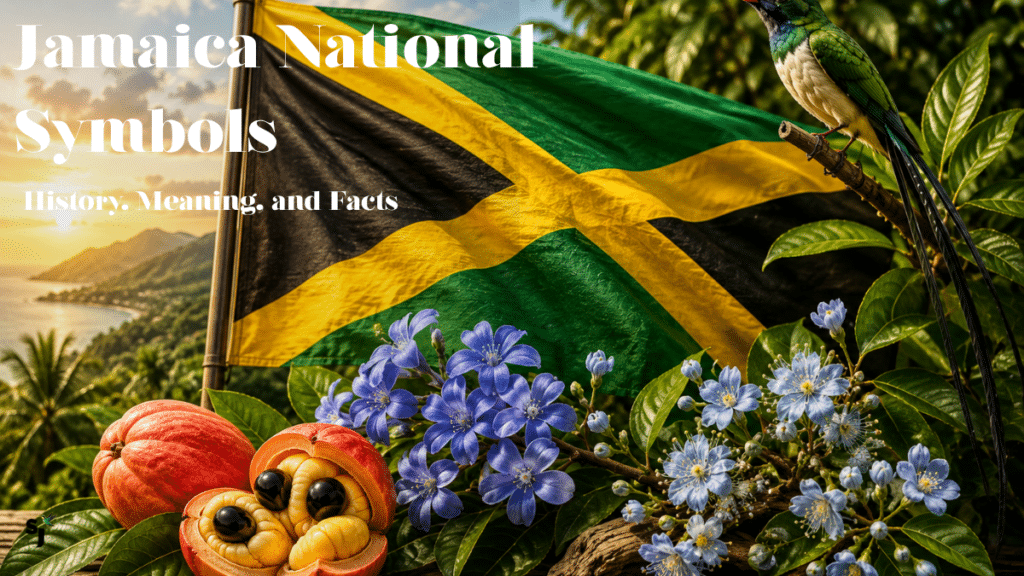
Every Jamaican child learns the list early: the Doctor Bird, the Lignum Vitae, the Blue Mahoe, ackee, the flag, the coat of arms. We recite them for school quizzes, we see them on the currency, and we spot them stitched onto tourist T-shirts in Ocho Rios. These Jamaica national symbols are instantly recognizable, but most of us were never told the history—where they came from, who chose them, and why.
The truth is, none of it was accidental. In the years leading up to August 6, 1962, Jamaica had to decide, quite literally, what would represent a brand-new nation to the rest of the world. Committees were formed. Shortlists were drawn up. A horticultural society argued over flowers. What emerged was a collection of national symbols rooted in Taíno history, African memory, British colonial record-keeping, and the island’s own natural bounty.
If you’ve just come from reading about Emancipendence — the season that runs from Emancipation Day through Independence Day — this is the other half of that story. That’s when Jamaica became free. This is what Jamaica chose to represent itself with once it was.
Here is the fuller story behind each of Jamaica National Symbols.
What Are Jamaica’s National Symbols?
The Flag: Sun, Land, and People
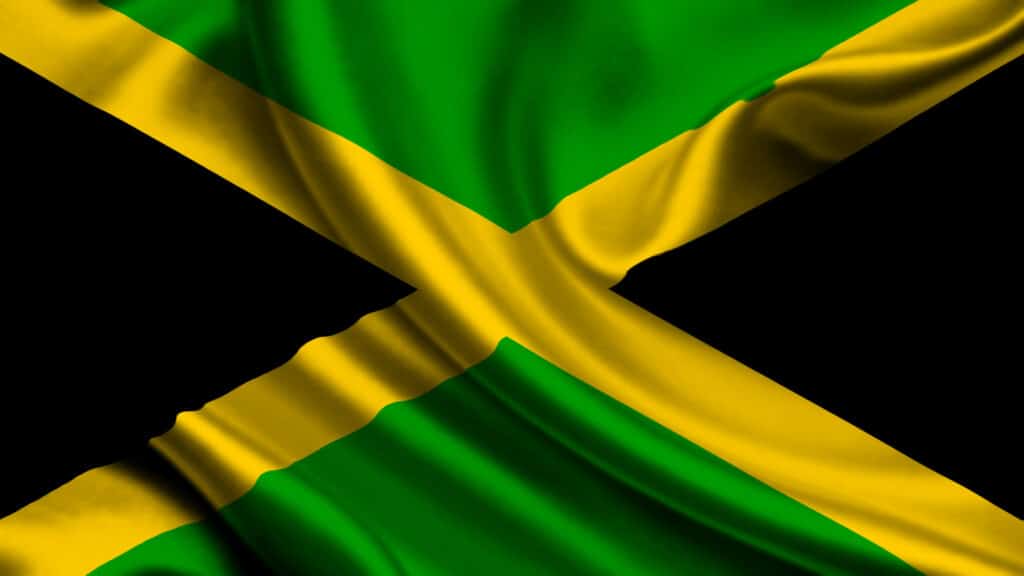
The flag was raised for the first time on August 6, 1962 — Independence Day — replacing the Union Jack that had flown over the island since 1655. It follows what’s called the Admiralty Pattern: a gold diagonal cross (a saltire) dividing the flag into four triangles, with black at the hoist and fly, and green at the top and bottom.
The colours were never meant to be decorative. Jamaica’s own official language for it has become one of the most quoted lines in the country’s civic life: the sun shineth, the land is green, and the people are strong and creative. Gold for sun and natural wealth, green for hope and the island’s agriculture, black for the strength and creativity carried by the Jamaican people through hardship. It is one of only a few national flags in the world that contains no red, white, or blue — which makes it a favourite talking point when families sit down to explain what the flag’s colours actually mean to the next generation.
The Coat of Arms: Out of Many, One People
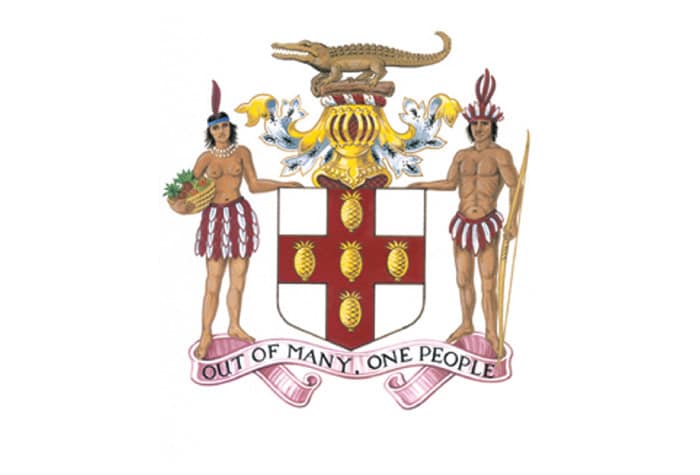
Jamaica’s coat of arms is older than almost anyone realizes — it dates back to 1661, granted by the College of Arms in England not long after the British took the island from Spain, making it one of the oldest colonial coats of arms in the Western Hemisphere. It was updated after Independence to reflect the new nation, but the bones of the design stayed the same.
A male and female Taíno stand on either side of a shield, honouring the island’s first inhabitants. The shield itself carries a red cross with five gold pineapples — the pineapple being an indigenous fruit the Taíno cultivated long before Columbus arrived. Above it all sits a Jamaican crocodile, mounted on the same kind of helmet and mantling used in British royal heraldry, a detail Jamaica was specifically permitted to keep. Underneath, the motto reads Out of Many, One People, adopted at Independence to speak to a population descended from Taíno, African, European, Chinese, Indian, and Middle Eastern roots, the same unity that Jamaica’s National Heroes gave their lives building.
Did you know? The Coat of Arms was designed by William Sancroft, who went on to become Archbishop of Canterbury. Its original 1661 motto wasn’t English at all — it read “Indus Uterque Serviet Uni,” Latin for roughly “both Indies shall serve as one,” long before it was changed to Out of Many, One People. (Source: National Library of Jamaica)
The Doctor Bird: Jamaica’s Only One of Its Kind
The red-billed streamertail hummingbird, known across Jamaica simply as the Doctor Bird, is found nowhere else on earth. It’s endemic to Jamaica alone, one of over 300 hummingbird species worldwide, but the only one that looks quite like this — iridescent green and black, with long twin tail feathers that swing behind it like a pair of coattails. On the male, those tail streamers can actually exceed the length of its own body, which is part of what makes the bird so instantly recognisable in flight.
Nobody is entirely sure where the “Doctor Bird” name came from. The most repeated explanation is that its black tail feathers and the confident, darting way it moves resembled the black coats old-time doctors wore on their rounds.
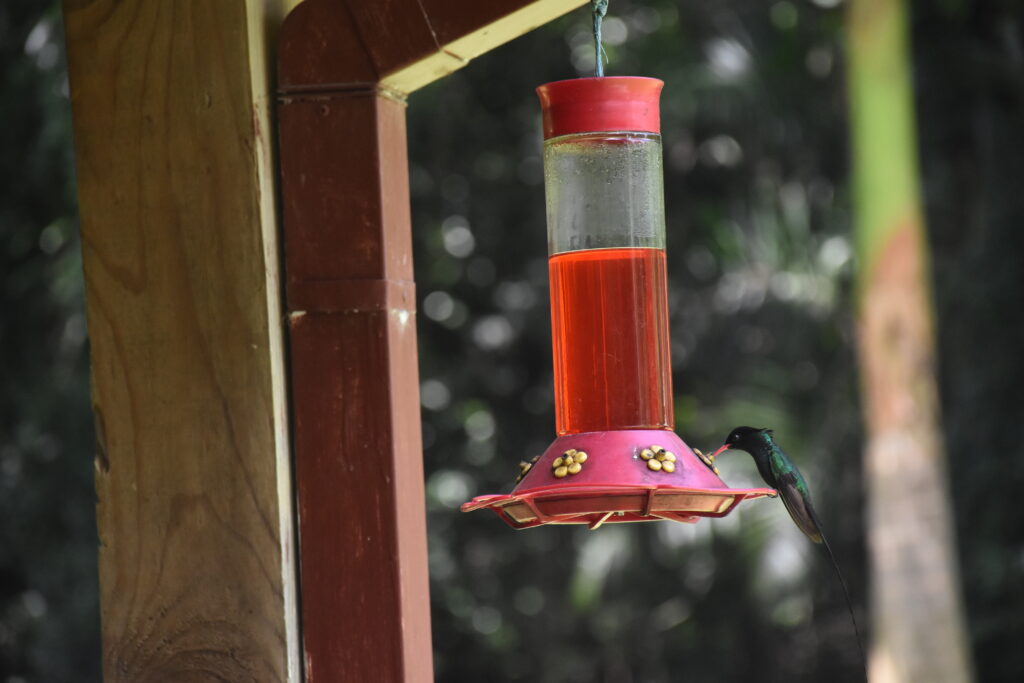
It went through the same official process as the flower, tree, and fruit: the National Flower Committee’s mandate was expanded to also recommend a national bird, and the Doctor Bird — already immortalised in Jamaican folklore and song — was approved alongside the rest of the island’s symbols ahead of Independence in 1962.
It remains one of the most recognisable pieces of Jamaican wildlife in the world, still turning up in tourism campaigns, government imagery, and currency design decades later — it even perches on the crest of Appleton Estate, one of the rum tours worth building a trip around, alongside the Blue Mahoe and Lignum Vitae.
Did you know? The Taíno called the Doctor Bird the “God bird,” believing it carried the reincarnated souls of the dead. An old Jamaican folk saying about the bird still gets repeated today: “Doctor Bud a cunny bud, hard bud fe dead” — a clever bird, hard to kill. (Source: Office of the Prime Minister)
Lignum Vitae: The Wood of Life
Lignum Vitae means “wood of life” in Latin, and it earned that name honestly. Christopher Columbus documented the tree when he arrived in Jamaica, and for centuries afterward, its resin and bark were used across the Caribbean as folk medicine — believed to treat everything from arthritis to syphilis, which is part of why European traders prized it so highly.
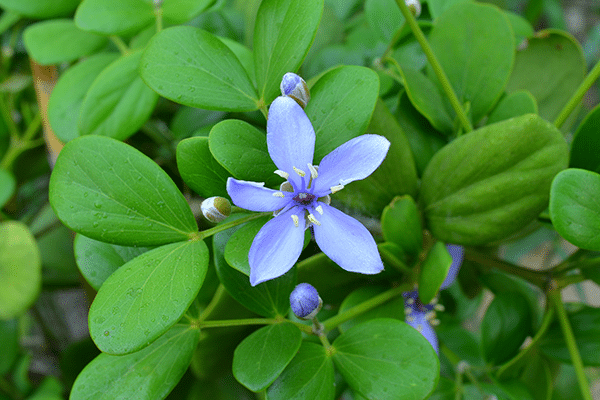
The flower itself is a small, powder-blue bloom, delicate against a tree whose wood is anything but. Lignum Vitae timber is famously dense — dense enough to sink in water — and for generations it was the material of choice for ship propeller shaft bearings on vessels sailing every ocean on earth, because it could take the friction and pressure other woods couldn’t. The selection process was formal: the Jamaica Horticultural Society began weighing candidates as early as 1959, narrowed an original shortlist of fourteen flowers down through public consultation, and recommended Lignum Vitae to the National Flower Committee, which approved it ahead of Independence.
Blue Mahoe: Jamaica’s Timber with a Shine
The name mahoe comes from a Carib word, and the “blue” refers to the striking blue-green streaks that run through the wood once it’s cut and polished — grain that shifts from gold to green to blue-grey depending on the light. It’s a fast-growing tree, found growing at elevations exceeding 1,000 feet across the island’s wetter parishes, and it produces hibiscus-like flowers that change colour as they mature, opening bright yellow and deepening through orange to a final crimson red before they drop.
Blue Mahoe timber has long been prized by Jamaican cabinet makers and woodworkers for furniture, bowls, and carvings, and the inner bark was historically stripped and used to tie bundles of Cuban cigars for export — which is where it picked up the old nickname “Cuba bark” among tradesmen. It remains one of the island’s primary reforestation species today, doing double duty as both a working timber tree and a national emblem.
Ackee: The Fruit That Almost Wasn’t Ours
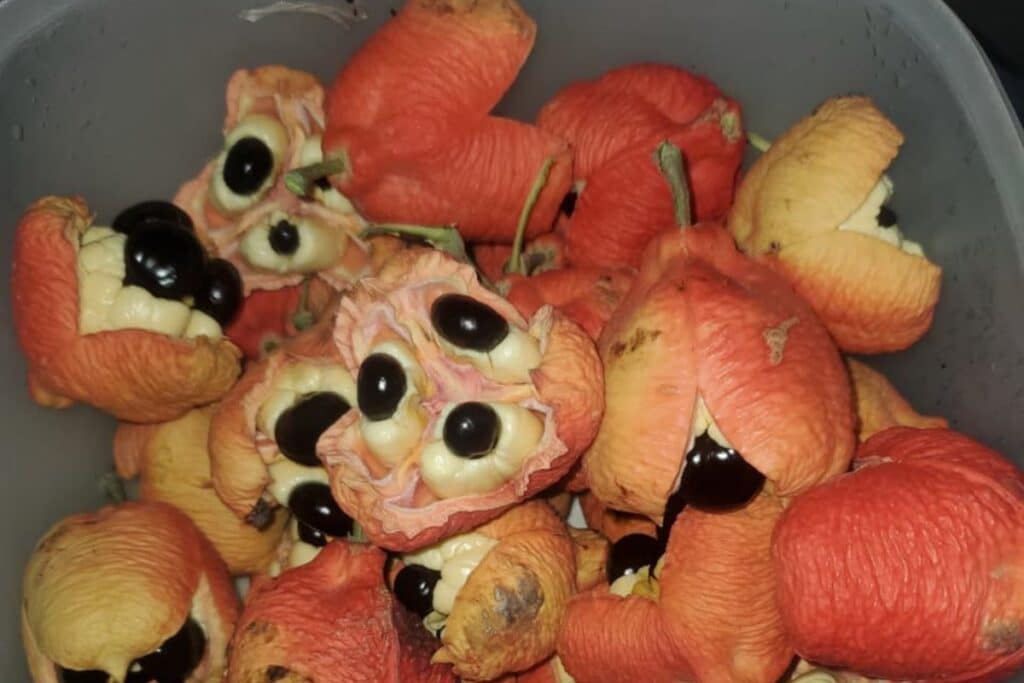
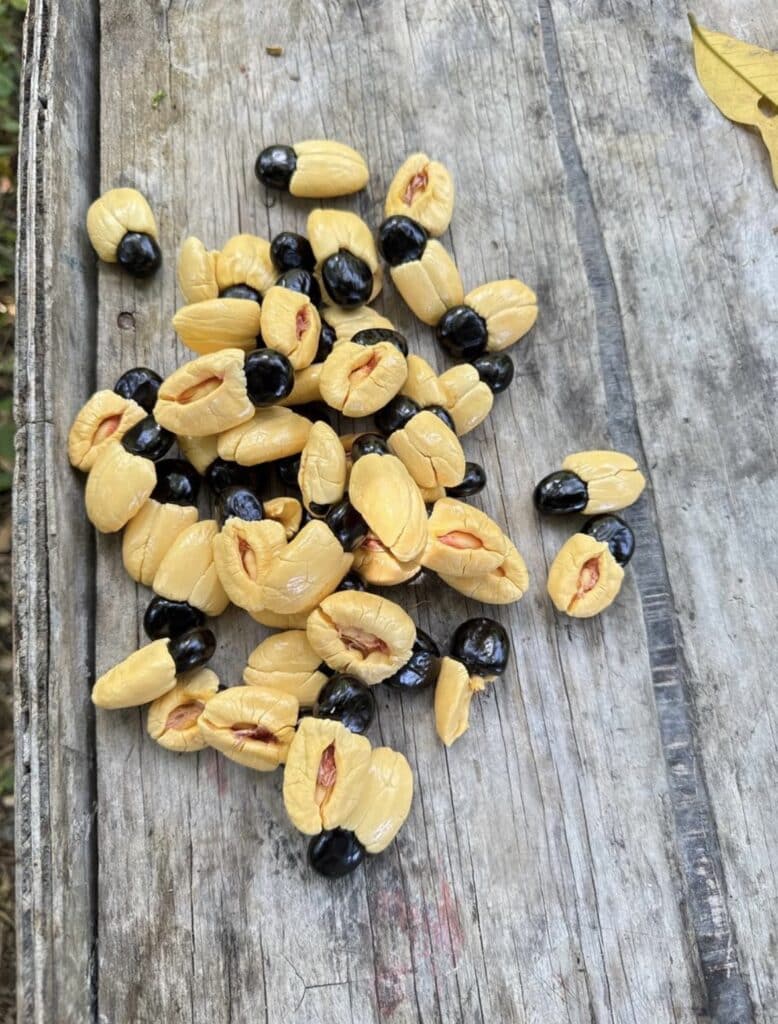
Ackee’s story is the most layered of all the symbols, because it isn’t originally Jamaican at all. The tree was brought from West Africa, most likely aboard a slave ship, arriving on the island around 1778. Its name comes from ankye, a word from the Twi language of Ghana — a direct linguistic thread back to the Akan-speaking people who were forcibly carried across the Atlantic and who carried this fruit’s memory with them. We’ve told the fuller story of ackee and saltfish in its own feature, but the short version starts here.
The fruit stayed largely unknown to European science until 1793, when Captain William Bligh carried ackee plants from Jamaica to England, which is how the tree ended up with the botanical name Blighia sapida in his honour. Jamaica remains the only place in the world where ackee is widely eaten as a staple crop, despite the plant having since spread across the Caribbean. Improperly ripened ackee is genuinely toxic, which is part of why generations of Jamaican mothers have drilled the same rule into their children: wait until the pod opens on its own, never force it.
Ackee and Saltfish: One Pot, Two Continents
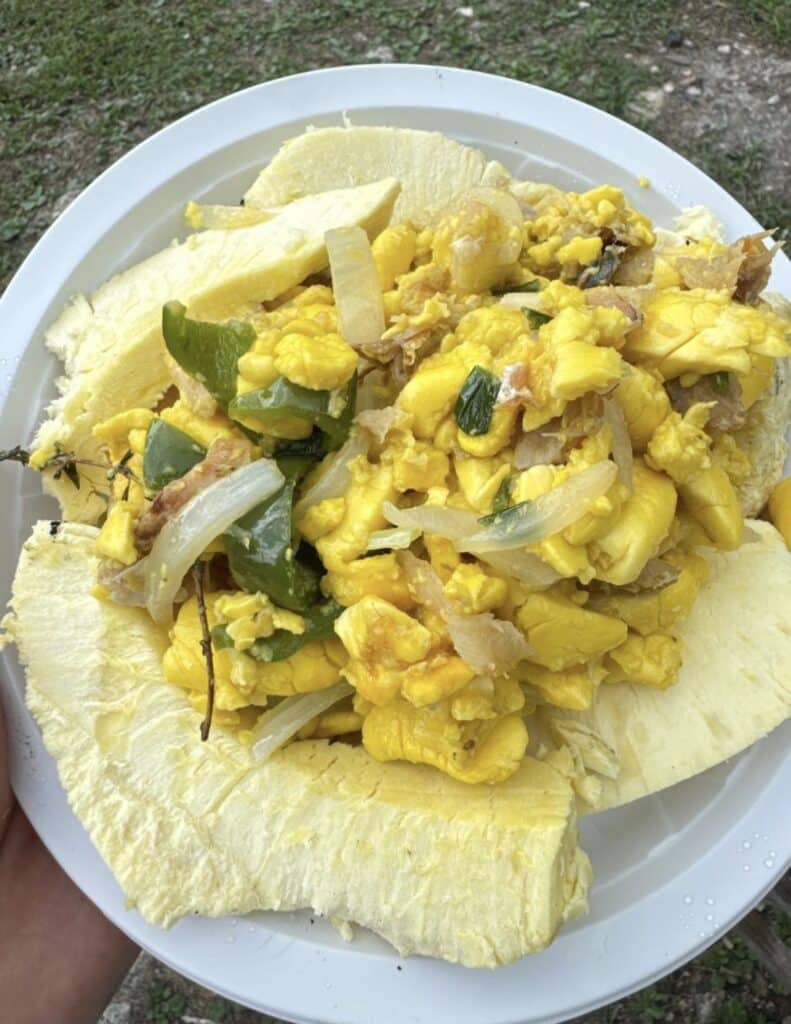
It’s fitting that the national fruit and the national dish are the same story told twice. Ackee and saltfish pairs the West African fruit with salted codfish, a preservation method brought by European traders and plantation economies that needed protein that could survive a transatlantic voyage without refrigeration. Sautéed together with onion, tomato, scotch bonnet, and callaloo, the dish became a breakfast staple eaten with fried dumpling, boiled green banana, or festival — and it’s the dish most Jamaicans abroad name first when asked what they miss, right alongside the rest of the Top 6 Jamaican breakfast items that make up a proper Sunday morning.
Quick Questions, Quick Answers
What are Jamaica National Symbols?
Jamaica national symbols are the flag, the coat of arms, the Doctor Bird (national bird), Lignum Vitae (national flower), Blue Mahoe (national tree), and ackee (national fruit). Ackee and saltfish is the national dish.
Why is unripe ackee dangerous to eat?
Unripe ackee contains hypoglycin, a toxin that can cause a serious illness known as Jamaican vomiting sickness. Ackee is only safe once its pod has opened naturally on the tree — it should never be forced open.
What do the colours of the Jamaican flag mean?
Gold represents the sun and the island’s natural wealth, green represents hope and agriculture, and black represents the strength and creativity of the Jamaican people.
Why is Jamaica’s national bird called the Doctor Bird?
The most common explanation is that the bird’s black tail feathers and confident movement reminded people of the black coats worn by old-time doctors, though the exact origin of the name isn’t officially confirmed.
What does Jamaica’s national motto mean?
Out of Many, One People reflects Jamaica’s population descending from Taíno, African, European, Chinese, Indian, and Middle Eastern roots, unified as one nation.
Every Nook, Every Cranny
None of these symbols exist in isolation. Taken together, they tell the same story Jamaica’s motto does — a nation built out of many different histories, forced together, choosing afterward what to keep and how to wear it. The next time you see the Doctor Bird on a rum label or Lignum Vitae carved into a souvenir, you’ll know it isn’t just decoration. It’s a shorthand for everything the island has survived and everything it still grows.
Chosen at the very birth of the nation, the Jamaica National Symbols were never just about picking a pretty flower or a striking bird — they were Jamaica’s first act of self-definition. Sixty-plus years later, they remain reminders of who Jamaicans were, who they became, and who they continue to be.
Walk Good. 🇯🇲
Every Nook. Every Cranny. All Jamaican