The Parish That Jamaica Keeps Almost to Itself
They say Jamaica is one destination, but Trelawny is almost a different world. It sits right there on the north coast, sandwiched between St. James and St. Ann, close enough to Montego Bay that most people drive straight through — or worse, dock at Falmouth’s cruise port, do a quick excursion, and leave thinking they’ve seen it. Dem nuh see nutten.
Because Trelawny is the kind of parish that doesn’t announce itself. It doesn’t have Ocho Rios’s waterfalls or Negril’s seven miles of beach. What it has is depth. A lagoon that glows blue in the dark. The rum Jamaica’s finest blenders have been using for decades without telling anyone. Bamboo rafts that once floated sugar to England, now floating visitors through the same jungle. A mountain fortress where Maroon warriors fought the British Empire to a standstill and won. Hidden waterfalls deep in the hills that most Jamaicans have never seen. And one small village that produced the fastest human being who ever lived.
This is what Trelawny looks like when you stop passing through and start paying attention. If you’re looking for the best things to do in Trelawny, Jamaica — this is where you start.
Fun Facts About Trelawny, Jamaica
- Falmouth had piped water before New York City
- The Martha Brae River is named after a Taino woman who drowned Spanish settlers — the gold she hid is still unfound
- Live and Let Die was filmed at Jamaica Swamp Safari Village in Falmouth in 1972
- Dornoch Riverhead is the largest river rising in Jamaica — two underground rivers surface from inside the earth there
- Trelawny produces 60–80% of Jamaica’s entire yam crop
- Usain Bolt — the fastest human in recorded history — was born in Sherwood Content, a small farming village in these hills
- Cockpit Country supplies nearly 40% of Jamaica’s fresh water
- The giant swallowtail butterfly — the largest butterfly in the Western Hemisphere — lives only in Cockpit Country
Start in Falmouth: The Georgian Town That Had Pipes Before New York City
Most cruise passengers walk off the ship at Falmouth’s port, buy a patty, take a photo, and head straight to Martha Brae or the Luminous Lagoon. Which is a shame, because the town they’re standing in is genuinely remarkable.
Falmouth was founded in 1769 — planned from scratch on a grid, with wide streets, grand public buildings, and piped running water long before New York City had anything of the sort. It was built to move the wealth of the British sugar empire, and at its peak, thirty merchant ships sat in the harbour on any given day. The cargo going out: sugar and rum. The cargo coming in: enslaved Africans. That history is in these streets whether you look for it or not.
What survives today is extraordinary. Falmouth is the best-preserved Georgian town in the Caribbean — arguably the finest collection of Georgian architecture outside Britain itself. The Falmouth Courthouse (1815), Water Square, the William Knibb Memorial Baptist Church, the Barrett House, the Albert George Market. These aren’t museum pieces. They’re the bones of a functioning Jamaican town that simply never got demolished. Falmouth is one of the best things to do in Trelawny if history is your thing. Falmouth Heritage Walks offer guided tours through the historic district — one of the most underrated two hours you can spend on this island.
The Luminous Lagoon: Jamaica’s Only Natural Night-Time Attraction
Just outside Falmouth, where the Martha Brae River meets the Caribbean Sea, there’s a lagoon that glows electric blue at night. Not as a metaphor. Literally glows.
The Luminous Lagoon — also called Glistening Waters — is home to millions of bioluminescent dinoflagellates, microscopic organisms that flash blue light when disturbed. The chemistry is specific to this geography: freshwater from the Martha Brae mixing with Caribbean saltwater creates brackish conditions at just the right warmth and depth — three to eight feet — for these organisms to thrive year-round. Jamaica’s is ranked among the brightest bioluminescent bays on earth. What makes it special compared to similar spots in Puerto Rico or Vietnam is that you can swim in it. You get in the water at night and your body leaves a trail of blue fire.
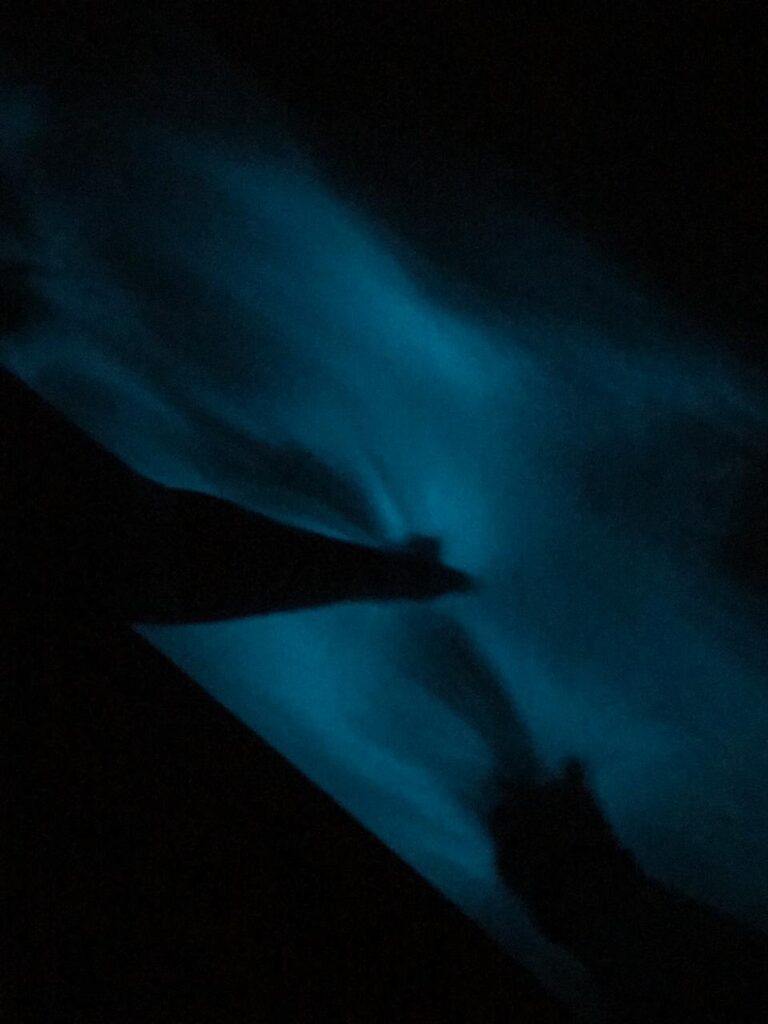
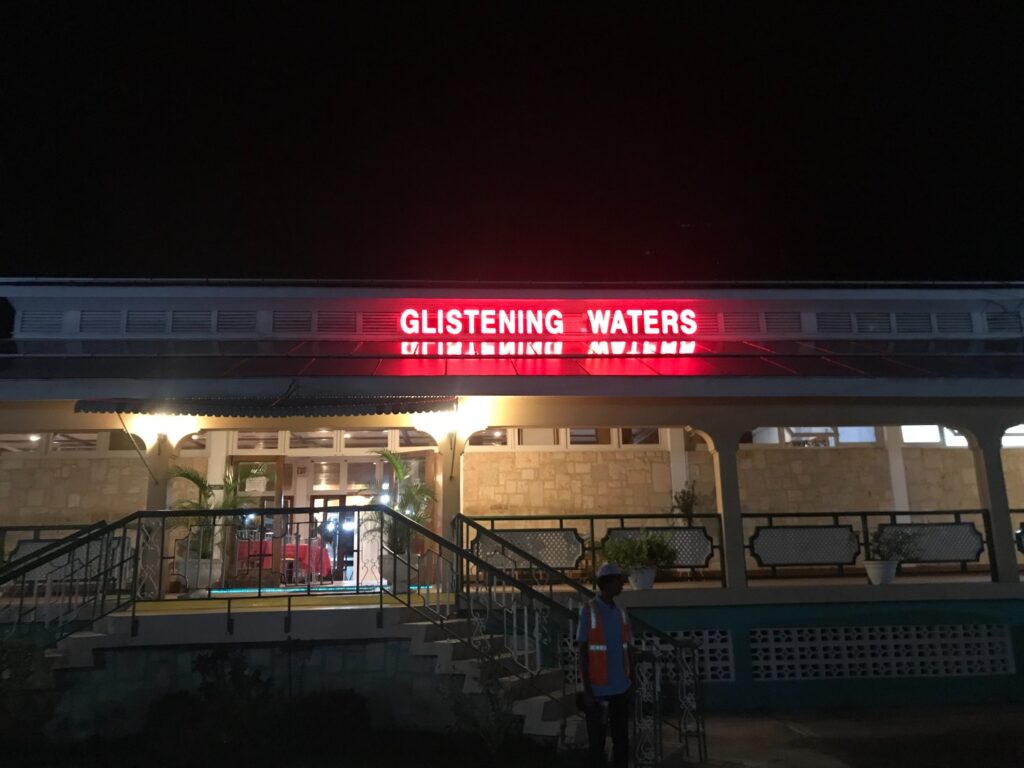
| 💡 Insider Tip: Go on a dark, moonless night — a full moon washes out the glow significantly. Forget your phone camera; most smartphones can’t capture low-light bioluminescence. Bring a GoPro with night mode, or decide to be fully present for it. Tours depart nightly at sunset from Glistening Waters Marina. The Knutsford Express stops there directly for locals. |
Martha Brae River: The Raft, the Legend, and the Gold Nobody Found
Six miles south of Falmouth, a river begins its journey out of the Cockpit Country hills and winds through 32 kilometres of Trelawny jungle before sliding into the Caribbean Sea. During the plantation era, bamboo rafts loaded with sugar and rum floated down this river to Falmouth’s harbour for export to England.
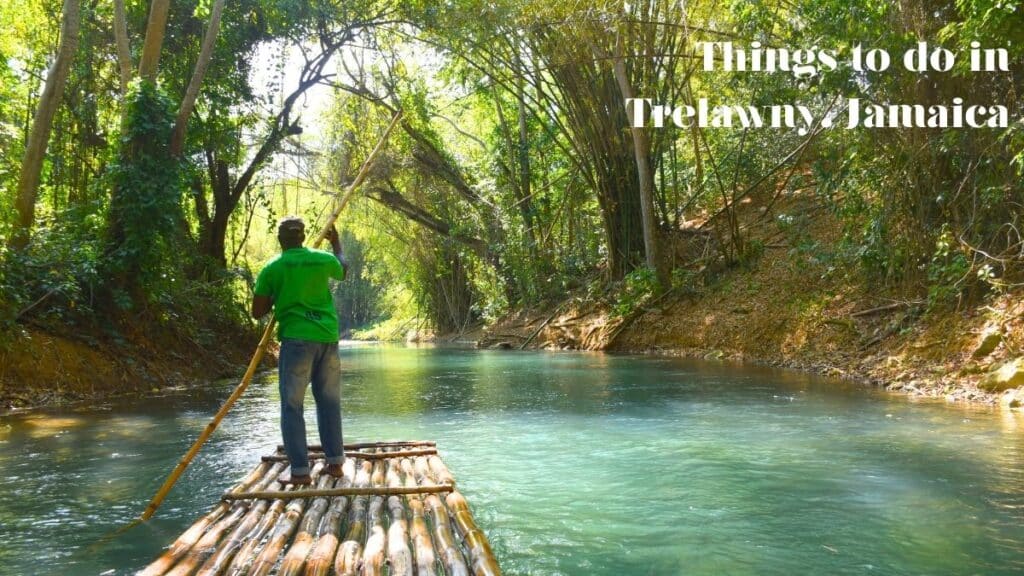
Those same 30-foot bamboo rafts now carry visitors instead of cargo. First established in 1970, the Martha Brae rafting experience is Jamaica’s number one rafting attraction (book at Jamaica Rafting) — a three-mile journey with a certified raft captain who poles you downstream through bamboo canopy, past trees, and flaming forest flowers, for about an hour and fifteen minutes. The ride ends at Rafter’s Rest, which has a bar, gift shop, restaurant, and photo shop.
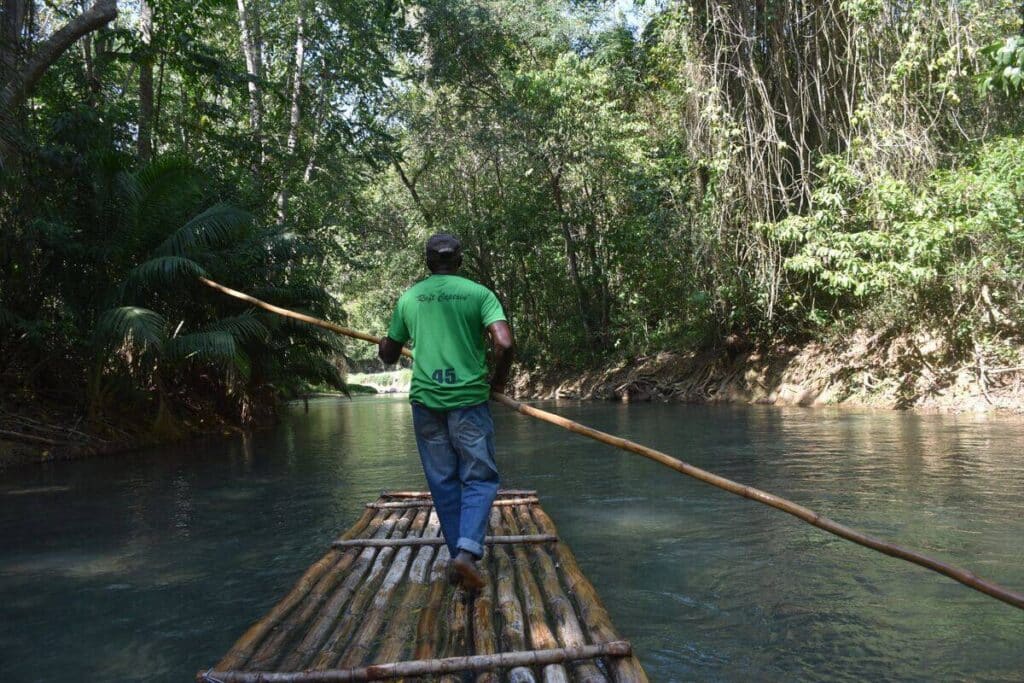
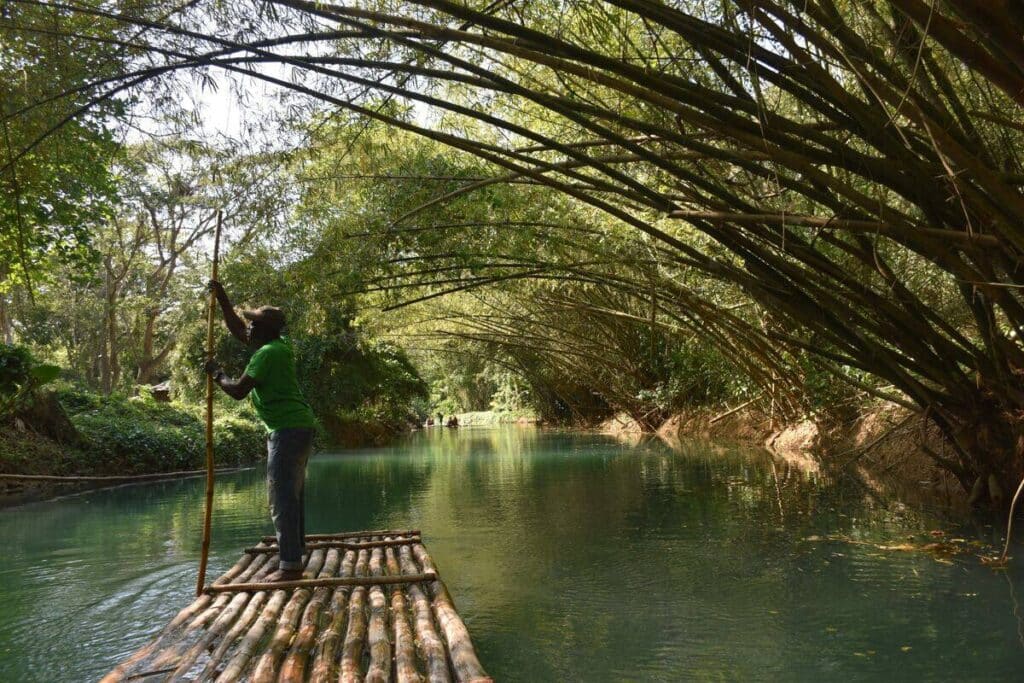
Martha Brae was named after a Taino woman tortured by Spanish settlers who wanted to know where a stash of gold was hidden in a cave along the river. She told them. She led them to a cave. Then she changed the course of the river, drowned them, and sealed the cave shut forever. The gold is still in there, according to legend. Your raft captain will tell you the whole thing somewhere around the third bend, where the bamboo closes overhead and it feels entirely plausible.
| 💡 Insider Tip: Miss Martha’s Herb Garden at Rafter’s Village is worth a slow walk before you push off — traditional medicinal plants, including some that might raise an eyebrow. Most raft captains are skilled craftsmen; they’ll offer calabash carvings from their backpack. Support them if something catches your eye. |
Hampden Estate: The Rum Jamaica’s Best Bartenders Have Been Keeping Secret
There is a rum distillery in the hills of Trelawny, in a valley called Queen of Spain, that has been making pot-still rum continuously since 1753. One of the oldest working distilleries in the world. For most of its history it shipped unaged rum in bulk to blenders in Europe who poured it without putting the name on the label. The finest Jamaican rum cocktails in London and Berlin and New York were often Hampden, and nobody knew.
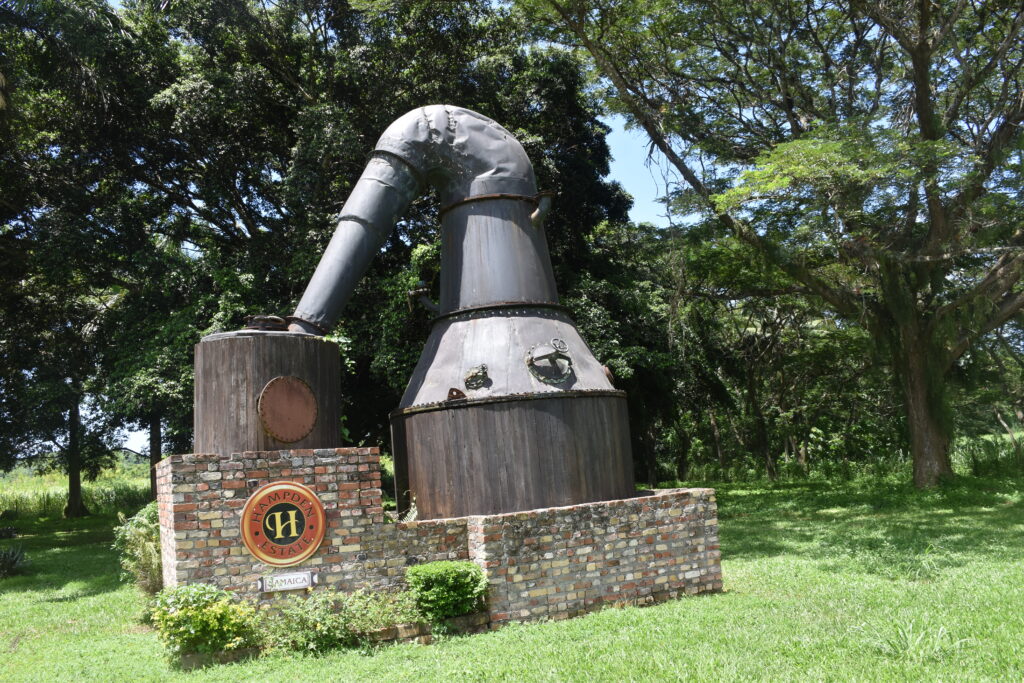
That changed in 2018 when Hampden launched its own branded bottles. Now rum enthusiasts make pilgrimages from across the world to stand in this jungle valley and experience what wild fermentation in wooden vats, natural spring water, and dunder — the leftover liquid from previous distillations — actually smells and tastes like. Intensely fruity, wildly aromatic, almost overwhelming. The distillery’s most celebrated rum is DOK — named after Dermot Owen Kelly-Lawson, Hampden’s distiller in the early 20th century, whose initials became the label. Among rum connoisseurs worldwide, it is one of the most sought-after pours on earth.
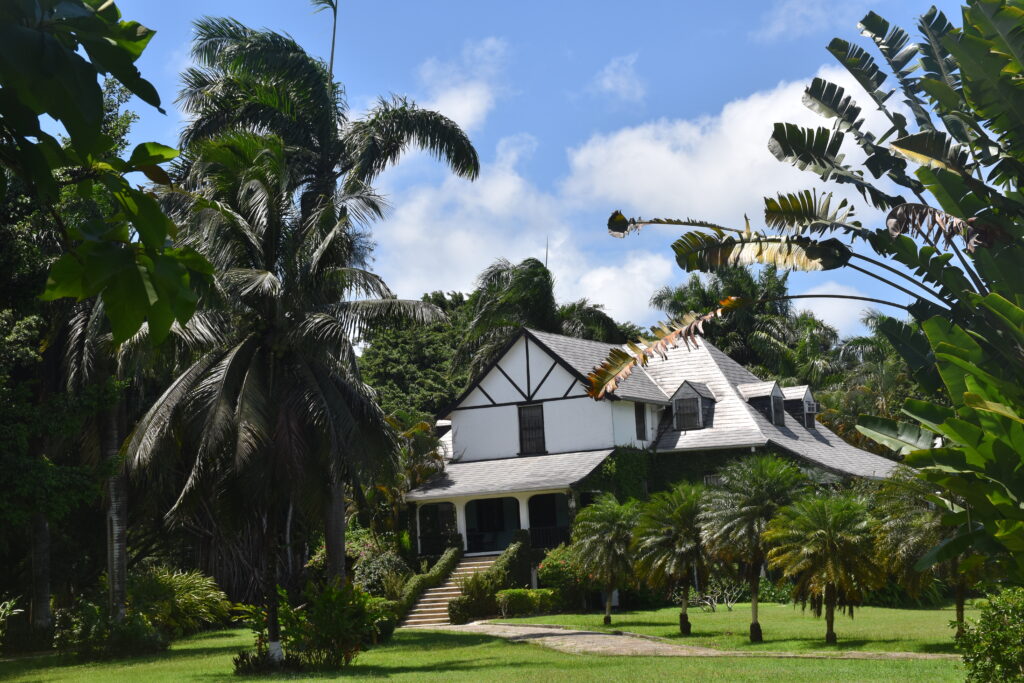
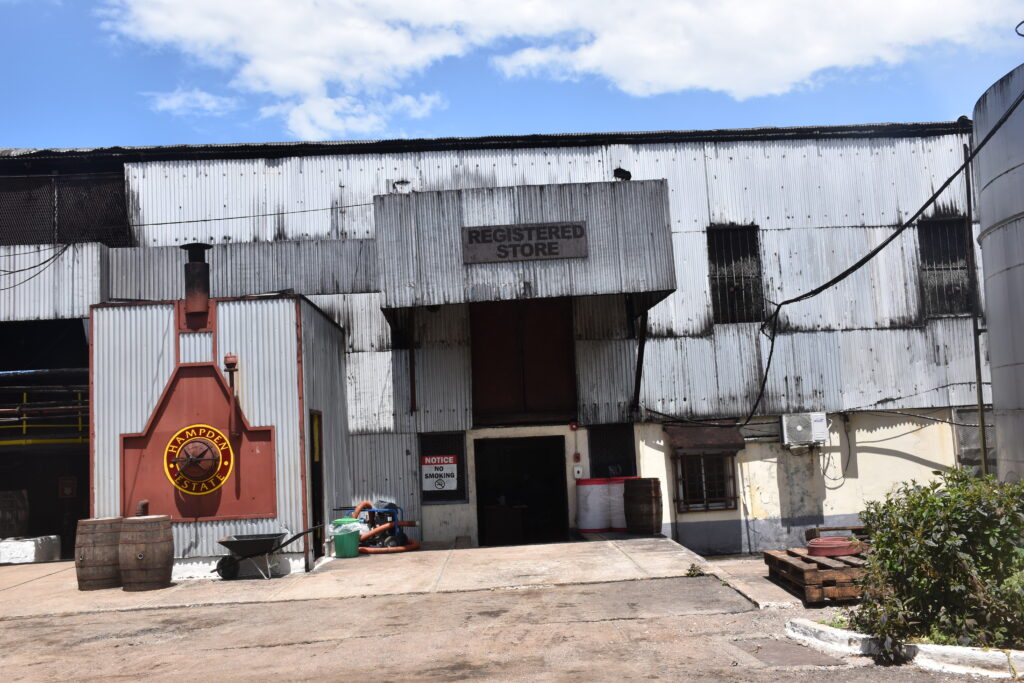
The Great House, built in 1779 by Scottish planter Archibald Stirling, survived the 1831 Christmas Rebellion intact — most accounts credit the estate’s Free School that taught enslaved people to read and write. Tours run Monday to Friday, 10am and 11am, small groups of ten, lunch included. The roads are rough — allow extra time. Fully enclosed shoes required.
| 💡 Insider Tip: Book directly at Hampden Estate Rum. For a full guide to rum tours across Jamaica, see our Rum Tours in Jamaica guide. Ask for the jerk pork at lunch rather than the chicken — people who know, know. |
Jamaica Swamp Safari Village: The Crocodile Farm That Made a Bond Film
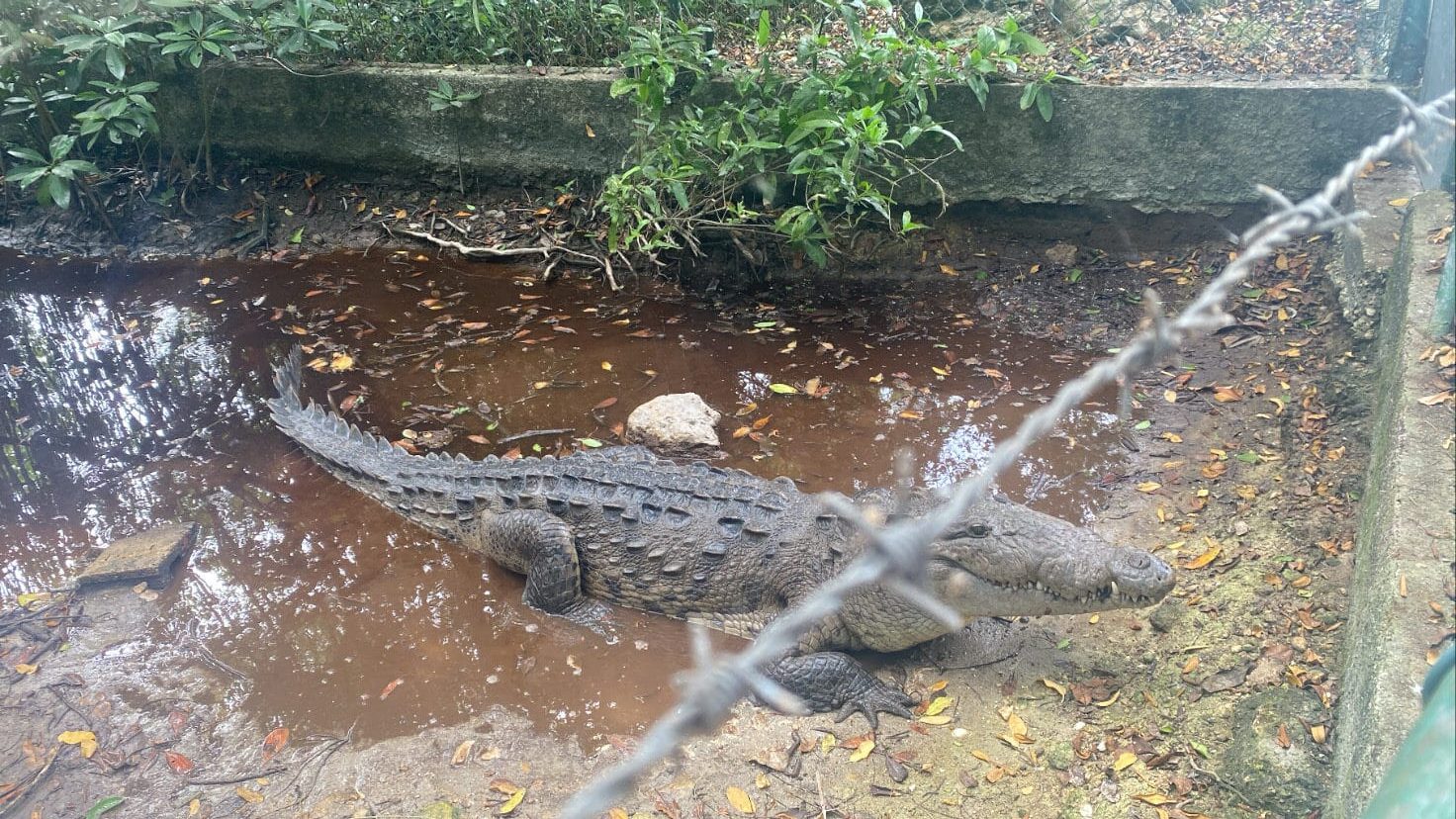
On the outskirts of Falmouth, on 50 acres of natural mangrove habitat, there’s a wildlife attraction with one of the better origin stories on the island. Jamaica Swamp Safari Village was established in 1969 as a crocodile farm — a place where rescued, injured, and displaced American crocodiles could be contained, cared for, and eventually released back into the wild.
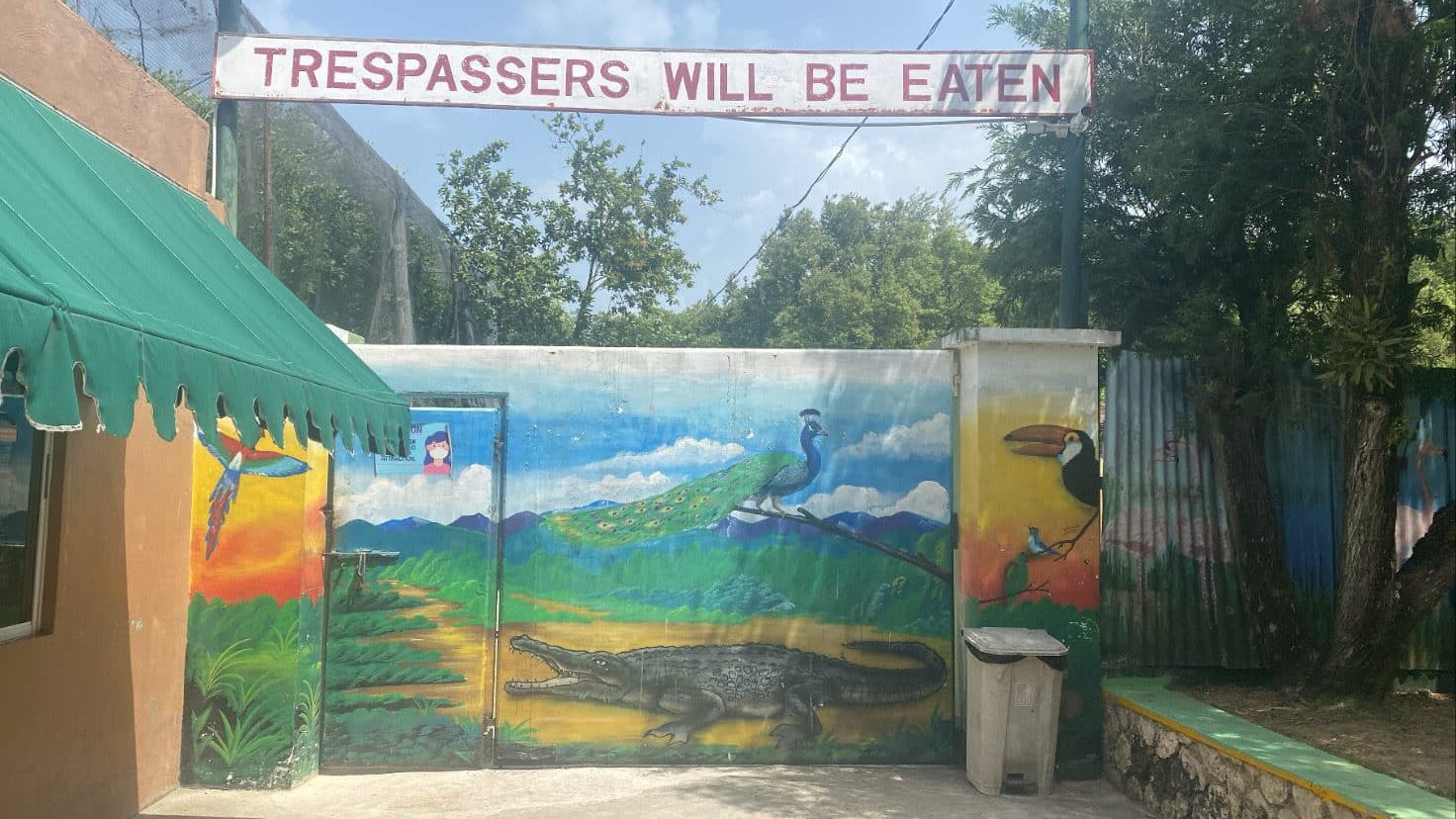
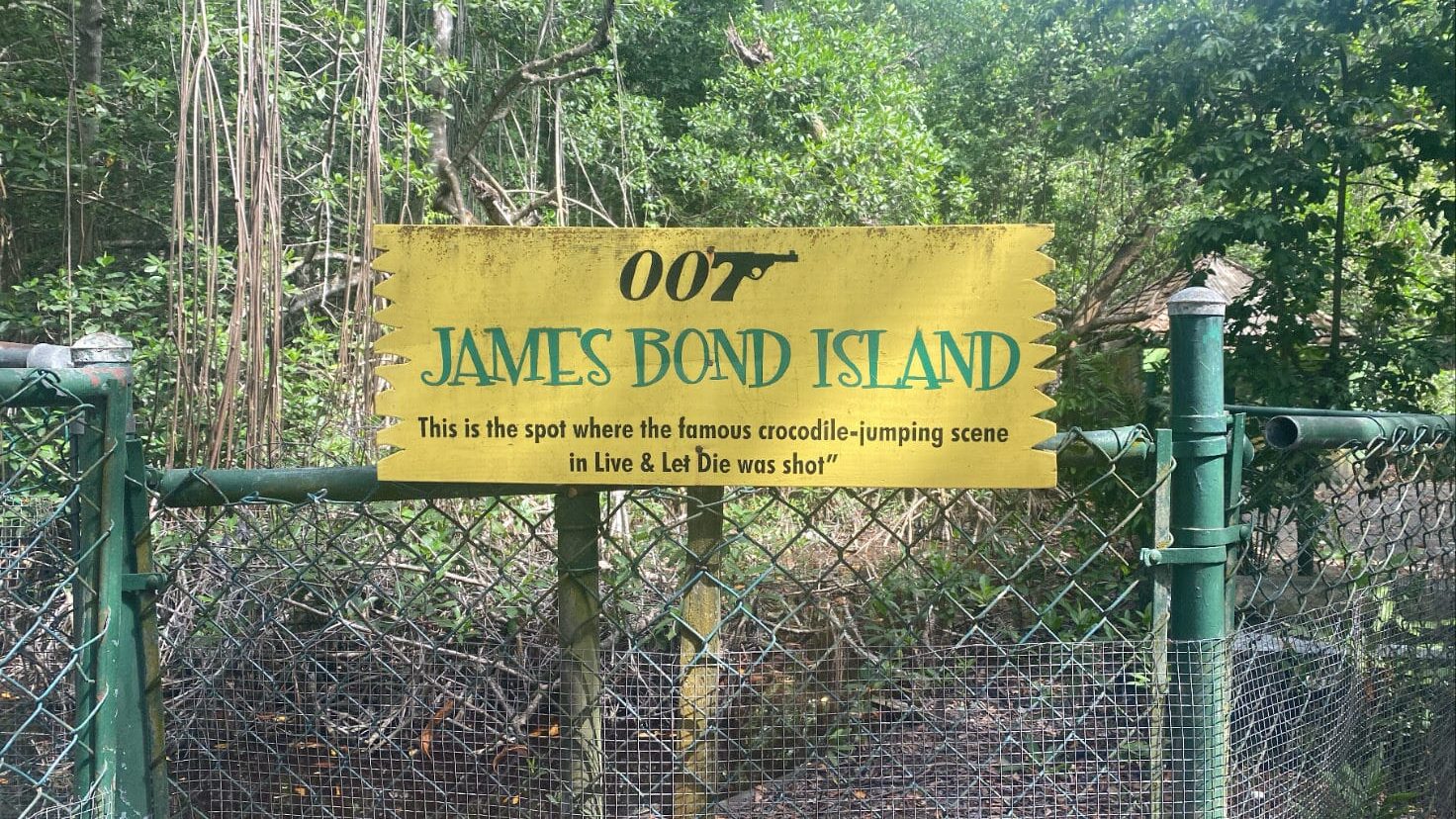
In 1972, it earned an entirely different kind of notoriety. American stuntman Ross Kananga, who owned the farm, offered the property to the producers of Live and Let Die. You know the scene — Roger Moore’s James Bond escaping across the backs of crocodiles. That was filmed right here in Trelawny, with Kananga performing the stunt himself.
Today the Safari Village is one of the few places in Jamaica where you can see American crocodiles at every stage of development — hatchlings, juveniles, and the full-grown animals that patrol the mangrove. There’s also a bird aviary, Jamaican yellow boa snakes, and — unexpectedly — a resident deer population. Visitors can hold a baby crocodile, which is either exactly what you came to Jamaica for or absolutely not. The sign at the entrance reads ‘Trespassers Will Be Eaten’, which sets the tone correctly.
Cockpit Country: Where the Maroons Beat the British Empire
The southern interior of Trelawny disappears into one of the most extraordinary landscapes in the Caribbean. The Cockpit Country is over 500 square miles of steep limestone hills separated by deep valleys that trap heat, humidity, and rain. Jamaica’s largest remaining rainforest. The British never conquered it.
Escaped enslaved Africans — the Leeward Maroons — used this terrain to fight a guerrilla war against British forces for decades. In 1739, the British conceded. They signed a peace treaty with Maroon leader Captain Cudjoe right here in Cockpit Country, granting the Maroons their freedom and land rights. A formal military defeat for the most powerful empire on earth.
Cockpit Country Adventure Tours (CCAT), based in Albert Town, runs cave tours guided by Maroon descendants — literal descendants of the people who used those same caves as military strongholds. Windsor Great Cave stretches 5.5 kilometres underground and shelters colonies of over 50,000 bats. The birding here is world-class: 28 of Jamaica’s 29 endemic bird species live in these hills, including the black-billed amazon parrot and the giant swallowtail butterfly, the largest butterfly in the Western Hemisphere.
| 💡 Insider Tip: Get muddy. This is not a well-lit tourist cave with handrails. You will crawl through limestone in the dark with a headlamp and emerge covered in clay and completely exhilarated. Wear clothes you don’t mind losing. The guides are exceptional — this is their ancestral land. |
Good Hope Estate & Chukka: Adventure on a Plantation
Good Hope Estate is an 18th-century plantation on over 2,000 acres of Trelawny hill country, with views of the Martha Brae River below and the Cockpit Country behind. At its peak, one of the wealthiest sugar estates in Jamaica. Now run by Chukka Caribbean Adventures as a full-day destination.
The Great House survived the 1831 Christmas Rebellion intact — most accounts credit the estate’s Free School. That history sits quietly behind the zip lines and the ATV tours. The adventure offerings are genuine: zip-lining over jungle canopy, ATV through muddy Trelawny terrain, bamboo rafting on the Martha Brae, horseback riding, a colonial village tour, aviary, and a challenge course for adults and children. Walkerswood Jerk Hut is on site. For families looking for things to do in Trelawny, Good Hope is the most efficient place in the parish
The Beaches
Trelawny’s beaches aren’t the famous ones on the posters. Which is exactly the point.
Burwood Beach
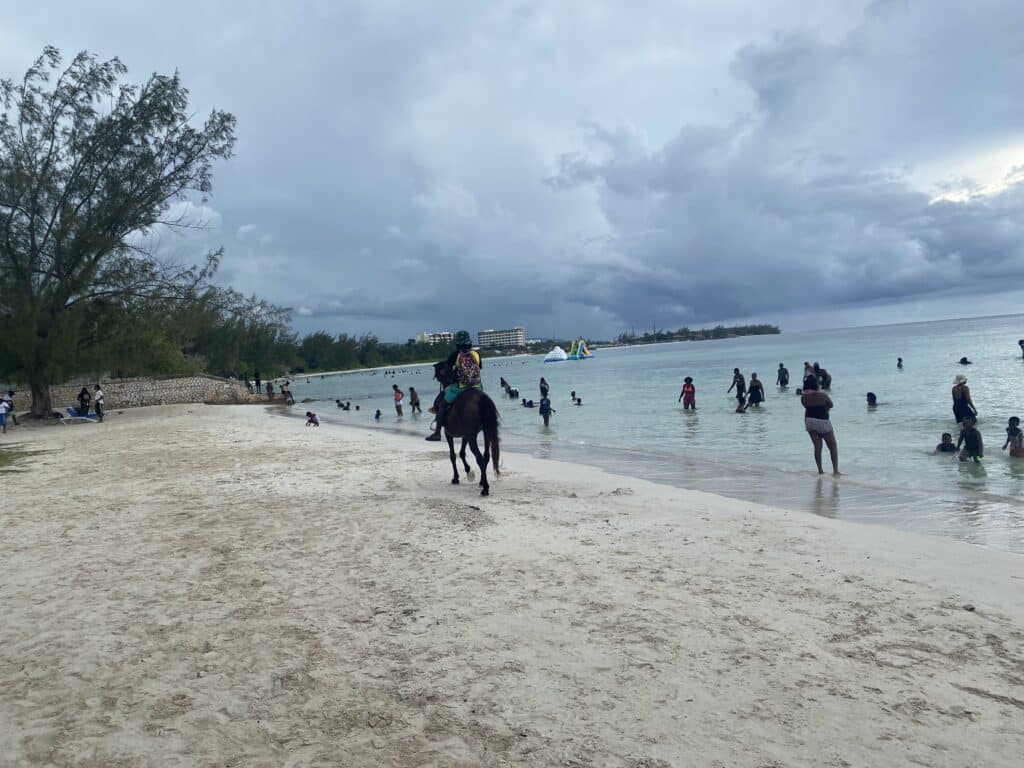
About 15 minutes east of the Falmouth cruise port, Burwood is a free public beach — pristine, calm Caribbean water, fresh fish cooked to order, local vendors, rum punch, Red Stripe, and an atmosphere that has nothing to do with resort Jamaica. Sundays are the main event, with music blasting and families sprawled across the sand from morning to sunset. A genuine community beach, and that energy is irreplaceable.
876 Beach Club — Same Shoreline, Different Setup
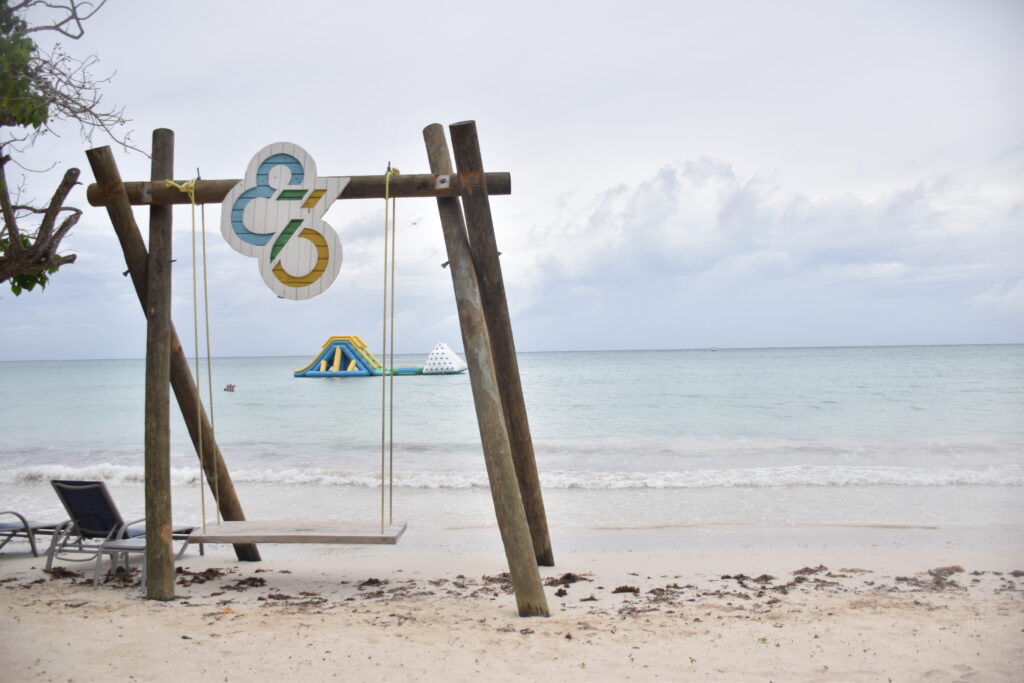
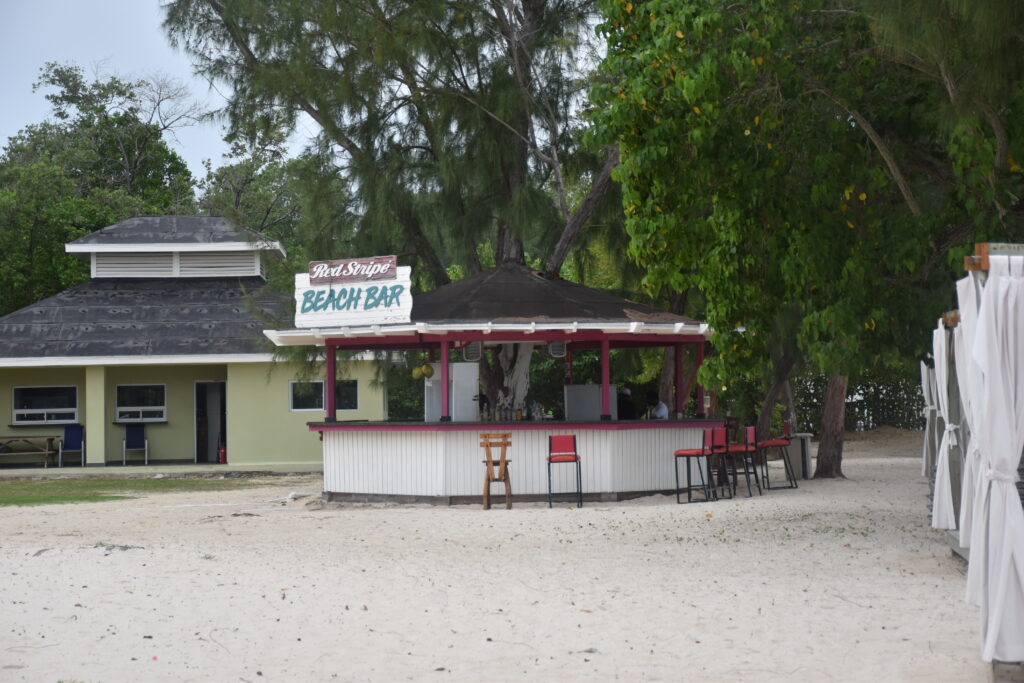
Right next door to Burwood on the same stretch of sand sits 876 Beach Club. Entry is around $10 USD, which covers a beach chair and wristband. There’s an aqua park with inflatables and water obstacles, a bar and restaurant on site, changing rooms, showers, and WiFi. For cruise visitors who want a structured, managed beach experience, it delivers.
The honest comparison: Burwood is free, spontaneous, and as local as it gets. 876 is the paid, curated version on the same beach. Both are on the same shoreline — you’re choosing an experience, not a location.
Jacob Taylor Beach & Fisherman’s Beach
Further east, just before the Silver Sands villa community, Jacob Taylor and Fisherman’s Beach sit beside a working fishing village. Boats going out, nets being mended, craft stalls at the entrance. You can buy directly from fishermen. The kind of beach encounter that reminds you why you came to Jamaica in the first place.
Silver Sands Public Beach — Duncans
Further east near Duncans, Silver Sands Public Beach is quieter, less visited, and genuinely local. Calm water, light crowds, a good stretch of sand. If you’re out this way, Julet’s Restaurant & Bar in Duncans is right around the corner — home-style Jamaican cooking, no fuss, exactly what you need after a beach afternoon.
Where to Eat in Trelawny
If you find yourself eating every meal inside your hotel in Trelawny, you’re missing the parish entirely. The food is out there — on the roadside, at the beach, around the corner from things you’re already going to. Here’s where to point yourself.
| Leon’s Lobster Hut — Burwood Beach area Fresh lobster, grilled to order, eaten with your feet in the sand. No printed menu needed — just ask what came in that day. This is the version of Jamaica that exists before the resort buffet got involved. |
| Flavaville Restaurant & Lounge — Falmouth Across from Gate #3, Falmouth Cruise Port, is the kind of spot visitors might walk past — but shouldn’t. It’s a proper sit-down break from the rush, serving up bold Jamaican flavors in a lively, welcoming space that blends restaurant and lounge energy. On the menu: rich curry goat, tender oxtail that falls off the bone, smoky jerk chicken, and an oxtail pasta that regulars swear by Showcase Tip: If you’re coming off a cruise or heading back in, this is one of the most convenient spots in Falmouth to get a real taste of Jamaican cooking without going far. |
| Pepper’s Jerk Center — Falmouth Proper roadside jerk. Pimento wood smoke, real heat, real spice. This is not the sanitised tourist version — this is the real thing. Order the chicken and the festival and find somewhere to sit. |
| Kimbo Pot Café — Falmouth Small, creative, and proudly local. Coffee, breakfast, and a slower pace. Good reset between excursions or before a heritage walk of the town. |
| Glistening Waters Restaurant — Luminous Lagoon, Florence Hall Right at the lagoon marina — best paired with your night tour. Seafood, Jamaican dishes, and rum punch with a front-row view of the water before it starts to glow. Arrive early to eat, then take the boat out. |
| Julet’s Restaurant & Bar — Duncans Home-style Jamaican cooking in the east of the parish. Curry goat, fried fish, rice and peas — the kind of meal that reminds you where you are. Unassuming, reliable, and worth the drive if you’re heading toward Silver Sands or Rio Bueno. |
Rio Bueno: Columbus’s First Anchorage and Jamaica’s Best River Tubing
On the eastern edge of Trelawny where the parish meets St. Ann, there’s a small coastal village built around the deepest natural harbour in Jamaica. Rio Bueno Harbour is where Christopher Columbus dropped anchor on his first visit to the island. The village that grew around it has the bones to prove its age — an old fort, warehouse ruins, historic churches, all set against Trelawny’s green hills.
River Rapids Jamaica operates three tours on the Rio Bueno river: a family-friendly rafting tour suited to young children and elderly visitors, a kayaking tour through rapids and river pools, and a river tubing tour where you float downstream through tropical scenery. All three are fully guided and end on a private beach where the river meets the sea. A genuinely good half-day for families or anyone who wants a river experience without the formality of Martha Brae.
| 💡 Insider Tip: Gallery Joe James, celebrating the work of the late Trelawny artist Joe James, is also in Rio Bueno village. If you’re making the drive east, it’s worth a stop. The village is small enough to walk — old fort, old church, harbour view — before or after the river. |
Off the Map: Joe Hut Falls and Dornoch Riverhead
These are not on any brochure — but they represent some of the most memorable things to do in Trelawny for adventurous visitors. No tour operator runs excursions here. You won’t find them on a cruise ship activity list. Which is exactly why they’re in this article.
Joe Hut Falls (Knotty Falls)
Hidden in the hills of a Trelawny community called Joe Hut, this waterfall is the kind of thing you hear about from someone who knows someone who went. A high cascade dropping into a forest-green pool, completely secluded — no facilities, no entry fee, no sign at the gate. The road is rough. You’ll need to ask locals for directions when you get close. For adventurous visitors doing their own island exploration, it’s well worth the effort.
Dornoch Riverhead — Stewart Town
In Stewart Town in inland Trelawny, underground rivers surface from beneath the limestone and form a pool about thirty yards across — the source of the Rio Bueno. According to cave researchers, this is the largest river rising in Jamaica: at least two underground rivers, the Quashies River and the Cave River, resurface here after flowing through the Cockpit Country’s cave system.
The water is deep, blue-green, and completely wild. No lifeguard, no facilities, no construction of any kind. An SUV is recommended for the road. Bring insect repellent. Most Jamaicans have never heard of it. For those who love the idea of swimming in a place where the water appears, fully formed, from inside the earth — this is the one.
| ⚠️ Important: Both Joe Hut Falls and Dornoch Riverhead are wild, unmanaged spots. The water at Dornoch is deep — not suitable for non-swimmers. Go with someone who knows the area, particularly for Joe Hut. These are genuine off-the-beaten-track experiences, not packaged excursions. |
Where to Stay in Trelawny: Resorts vs Other Accommodations
Most visitors searching for things to do in Trelawny, don’t realise they’re already in the parish — they think it’s Montego Bay. But this stretch of coastline between Falmouth and Duncans has quietly become one of Jamaica’s main resort corridors, with a mix of large all-inclusives and genuine local alternatives.
| Best for Luxury (Adults Only) → Excellence Oyster Bay — private peninsula, Falmouth. Reopened Dec 2025, now expanding with new beach bungalows. Highest-rated in parish on TripAdvisor. → Ocean Eden Bay — 5-star adults-only, Coral Spring. Same H10 campus as Ocean Coral Spring. Open and receiving guests. |
| Best for Families → Ocean Coral Spring — 5-star, Coral Spring near Duncans. Barely affected by Melissa, operational from late October 2025. Strong early 2026 reviews. → RIU Palace Aquarelle — White Bay Beach, 700+ rooms, water park. Reopened December 2025. |
Whichever property you’re in, Trelawny rewards leaving the compound. The Luminous Lagoon is an easy night excursion from any of these hotels. Hampden Estate and Good Hope are half-day outings. Falmouth Heritage Walk is a morning. You came all the way to the parish of the fastest man alive — nuh waste it inna pool.
Not the all-inclusive type? Trelawny has a solid range of villas, cottages, and guesthouses on Airbnb — particularly around Falmouth and the Duncans area — that put you closer to the parish and further from the resort bubble.
Is Trelawny Worth Visiting? (Short Answer: Yes)
If you’re already going to be in Montego Bay, Trelawny is less than 40 minutes east along the north coast. There’s no excuse not to spend at least a day here — and most people who do wish they’d given it more time.
| ✔ Fewer crowds than Montego Bay or Ocho Rios ✔ The Luminous Lagoon — one of the brightest bioluminescent bays in the world, and you can swim in it ✔ Hampden Estate rum — 260+ years old, world-class, and most people have never heard of it ✔ Martha Brae bamboo rafting — Jamaica’s number one rafting attraction ✔ Falmouth — the Caribbean’s best-preserved Georgian town ✔ Cockpit Country — Maroon history, endemic wildlife, and caving unlike anywhere else in Jamaica ✔ Usain Bolt’s birthplace — Sherwood Content, Trelawny ✔ Strong beach options across the budget spectrum — free Burwood to private beach clubs ✔ Easy access: 40 minutes from Sangster International Airport, Montego Bay |
The one honest caveat: Trelawny rewards the curious. If you’re looking for a completely passive holiday — pool, beach, repeat — the all-inclusives here will deliver that, same as anywhere else on the north coast. But if you’re willing to leave the compound, even for an afternoon, this is one of the most layered parishes on the island. The best things to do in Trelawny, Jamaica are almost always the ones you didn’t plan
FAQs About Things to do in Trelawny
Is Trelawny worth visiting?
Yes — if you’re weighing up things to do in Trelawny, you’ll find a quieter, more authentic side of Jamaica with genuinely unique experiences. The Luminous Lagoon, Hampden Estate rum, Cockpit Country, and Martha Brae are all world-class in their own right, and none of them feel like the crowded resort circuit. Trelawny is less than 40 minutes from Montego Bay, which means it’s easy to build into any north coast itinerary.
What is Trelawny known for?
Trelawny is known for the Luminous Lagoon (one of the brightest bioluminescent bays in the world), Martha Brae bamboo rafting (Jamaica’s number one rafting attraction), Cockpit Country and Maroon history, Hampden Estate rum (established 1753), Falmouth’s Georgian architecture, and as the birthplace of Usain Bolt — the fastest human in recorded history. The parish also produces 60–80 per cent of Jamaica’s yam crop.
Is the Luminous Lagoon in Montego Bay or Trelawny?
The Luminous Lagoon is in Trelawny, not Montego Bay — though many tours depart from Montego Bay resorts and it’s commonly marketed as a Montego Bay excursion. The lagoon sits just outside Falmouth, the capital of Trelawny, about 40 minutes east of Sangster International Airport. The official venue is Glistening Waters Marina in Florence Hall, Trelawny.
How far is Trelawny from Montego Bay?
Trelawny is approximately 40 minutes east of Montego Bay (Sangster International Airport) along the north coast highway. Falmouth, the parish capital, is about 23 miles from the airport. The parish stretches further east toward Duncans and Rio Bueno, which can add another 15–20 minutes depending on your destination within Trelawny.
Can you visit Trelawny on a cruise ship stopover?
Yes — Falmouth has a dedicated cruise ship port, one of the few in the Caribbean designed to accommodate the largest Oasis-class vessels. The port sits right in the heart of historic Falmouth town, which means the Georgian heritage district, local markets, Martha Brae, the Luminous Lagoon, Hampden Estate, and Good Hope Estate are all reachable on a standard ship visit. Most cruise excursions cover Martha Brae and the Luminous Lagoon; independent visitors can also arrange tours directly at the port.
Before You Go — We Want to Know
Trelawny doesn’t beg for your attention. It never has. The resorts came, the cruise ships dock at Falmouth, the souvenir stalls set up outside the port gates — and still, most visitors leave without knowing what parish they were actually standing in. Meanwhile the parish kept quietly doing what it’s always done — growing the best yam on the island, making rum that the world’s finest bartenders pour without knowing the name, lighting up a lagoon every night that most visitors never stay long enough to see.
The fastest human being in history grew up here eating yam and playing cricket in the street. Maroon warriors held this mountain interior against the British Empire and won. A Taino woman drowned her captors in a river that still carries her name. A crocodile farm became a Bond film set. Georgian merchants built a town with running water before New York City had a pipe.
None of that is on the cruise ship schedule.
But it’s all still there, waiting for the person willing to drive past the port, turn off the main road, and ask what’s actually in this parish.
Trelawny people — we know you’re out there. What’s the one spot every visitor rushes past without knowing what they’re missing? Whether it’s a beach, a cook shop, a river bend, or a family landmark nobody has written about yet, drop it in the comments. This island is bigger than any article.
Walk Good. 🇯🇲
Every Nook. Every Cranny. All Jamaican.