Some experiences in Jamaica are famous because they were marketed well. Others are famous because they actually deserve to be.
Bamboo rafting belongs to the second category.
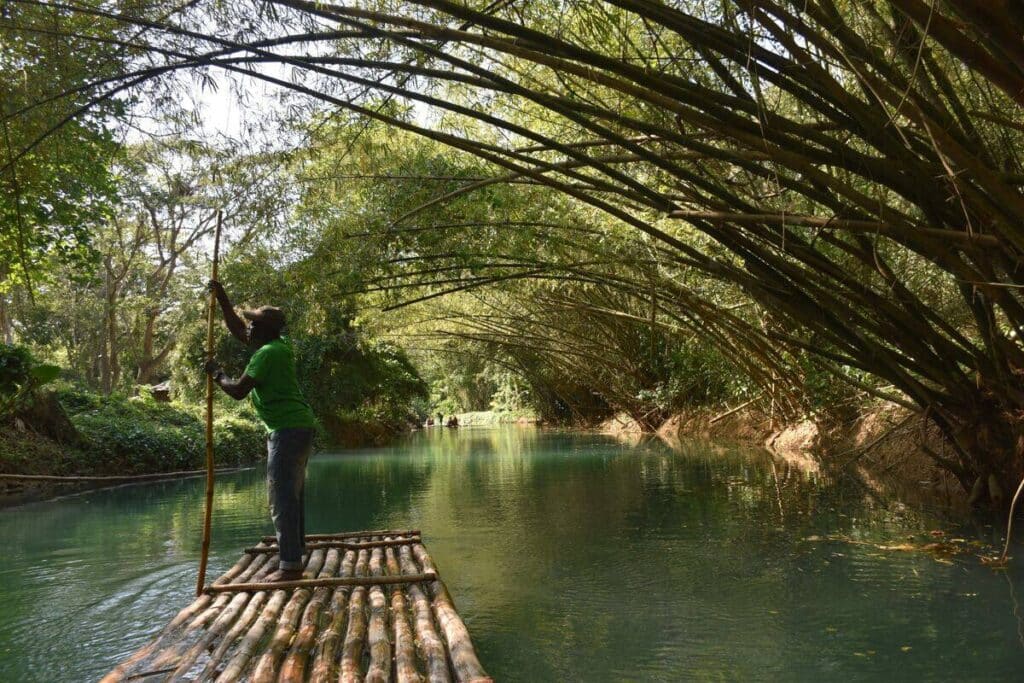
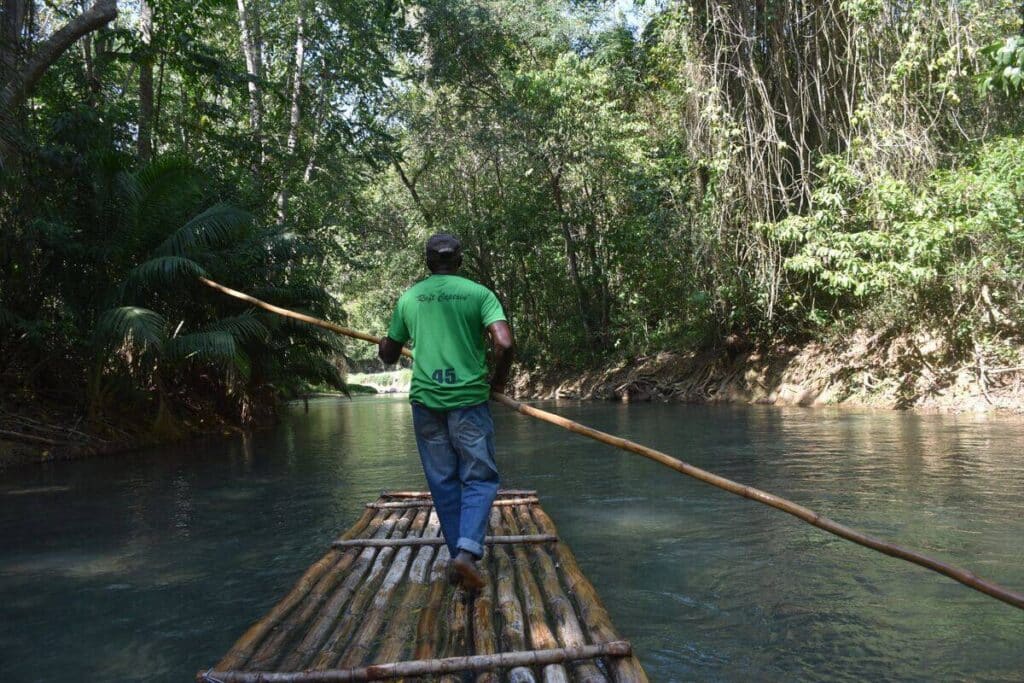
A flat-bottomed raft of bamboo, maybe twelve feet long. A captain at the front, reading the current with a bamboo pole, steering you through the green corridors of a Jamaican river at a pace that feels like the river has decided to take responsibility for the day. Jungle overhead. The sound of water and birds and nothing else. A cold Red Stripe appearing from somewhere mid-river. The particular quality of light that comes through the canopy onto moving water.
It started as commerce — farmers transporting bananas downriver to the coast. It became tourism, with a little help from a Hollywood swashbuckler who discovered Portland in the 1940s. And it has been one of Jamaica’s most iconic river experiences ever since — on rivers from Portland to Trelawny to Hanover, each one with its own character and its own rhythm.
Here’s the full picture across every river worth knowing about.
If you’re trying to decide which river to choose, start here.
How Bamboo Rafting Started — Bananas, Flynn, and the Rio Grande
Before rafting was tourism, it was logistics.
Banana farmers in the interior of Portland needed to get their harvest to the coast for export. The Rio Grande — one of Jamaica’s longest rivers, flowing from deep in the Blue Mountains to the sea at St. Margaret’s Bay — was the most practical route. Farmers built flat bamboo rafts, loaded them with banana bunches, and poled them downriver to the waiting boats. The raft captains who navigated the Rio Grande knew every curve and every current of the river. They had to.
The man who turned that utility into tourism was Errol Flynn — the Hollywood actor who arrived in Port Antonio in the 1940s, fell in love with Portland, and never quite left. Flynn began organising recreational raft trips on the Rio Grande for his celebrity friends and the international visitors who followed him to the parish. He is widely credited with transforming a working river transport system into Jamaica’s first formal tourist attraction.
Portland has never forgotten this. The Errol Flynn Marina in Port Antonio carries his name. The rafting tradition he helped build has now run for over seventy years, through generations of raft captains who learned the Rio Grande from their fathers and will pass it to their children.
At a Glance — Jamaica’s Rafting Rivers
| River | Parish | Length | Vibe | Best For |
| Rio Grande | Portland | ~10 km | Scenic, historic, classic | The full experience |
| Martha Brae | Trelawny | ~5 km | Accessible, calm, popular | First-timers, families |
| White River (Calypso) | St. Ann | ~45 min | Clear, canopied, limestone floor | Ocho Rios day trips |
| Great River (Lethe) | Hanover | ~45 min | Quiet, unhurried, local | Negril-based visitors |
| Blue Lagoon Rafting | Portland | Short route | Scenic, intimate | Lagoon explorers |
Is Bamboo Rafting Worth It in Jamaica?
Yes — without qualification. But the right answer to ‘which river?’ depends entirely on where you’re based and what kind of day you want.
- Best overall experience: Rio Grande, Portland — the original, the most scenic, the most storied
- Best near Montego Bay or Falmouth: Martha Brae, Trelawny — 25 minutes from MoBay, family-friendly, well-run
- Best near Ocho Rios: White River (Calypso Rafting) — shorter trip, legitimate operator, pairs well with the rest of the White River
- Best near Negril: Great River at Lethe, Hanover — the quiet one most people miss, significantly fewer tourists
- Most unique experience: Blue Lagoon rafting, Portland — not a river route, but bamboo on that electric-blue water is unlike anything else
- Most historic: Rio Grande — Errol Flynn, banana farmers, seventy years of raft captains who know the river by name
If you only do one: Rio Grande. If you’re based in MoBay and pressed for time: Martha Brae. Either way — go.
In short: choose the river closest to where you’re staying — the experience is more similar than it is different, but the scenery and atmosphere change from parish to parish.
| 🇯🇲 Know Jamaica like a local. If you already know which river you want and you’re just looking for someone to confirm it — you’re our kind of people. Join the Showcase Jamaica community and get Talk Like a Jamaican free: everyday slangs, proverbs straight from granny’s mouth, bush tea remedies, and a proper education in the badwords you’re going to hear on the raft whether you’re ready or not. |
How Much Does Bamboo Rafting Cost in Jamaica?
Prices vary by operator and season and are best confirmed directly before booking. These are approximate figures current at time of writing — use them for planning, not budgeting to the dollar.
| River / Operator | Price (Approx per raft) | Notes |
| Rio Grande, Portland | US$80–100 | Price covers 2 passengers + captain. Taxi up to start point extra. |
| Martha Brae, Trelawny | ~US$90 | Well-organised facility. Check current rate at Rafter’s Village. |
| White River — Calypso Rafting | ~US$60–70 | Only licensed operator on White River. Book through them directly. |
| Great River — Lethe, Hanover | ~US$70–80 | Confirm directly — operation is smaller and pricing less publicised. |
| Blue Lagoon, Portland | ~US$60 | Shorter route on the lagoon rather than a full river trip. |
A note on tipping: your raft captain is the experience. The conventional tip is US$5–10, more if your captain has been exceptional — which they often are. This is not optional in the way that a restaurant tip is optional. It is the difference between a captain who earns a living and one who does not.
One thing worth knowing: most operators charge per raft, not per person — and each raft carries two passengers and one captain. That means the cost is usually shared between two people, which makes it considerably more reasonable than the headline price suggests.
Rio Grande, Portland — The Original and the Best
The Rio Grande is the grandfather of Jamaican river rafting, and most people who have done all four rivers will quietly tell you it’s still the finest.
Before you book, there’s one thing worth knowing: the Rio Grande has two routes, and which one you take changes the experience significantly.
| Route | Start Point | Duration | Passes Belinda’s? |
| Long Route | Berrydale | 2–3 hours | Yes — the full experience |
| Short Route | St. Margaret’s Bay | 40–60 min | No |
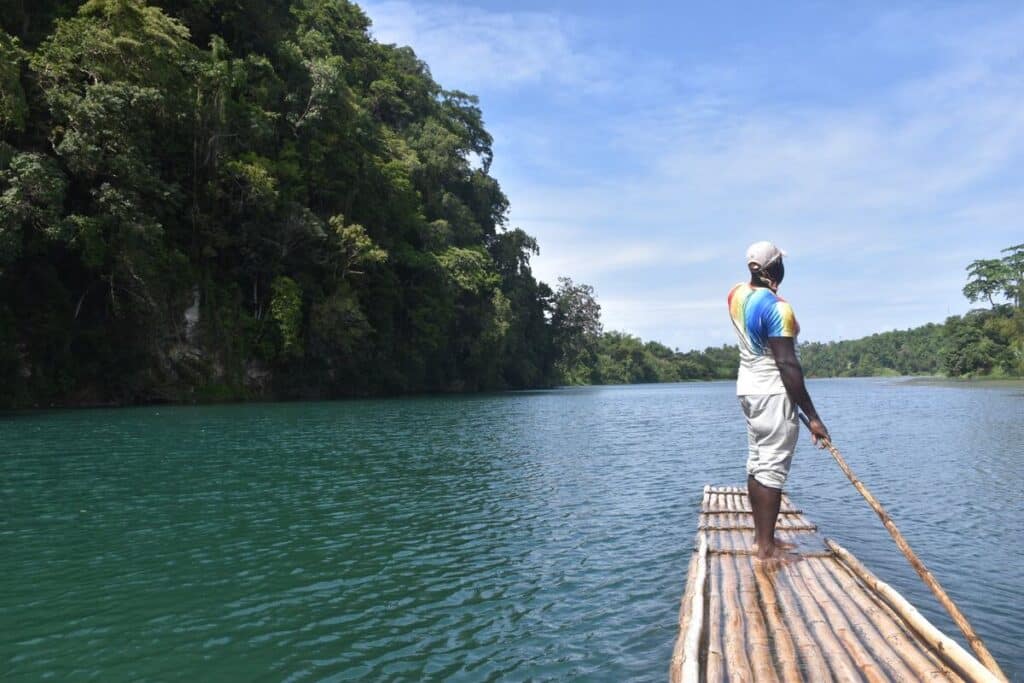
The long route — Berrydale down to Rafter’s Rest at St. Margaret’s Bay — is the original historic route and the one most people mean when they talk about rafting the Rio Grande. It runs approximately 10 kilometres through a river valley that is extraordinary: lush rainforest pressing in on both sides, banana plantations lining the banks, the Blue Mountains visible through gaps in the canopy, the water clear enough to see the riverbed in the shallows. Two to three hours, depending on your captain’s pace and how many stops you make along the way.
The short route starts near the mouth of the river and goes upstream and back — better suited to visitors with limited time, but it skips Belinda’s and the deeper valley scenery that makes the Rio Grande what it is.
Logistics for the long route: you park at Rafter’s Rest near the sea, take a taxi up to Berrydale (about 30–40 minutes through the communities of the Rio Grande valley — that drive is part of the experience), then raft back down to your car. Book the long route. That drive is part of the experience.
Belinda’s — The Restaurant Only Accessible by Raft
Halfway down the Rio Grande sits Miss Belinda’s Riverside Restaurant — and the only way to reach it is by bamboo raft. There is no road to Belinda’s. No trail. You arrive on the water and you leave on the water. The kitchen is open-air and wood-fired, the menu runs to curried goat, jerk chicken, escovitch fish, rice and peas, and whatever else Belinda has decided to cook that day. The river provides the soundtrack.
Beyoncé has eaten here. Daniel Craig has eaten here. Usain Bolt has eaten here. None of that changes the quality of the food, but it tells you something about what the Rio Grande offers that other rivers don’t — a genuine sense that you have arrived somewhere worth arriving at.
Call ahead — Belinda only fires up the dutch pots when she knows you’re coming
The full Portland picture beyond the river: Things To Do in Portland, Jamaica
Martha Brae, Trelawny — The Accessible One
The Martha Brae is the most visited rafting river in Jamaica — which tells you something about its position relative to the tourist corridors. The rafting operation is located in Trelawny, about 25 minutes from Montego Bay, which makes it the most logistically practical rafting experience for visitors based on the north coast.
The route is shorter than the Rio Grande — around 5 kilometres — and the river is calmer and wider, moving through a landscape of bamboo and tropical vegetation with a gentler pace than Portland’s mountain rivers. A two-person raft, a captain, a cold drink, the sound of the river. It is exactly what bamboo rafting should feel like, delivered in a format that works for families, for cruise passengers with limited time, and for first-timers who want to understand what all the conversation is about before committing to a longer experience.
The Martha Brae operation is well-organised with a proper visitor facility, parking, and trained captains. It does not have the wilderness quality of the Rio Grande — you are more aware here of other rafts and other visitors — but the river itself is beautiful and the experience is genuine.
Martha Brae pairs well with: Falmouth’s Georgian town architecture, the Luminous Lagoon at Glistening Waters, and the Cockpit Country interior of Trelawny for visitors who want a proper look at the parish.
White River, St. Ann — Where the River Meets the Limestone
The White River gets its name from its floor. The limestone bedrock beneath filters the water as it flows, keeping it translucent and cool even in the height of summer — an aquamarine clarity that you notice the moment the raft pushes off and you look down at the riverbed moving beneath you.
The river runs 27 kilometres from the hills of St. Ann down to the Caribbean Sea, forming the boundary between St. Ann and St. Mary as it goes. Along the way it feeds some of the best natural attractions in that part of the island — the Blue Hole, Calby’s Hidden Beauty, Reggae Hill — before reaching Ocho Rios and the coast. The rafting section sits in the upper stretch, shaded by a dense canopy of bamboo, almond, and coconut trees, the banks thick with the kind of vegetation that makes you forget the cruise ship pier is twenty minutes away.
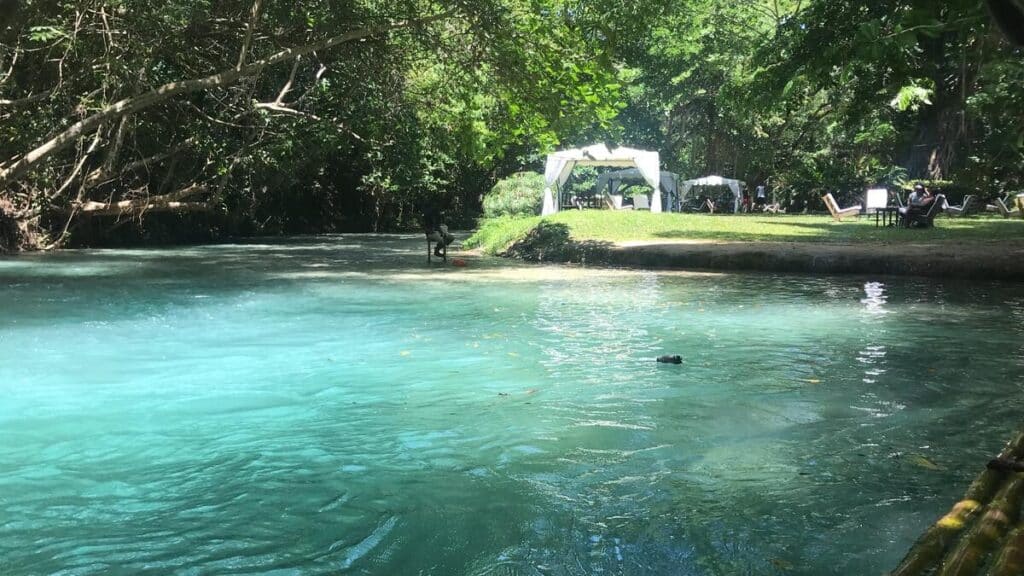
Rafting on the White River is a 45-minute experience — shorter than the Rio Grande, more contained than Martha Brae — which makes it the natural fit for visitors based in Ocho Rios who want the bamboo raft without committing to a half-day. The licensed operator is Calypso Rafting, on Exchange Road about ten minutes uphill from the main junction. Operating since 2005, they offer both rafting and tubing, with a mid-river stop for swimming, a rope swing, and drinks. The captains know this river the way good captains always do — by feel, by current, by the particular light that comes through the canopy at different hours of the day.
The limestone foot massage tradition is particularly associated with this river. A riverside attendant works crushed limestone paste into the feet and lower legs — a natural exfoliant that the mineral content of the White River makes especially effective. Done properly, it leaves the skin noticeably smooth. More on this tradition in the limestone section below.
For the swimming holes, bamboo groves, and hidden spots along this river beyond the rafting experience, see: 7 Unmissable Experiences Along White River
| Editor’s Note: The White River has seen ongoing tension between licensed and unlicensed rafting operators since at least 2023, when authorities intervened to shut down informal operations that had drawn visitor safety complaints. The situation has remained unsettled since. Some informal operators continue to work the river, and some taxi drivers and tour guides will direct visitors to them rather than to the licensed option. For your safety and peace of mind, book your White River rafting through Calypso Rafting — the only operator on this river that is fully licensed and certified by the Jamaica Tourist Board. Start at the top of Exchange Road, not at the bottom near the bridge. |
Great River, Hanover (Lethe) — The Quiet One Most People Miss
The Great River in Hanover is the most underrated rafting experience in Jamaica — and arguably the most peaceful. The rafting operation is based at Lethe — a small community and estate in the Hanover interior that gives this stretch of river its local identity. If you search ‘Lethe rafting Jamaica’ or ‘Lethe estate Hanover’, this is what you’re looking for.
It runs close to Negril and Montego Bay, accessible for visitors on the west coast without the two-hour drive to Portland. But it sits far enough off the main tourist circuit that it rarely appears on the standard excursion lists. The result is a rafting experience with significantly fewer other visitors, a slower pace, and the kind of quiet that lets you actually hear the river.
The Great River passes through lush Hanover countryside — one of Jamaica’s lesser-known parishes and one of its most beautiful. The raft captains here tend to be unhurried and genuinely informative, with the ease that comes from working a river that hasn’t been over-commercialised.
For visitors spending time in Negril or Montego Bay who want a river experience without the tour bus dynamic: Lethe on the Great River is the answer. For more of Hanover: Things To Do in Hanover, Jamaica
Blue Lagoon, Portland — Rafting on the Lagoon
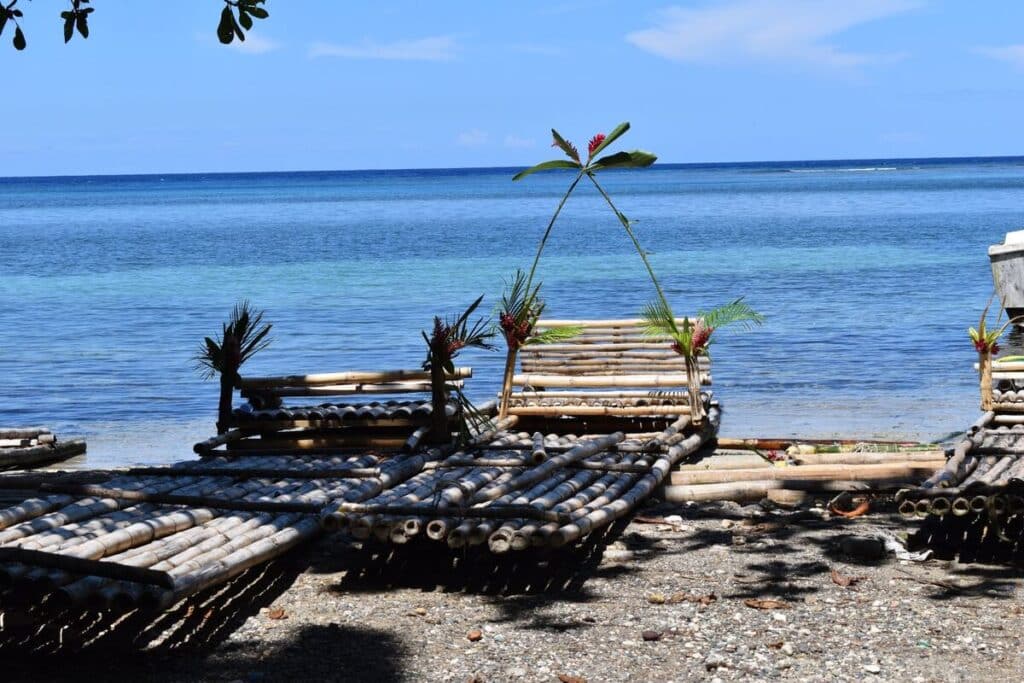
A quick mention for a different kind of rafting experience. The Blue Lagoon in Portland — the legendary coastal lagoon near Port Antonio where freshwater springs meet the Caribbean Sea — offers bamboo raft tours directly on the lagoon itself.
This is not a river route in the traditional sense. It is a shorter, more contained experience: a bamboo raft on that extraordinary electric-blue water, guided through the lagoon past the luxury villas on the shore and out toward Monkey Island. The particular combination of the raft’s leisurely pace and that particular shade of blue water is genuinely unlike anything else in Jamaica.
For the full Blue Lagoon picture before you plan your visit: Blue Lagoon Jamaica — Portland’s Most Mesmerising Natural Wonder
The Limestone Foot Massage — What It Actually Is
One of the traditions associated with bamboo rafting — particularly on the White River and at Lethe on the Great River — is the limestone foot massage. The captain or an attendant on the riverbank crushes soft limestone rock into a paste and works it into the feet and lower legs as a natural exfoliant. The limestone minerals leave the skin genuinely smooth. It is a legitimate and longstanding tradition — visitors who have experienced it through a proper licensed operator consistently speak well of it.
It is also honest to acknowledge that some visitors arrive specifically asking for an extended version of this experience that goes well beyond a foot massage. That demand exists, and at informal and unlicensed operations at spots like White River and Lethe, some operators have been willing to accommodate it. The content that occasionally surfaces on social media reflects this reality. That is not what bamboo rafting is, it is not what the tradition is, and it is not what licensed operators offer. Booking through a certified operator is straightforward protection against having a river day become something else entirely.
| 💛 Still deh yah? Good. You’ve just read more honest Jamaica travel information than most visitors ever find. That’s what Showcase Jamaica is for. Join the community and we’ll send you Talk Like a Jamaican — free. Slangs, proverbs, bush remedies, and the words that will make your raft captain laugh and respect you at the same time. |
Bamboo Rafting vs River Tubing — Different Things Worth Doing
They share a river. They share a scenery. But they are different experiences serving different moods.
Bamboo rafting is slow, contemplative, and guided. You sit on the raft — sometimes with a seat, sometimes on the bamboo itself — while the captain poles you along, narrating and navigating. The pace is the river’s pace. It rewards the visitor who wants to be carried through Jamaica rather than through it.
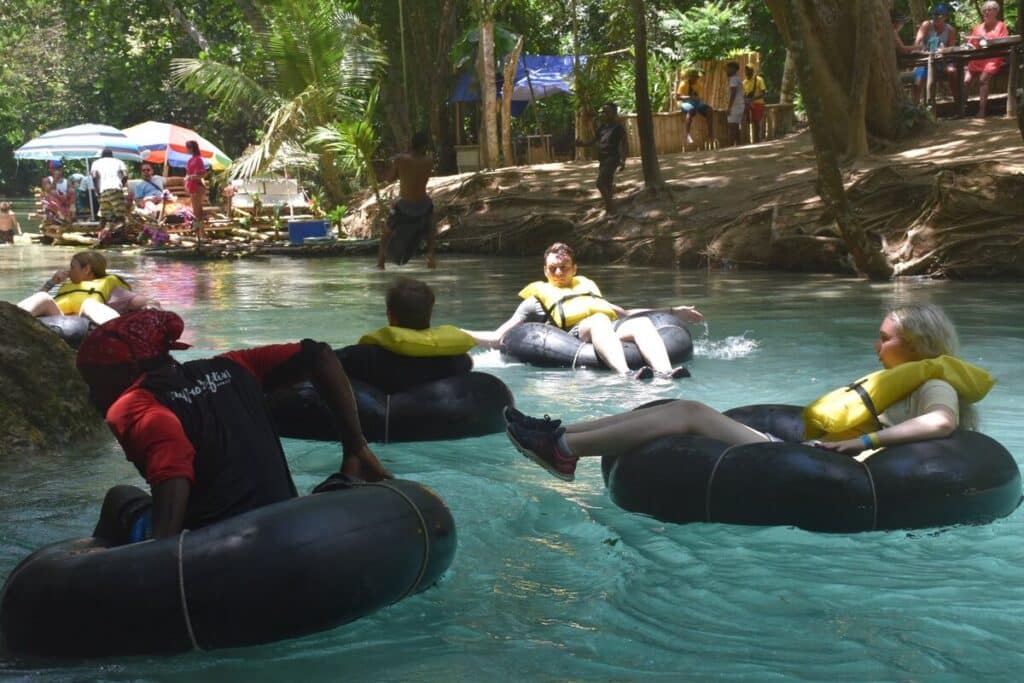
River tubing is more active, more physical, and more social. You float inside an inflated tube on the current, paddling through sections, navigating small rapids, getting significantly wetter. It is particularly popular on the White River and the great fun of it is the unpredictability — you are not entirely in control and that is the point.
Both are worth doing on a Jamaica visit. Rafting for the serenity and the history and the riverside lunch at Belinda’s. Tubing for the adrenaline and the laughter and the moment someone’s tube spins the wrong way in a rapid. They are not competing — they are complementary.
When Is the Best Time to Go Bamboo Rafting in Jamaica?
The short answer: any time of year. The longer answer is worth knowing before you book.
Jamaica’s dry season runs roughly December through April — the period most visitors come, when the rivers run clear and the weather is most predictable. Rafting in dry season means calmer water, better visibility to the riverbed, and a more leisurely pace. The Rio Grande in particular benefits from lower, steadier water levels — the captain has more control, the shallows are more pronounced, and the whole thing feels exactly the way bamboo rafting is supposed to feel.
The rainy season (May through November) changes the character of the rivers noticeably. The water runs faster and sometimes murkier after heavy rain, the banks are deeper green, and the scenery is genuinely more dramatic. Experienced captains handle the conditions well, but the Rio Grande can be affected by flooding after significant rainfall — worth checking before you make the drive to Portland.
Morning is better than afternoon on almost every river. The light through the canopy is softer, the temperature cooler, and you’ll beat the cruise ship groups that tend to arrive mid-morning and descend on Martha Brae and White River in numbers. If your hotel is near Falmouth or Ocho Rios and a cruise ship is in port that day, go early or go to a different river.
| When | What to Expect |
| Dec–Apr (Dry) | Clear water, calmer rivers, predictable conditions. Peak season — book ahead. |
| May–Nov (Rainy) | Faster water, lusher scenery, more dramatic atmosphere. Check Rio Grande conditions after heavy rain. |
| Morning | Best light, cooler temps, fewer visitors. Recommended across all rivers. |
| Cruise ship days | Martha Brae and White River get busy. Go early, or consider Rio Grande or Lethe instead. |
What to Know Before You Go
What to Bring
- Swimwear — you may not get wet on the raft itself but most trips involve at least one swim stop
- A change of dry clothes for the journey back
- Cash — USD or JMD for the rafting fee, tips for your captain, food and drinks at riverside stops
- Waterproof phone case or camera — the river views will want to be photographed
- Sunscreen and a hat — you are on open water for two to three hours
- Insect repellent — especially for the riverside stops on longer routes
What to Expect From Your Captain
A good raft captain is one of the best things about bamboo rafting in Jamaica. They know the river — every current, every safe swimming spot, every story attached to every bend. The best ones read their passengers quickly: those who want conversation get conversation; those who want quiet get the sound of the river. They build the raft themselves (particularly on the Rio Grande), maintain it, and can articulate the history of the tradition without being asked. Tip well. They have earned it.
Book Official, Always
Every river that offers rafting in Jamaica has an official licensed operator. Book through that operator. The taxi drivers who approach you outside the hotel offering cheaper alternatives, the informal operators waiting at the bottom of some rivers — they may be perfectly fine, but they may not be trained, may not carry proper insurance, and if something goes wrong on the water, you have no recourse. The official operators are accountable. The unofficial ones are not.
More of Jamaica’s Rivers and Water Experiences
The rivers of Jamaica are some of its most extraordinary natural assets. Here’s more, covered properly on Showcase Jamaica:
- The White River in depth: 7 Unmissable Experiences Along White River — tubing, swimming holes, Reggae Hill, and more
- All of Jamaica’s best rivers: 8 Best Rivers in Jamaica
- Portland in full: Things To Do in Portland, Jamaica
- The beaches nearby: Best Beaches in Jamaica — Boston Bay, Winnifred, Frenchman’s Cove all within reach of the Rio Grande
- Hanover: Things To Do in Hanover, Jamaica
Before You Walk Good
Bamboo rafting in Jamaica is one of those experiences that never quite fits into the conversation properly until someone has actually done it. Then they understand why people keep coming back.
The Rio Grande on a quiet morning when the mist is still in the valley. The sound of Belinda’s fire before you see the smoke. The captain’s rafting pole finding the bottom in a shallow stretch and pushing you forward into the green. This is Jamaica at a different speed — not the Jamaica of the highway or the beach bar or the resort timetable. The river Jamaica. The one that was here before the tourists, and the one that will be here long after.
Whatever river you choose for bamboo rafting, the water knows where it’s going. Trust the captain. Tip well. Let the current do the work.
Which river have you been on? Or if you haven’t been yet — which one is calling you? Drop it in the comments.
FAQ — Bamboo Rafting in Jamaica
Q: Where can you go bamboo rafting in Jamaica?
A: Jamaica has five main rafting options: the Rio Grande in Portland (the original), Martha Brae in Trelawny, White River in St. Ann (Calypso Rafting — the only licensed operator), Great River at Lethe in Hanover, and the Blue Lagoon in Portland for a lagoon rather than river experience.
Q: How much does bamboo rafting cost in Jamaica?
A: Prices vary by river and operator. As a guide: Rio Grande runs approximately US$80–100 per raft, Martha Brae around US$90, White River (Calypso) US$60–70, Lethe/Great River US$70–80, and Blue Lagoon around US$60. Always confirm directly with the operator before booking as prices change.
Q: How long is bamboo rafting in Jamaica?
A: It depends on the river. The Rio Grande is the longest at approximately 10 kilometres, taking 2–3 hours. Martha Brae covers around 5 kilometres in 60–90 minutes. White River (Calypso) and Great River (Lethe) runs are approximately 45 minutes each. Blue Lagoon is the shortest route.
Q: Which river is best for bamboo rafting in Jamaica?
A: For the full classic experience: Rio Grande, Portland. For visitors near Montego Bay: Martha Brae, Trelawny. Near Ocho Rios: White River at Calypso Rafting. Near Negril: Great River at Lethe, Hanover. For something completely different: Blue Lagoon, Portland.
Q: Is bamboo rafting safe in Jamaica?
A: Yes, when booked through licensed operators. All major rivers have official certified operators approved by the Jamaica Tourist Board. Avoid unlicensed informal operators — stick to the official option on each river.
Q: Do you need to book bamboo rafting in advance in Jamaica?
A: Advance booking is recommended, especially in peak season (December–April) and for the Rio Grande. Walk-ups are possible at some rivers, but the experience runs on a schedule and rafts fill up, particularly when cruise ships are in port near Falmouth for Martha Brae.
Walk Good. 🇯🇲
Every Nook. Every Cranny. All Jamaican.
| Every Nook. Every Cranny. Every Word. Showcase Jamaica goes deeper than the brochure — the rivers, the food, the language, the stories that never make the resort newsletter. Join the community and get Talk Like a Jamaican free: slangs, proverbs, bush tea, and the badwords. The full picture. |