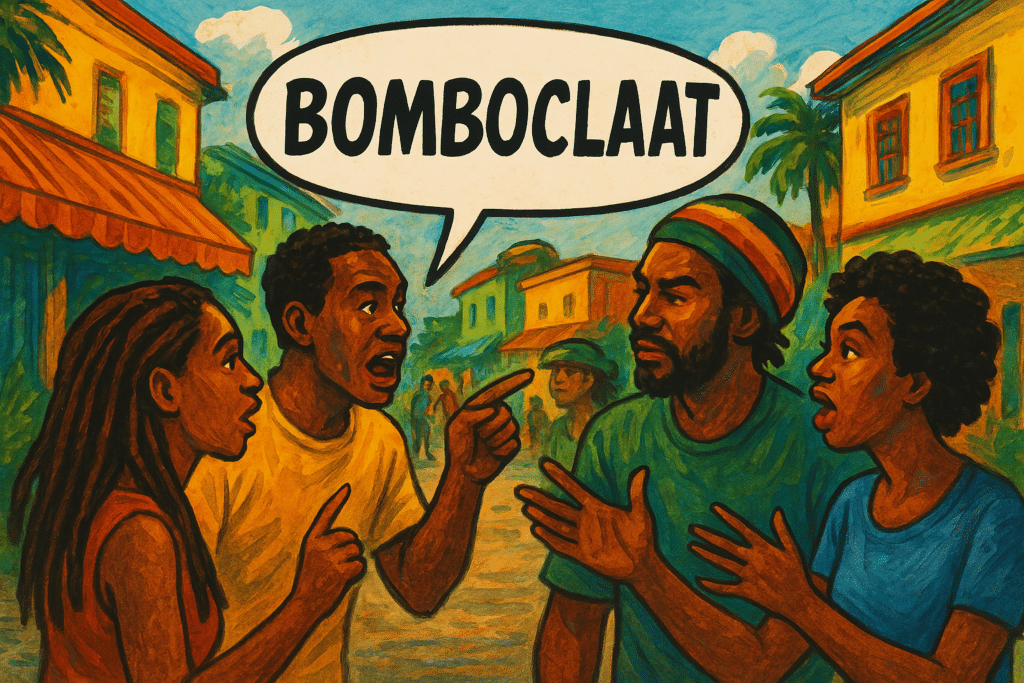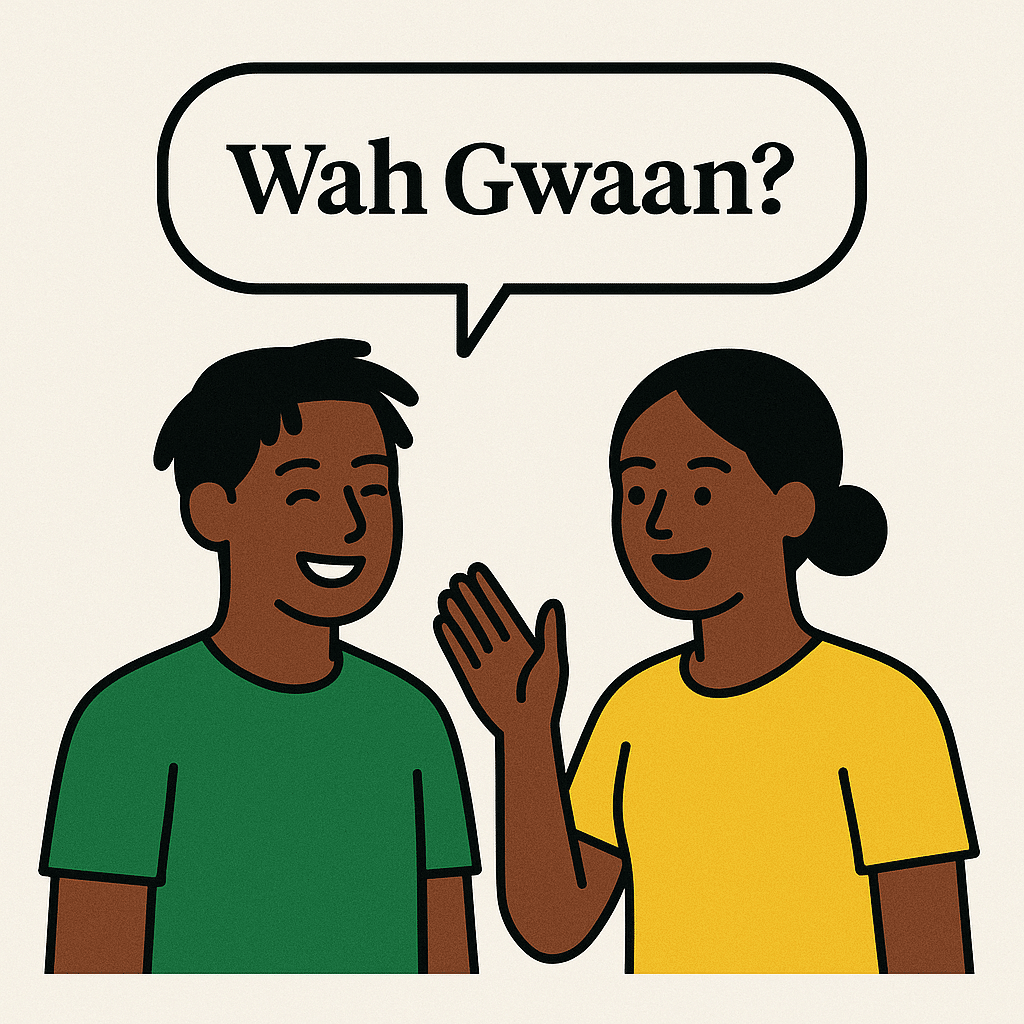
Jamaican expressions and meanings aren’t always what they appear to be. Someone says something in Patois — words you half-recognise strung together in a rhythm you don’t quite follow — and everyone else in the room responds like it’s perfectly obvious. You smile. You nod. You move on
This article is for that moment.
The Jamaican expressions and meanings you hear everywhere — in conversations, on the street, across the fence — but never quite understand. Not textbook Patois. Not tourist phrases. Just the real, everyday language Jamaicans use without thinking — and how to respond when it’s said to you.
Each entry below gives you what was said, what it actually means, and — crucially — how to respond. Because understanding a language isn’t just about decoding it. It’s about being able to hold your end of the conversation.
Jamaican Expressions and Meanings: The Greetings
In Jamaica, a greeting is an acknowledgment. It tells the other person you see them. Getting this right — or even attempting it — changes how an interaction goes from the first word.
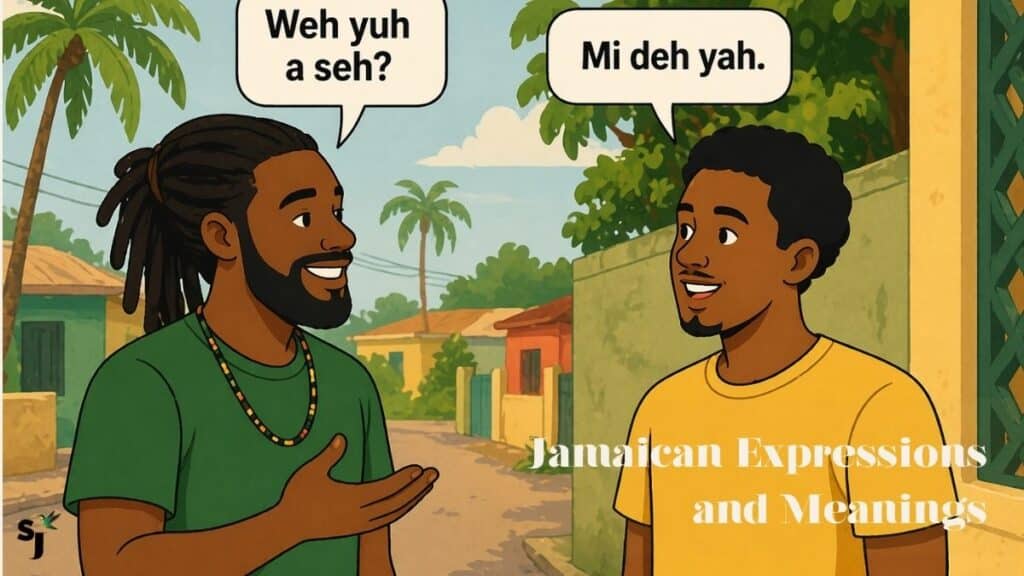
Weh yuh a seh?
What it means: How are you / what’s going on. Not a literal question about what you’re saying — a genuine check-in.
Respond with: Mi deh yah — or — Nuttin much
What that means: “Mi deh yah” means I’m here, I’m present, life is going on. “Nuttin much” means not much happening, all quiet. Both are honest, relaxed answers that land exactly right.
Either response signals you’re comfortable, not performing. That matters more than getting the pronunciation perfect.
Wha’ppen?
What it means: What’s happening? Slightly more casual than weh yuh a seh — used between people who already know each other.
Respond with: Everything criss — or — Mi good
What that means: “Everything criss” means all is well, clean, sorted. “Mi good” is the simple version — I’m fine. Both close the greeting loop naturally.
Criss is one of those words worth knowing. It means sharp, clean, in order. Using it in a response signals you actually know the language.
Yuh alright?
What it means: Are you okay / how are you. The most English-adjacent Jamaican greeting — easy entry point for visitors.
Respond with: Yeah man, mi good — or — Irie
What that means: “Yeah man” is relaxed affirmation, not just agreement. “Irie” means at peace, all good, blessed. Either tells the person you’re fine and the interaction can continue.
This is the greeting most visitors feel comfortable starting with. It’s received warmly because the effort is visible.
Responses That Carry More Than They Show
Some of the most revealing Jamaican expressions and meanings aren’t opening lines — they’re what comes back. One word doing the work of a full sentence. These are the Jamaican expressions and meanings that carry more than they seem at first.
Mi deh yah
What it means: I’m here / I’m managing / life is going on. The standard response to most greetings. Not triumphant, not despairing — honest.
Respond with: Dat good, still — or — Keep strong
What that means: “Dat good, still” means that’s good, even so — a quiet affirmation. “Keep strong” means stay resilient, I see you carrying this. Use keep strong especially when mi deh yah carries a little weight behind it.
The “still” at the end of dat good, still is doing something important. It means: even so, even under the circumstances. It acknowledges reality without dramatising it.
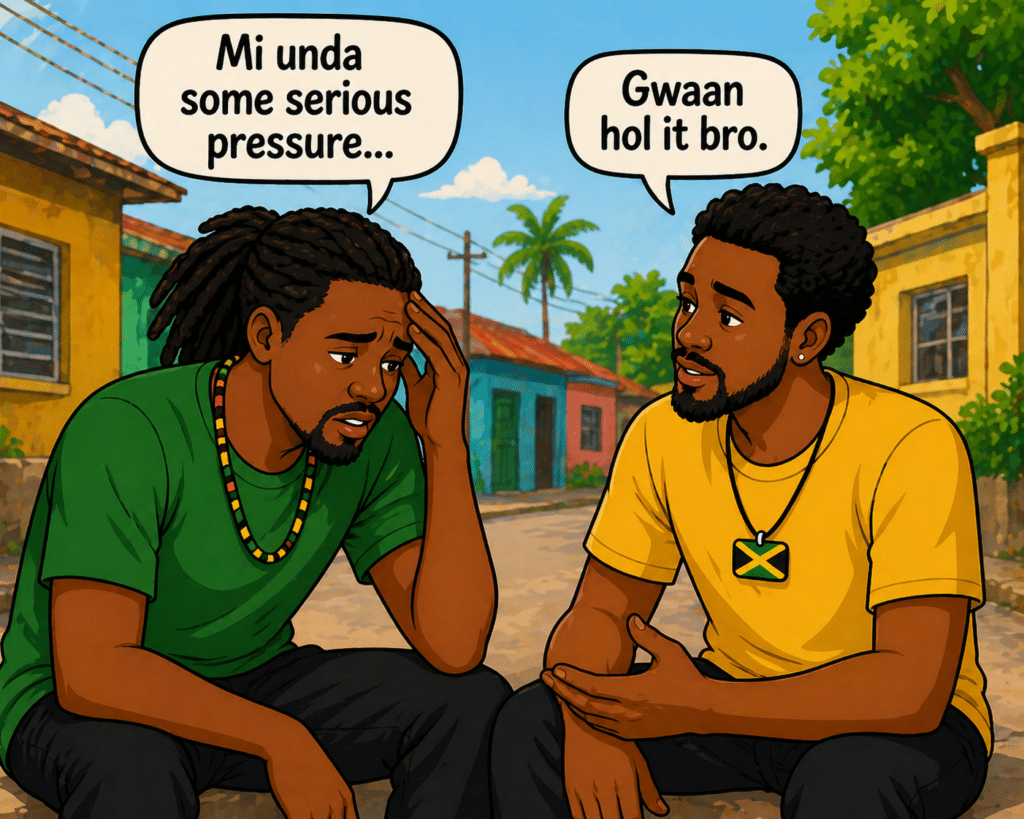
Pressure
What it means: Things are tough / I’m under stress / the weight is on me right now. Said in response to a greeting, not as a complaint — as an honest answer.
Respond with: Keep strong — or — Better mus come
What that means: “Keep strong” means hold on, stay resilient. “Better mus come” means better times are coming — not a promise exactly, but a conviction. It’s one of the most Jamaican things you can say to someone carrying weight.
Don’t rush past pressure with “oh sorry to hear that.” That lands flat. Keep strong or better mus come acknowledges the weight without making it bigger than it needs to be.
Zeen
What it means: I understand / I hear you / I’m with you on that. Rastafarian in origin, now used broadly across Jamaican speech as a word of alignment.
Respond with: Zeen
What that means: Responding with zeen confirms mutual understanding. You’re not just agreeing — you’re signalling that you received what was said on a deeper level.
One word. Delivered with a nod. It says everything it needs to say.
Words That Look Familiar but Aren’t
Some Jamaican expressions and meanings are words borrowed directly from English but carry entirely different meanings. These are the ones that catch visitors most off guard because they think they already know them.
Dutty
What it means: Dirty at its root — but used far more broadly as a moral judgement, an intensifier, or a descriptor of character. “Dutty road” is literal. “Dutty bwoy” is not about hygiene.
Respond with: Context tells you when to respond. If it’s directed at someone else, a nod or “true” (meaning agreed) is enough.
What that means: “True” as a response means I agree, you’re right, that assessment is accurate.
Don’t use dutty casually if you’re not sure of the context. Said in the wrong direction it escalates fast.
Renk
What it means: Out of order / unacceptable / offensive in behaviour. Nothing to do with smell — this is a moral judgement about how someone conducted themselves.
Respond with: Renk fi true — or — A pure foolishness dat
What that means: “Renk fi true” means undeniably out of order, no argument. “A pure foolishness dat” is a broader dismissal — that whole situation is nonsense. Both land naturally without overstating it.
You’ll hear “renk” more as a reaction than anything else — when something crosses the line, the response comes quick.
Facety
What it means: Rude, presumptuous, out of place — acting above one’s standing or showing disrespect where it isn’t warranted. Particularly used by older Jamaicans correcting younger ones.
Respond with: Mi neva mean it suh — or — Alright nuh
What that means: “Mi neva mean it suh” means I didn’t intend it that way — a genuine, yard-natural walk-back. “Alright nuh” is softer — a calm acknowledgment that de-escalates without making it bigger than it needs to be.
If you’re on the receiving end of facety, the right move is a calm acknowledgment. Don’t argue the point.
Broughtupsy
What it means: Your upbringing made visible in your behaviour. Manners, dignity, how you carry yourself in company. Saying someone has no broughtupsy is a serious charge against both the person and whoever raised them.
Respond with: You’re unlikely to need to respond — this word usually appears as commentary, not in conversation with you. But knowing it tells you when the room has made a judgement.
What that means: If someone around you says “no broughtupsy,” the verdict has been delivered. The kindest response is to adjust your behaviour quietly.
The Oxford English Dictionary added broughtupsy in 2025 — which tells you everything about how seriously Jamaicans take it.
The Dismissals — When the Conversation Is Over
Jamaican expressions and meanings offer a refined way of ending a conversation, declining an invitation, or removing yourself from a situation you want no part of. These aren’t insults — they’re exits.
Gweh
What it means: Go away / leave me alone / I’m done with this.
What it signals: The conversation is closed. Respect the exit. If said with a laugh, you can laugh back. If said flatly, move on.
Tone is everything with gweh. Said warmly it’s affectionate exasperation — “gweh, yuh too much.” Said without expression it’s a door closing.
Nuh business
What it means: I don’t care / it doesn’t concern me / leave me out of it entirely.
What it signals: Acknowledge and redirect. “Alright, alright” works. Pressing further after nuh business has been said is the wrong move.
This is a complete withdrawal from a situation. It’s not rudeness — it’s a boundary. Respect it as one.
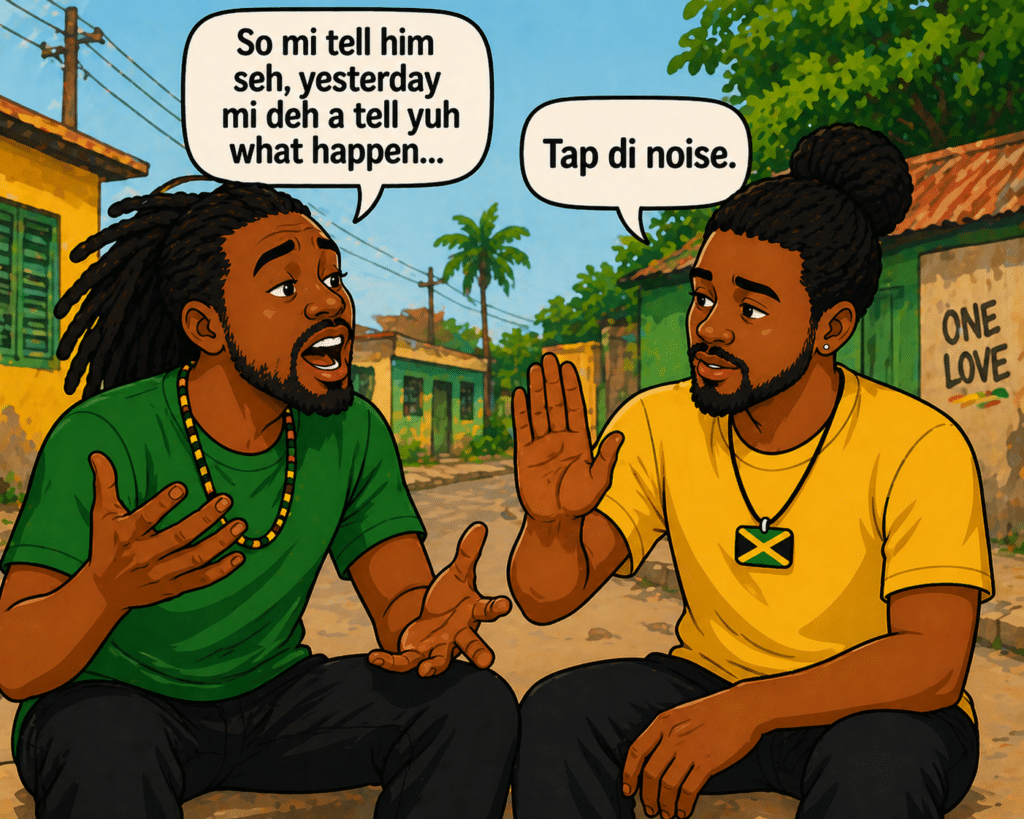
Tap di noise
What it means: Stop talking / enough now / what you’re saying is irrelevant to me.
What it signals: Stop. Briefly. Then if the conversation matters, re-approach calmly. If it doesn’t, let it go entirely.
In Jamaican usage, what someone is saying can be reduced to ‘noise’ when it’s considered excessive or unwelcome. Between friends it’s almost playful. From an elder, it’s final.
Expressions That Mean More Than They Say
These are the phrases that carry a whole outlook inside them. Not just communication — a worldview compressed into a few words.
Big up yuhself
What it means: Respect yourself / I honour you / hold your head high. Both an affirmation and an acknowledgment — directed inward and outward at the same time.
Respond with: Big up — or — Nuff respect
What that means: “Big up” returns the acknowledgment simply and cleanly. “Nuff respect” — much respect — elevates it. Either lands right.
Big up yuhself directed at you is a genuine compliment. Receive it with big up or nuff respect and the exchange is complete.
Keep strong
What it means: Stay resilient / hold on / I see you carrying this and I’m asking you to keep going. Said to someone under pressure without overstepping.
Respond with: Tank yuh — or — Wi ago be alright
What that means: “Tank yuh” is simply thank you — genuine and clean. “Wi ago be alright” means we’re going to be okay — a quiet affirmation of resilience returned.
Keep strong doesn’t promise things will be fine. It says: I see you carrying this. Wi ago be alright responds in the same spirit — not a guarantee, just solidarity.
Cho
What it means: A quick expression of frustration, disbelief, or mild annoyance. It doesn’t carry a full meaning on its own — it sets the tone for whatever comes next.
Respond with: Depends on what follows. Often no response is needed — just read the situation.
What that means: “Cho” isn’t the message — it’s the signal. It tells you how the speaker feels before they even say the rest.
Practical note: You’ll hear it at the start of reactions: “Cho, dat no mek sense” ” or “Cho, yuh cyaa serious?”
Small word, but it shapes the entire sentence.
Likkle more
What it means: See you later / until next time / the connection continues. A goodbye that implies the conversation isn’t really ending — just pausing.
Respond with: Likkle more — or — Walk good
What that means: “Likkle more” returned means the same thing — acknowledged, see you when I see you. “Walk good” is a blessing — go safely, take care of yourself. It’s the warmer close.
Walk good is one of the most generous phrases in Jamaican expressions and meanings. When you say it and mean it, people feel it. Don’t rush past it.
Now You Know What’s Being Said
Once you understand these Jamaican expressions and meanings, conversations start to feel natural instead of confusing. Patois isn’t just a collection of words — it’s a whole way of moving through the world. Every greeting is an acknowledgment. Every dismissal is a boundary. Every expression of solidarity carries more weight than its literal meaning suggests. It’s a window into how Jamaicans actually communicate — the warmth, the economy of words, the unspoken rules that hold conversations together.
You won’t get it all right immediately. You’ll mispronounce something. You’ll use a phrase slightly out of context. That’s fine — Jamaicans appreciate the effort every time, and someone will always set you straight with a laugh rather than a lecture. The point is to try. To listen. To respond. To be present in the exchange rather than just passing through it.
The next time someone says weh yuh a seh — you know what to do.
Go Deeper into the Language
If this gave you a feel for how Jamaicans actually speak, there’s more to explore.
Start with Wha Dem Seh: A Guide to Jamaican Slangs and Expressions for the words you’ll hear everywhere.
And if you’re curious about the more unfiltered side of the language, Badwords 101 is exactly what it sounds like.
Which Expression Are You Trying First?
We’re building a community of people who love Jamaica — from yaad and from abroad — and Jamaican expressions and meanings are exactly the kind of conversation we want to have. Drop a comment below. Tell us which expression caught you off guard, which one you’ve already been using wrong, or which one you’re going to try the next time you’re on the island. Visitors, diaspora, and Jamaicans alike — all are welcome in the comments.
Walk Good. 🇯🇲
Every Nook. Every Cranny. All Jamaican.
Get More of This in Your Inbox
Want more Jamaican expressions and meanings delivered straight to you? Letters to Yaad is the Showcase Jamaica newsletter — culture, language, food, and the stories behind them, every month. If this article gave you something, the newsletter gives you more of it. Sign up below and stay connected to the island, wherever you are.