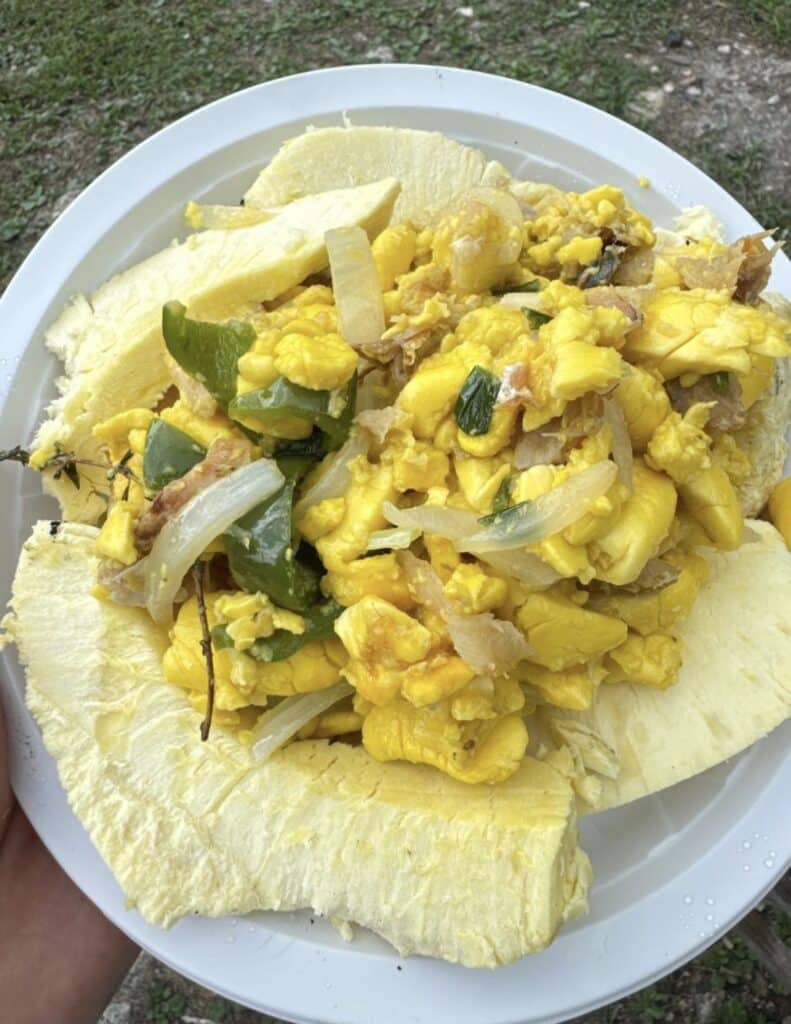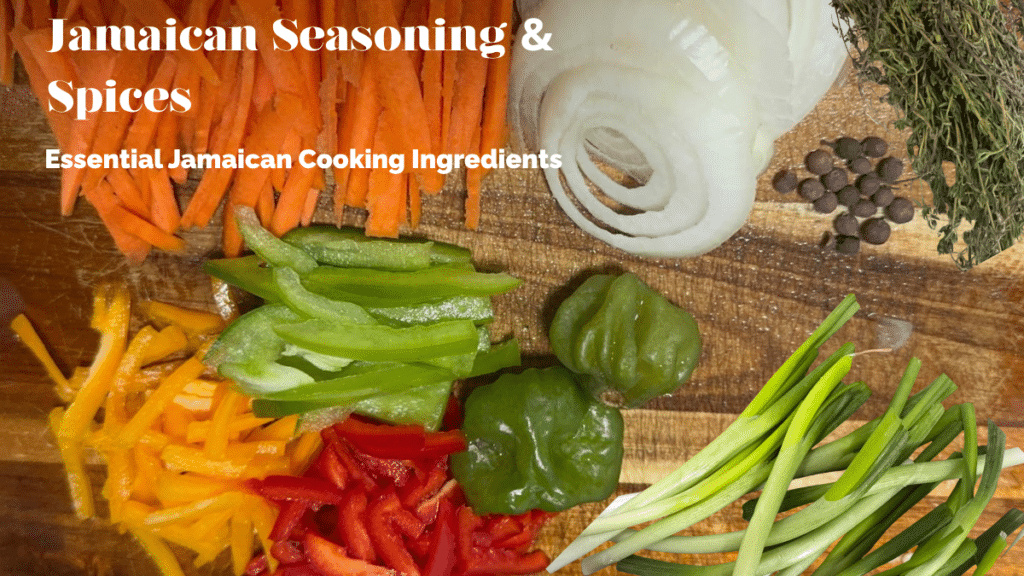
Before the dutch pot goes on the fire, these are what you reach for.
You can tell a Jamaican kitchen by its smell before you see what’s cooking. There’s a particular combination — thyme, scallion, scotch bonnet hitting hot oil — that is so specific to this place that it stops you in your tracks. Wherever in the world you encounter it, something in you recognises it immediately.
That smell isn’t an accident. It’s a small, precise collection of ingredients Jamaican cooks have reached for generations. Not a long list. Not complicated. But non-negotiable. Learn them and you begin to understand not just how Dutch Pot cooking works, but why it tastes the way it does.
Quick Answer: Jamaican Cooking Ingredients
- Thyme
- Scallion (green onion)
- Garlic
- Scotch bonnet pepper
- Pimento (allspice)
- Browning
- All-purpose seasoning
- Jamaican curry powder
- Black pepper & salt
- White rum (for cooking, not just drinking)
What Are the Essential Jamaican Cooking Ingredients?
Ten Jamaican cooking ingredients make up the essential Jamaican pantry — the ones you’ll find in almost every kitchen from Kingston to the country, and the ones every diaspora cook keeps stocked no matter where they’ve landed. Here’s what each one does, and why none of them are optional.
Thyme — The Foundation
What it is
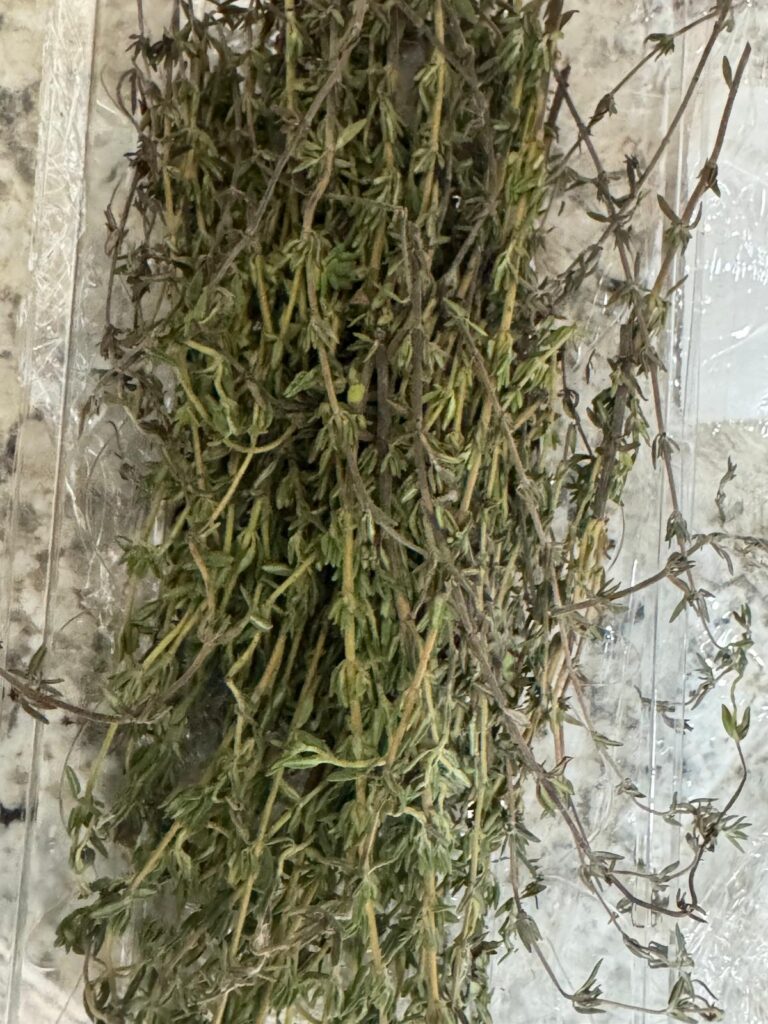
Jamaican thyme is the fresh herb — small, fragrant, woody-stemmed. Not dried thyme from a supermarket jar. The real thing, sold in bundles at every market across the island, grown in kitchen gardens from Kingston to the country.
What it does
Thyme is in almost everything. Rice and peas. Stew chicken. Callaloo. Soup. It goes in early and it goes in whole — stems and all — releasing a fragrance that is the baseline of Jamaican cooking. If there is one herb that defines the smell of the Jamaican kitchen, it is thyme.
What to know
Fresh is always better. Dried thyme is not the same thing — the fragrance is flatter, the flavour more medicinal. If you’re in the diaspora and can’t find fresh Jamaican thyme, look for fresh thyme at any Caribbean or general grocery store. It grows easily in a pot on a windowsill too. Worth knowing.
Scallion — The Backbone
What it is
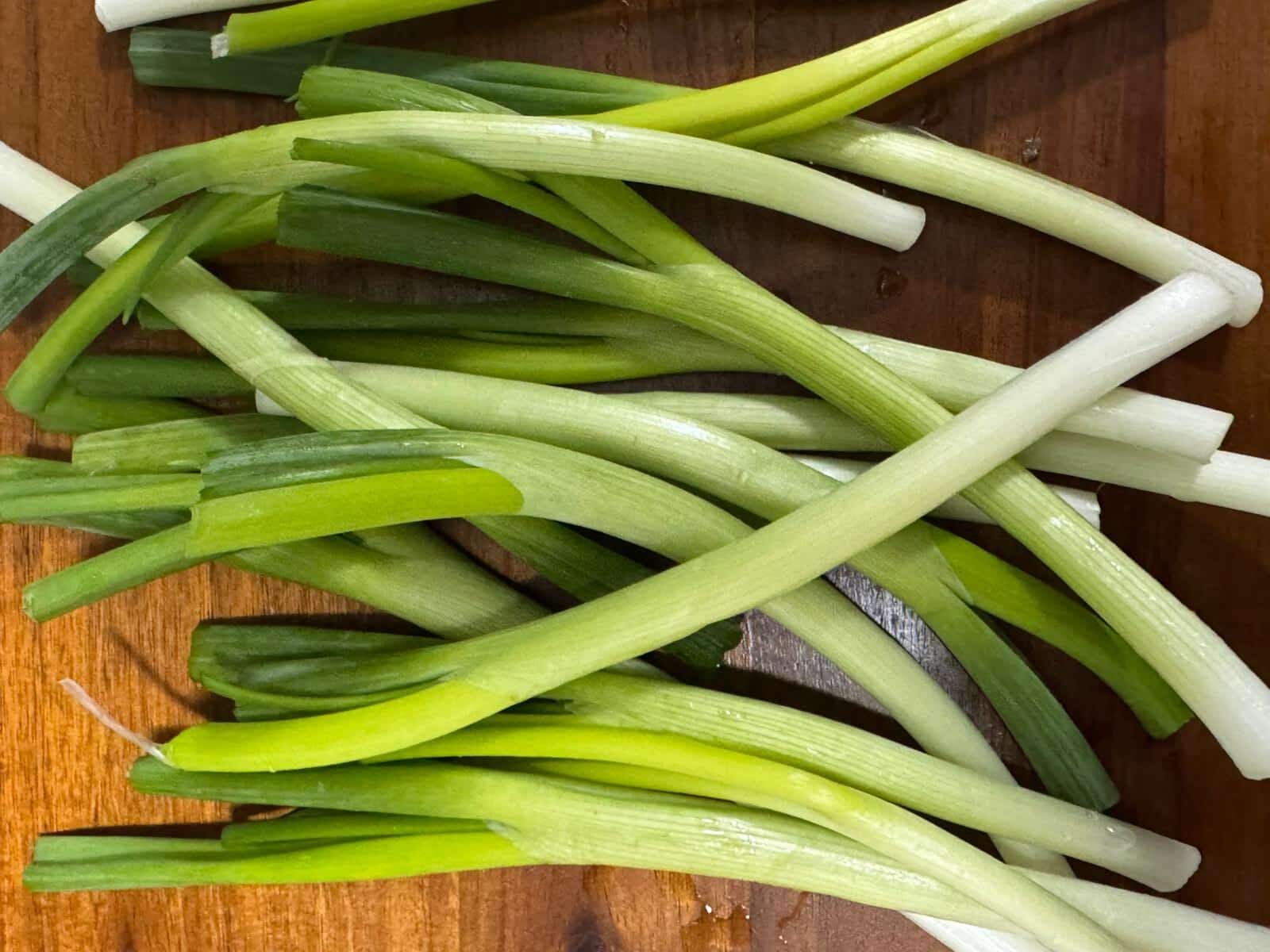
Scallion is what Jamaicans call spring onion or green onion — the long-stemmed allium with a white base and green top. In Jamaica it is one of the first things that goes into any seasoning base.
What it does
Scallion brings a mild, sweet onion flavour that builds the foundation of most Jamaican dishes alongside thyme and garlic. It goes into marinades, into the pot at the start of cooking, and into the seasoning base that makes everything else work. When you season Jamaican chicken overnight, scallion is in the bowl.
What to know
Widely available everywhere. No substitution issues. The only thing to know is that Jamaicans use it generously — a small pinch is not the Jamaican way. Use both the white and green parts.
Garlic — The Depth
What it is
Fresh garlic. Simple. Universal. But worth mentioning because Jamaican cooking uses it in ways and quantities that make the food distinctive.
What it does
Garlic goes into almost every savoury dish — into marinades for chicken and meat, into the seasoning base at the start of cooking, crushed or minced fine. It provides the deep, slightly sweet earthiness that sits underneath everything else. Without it the food is flatter.
What to know
Fresh always. Jarred pre-minced garlic is acceptable in a pinch but the flavour is noticeably different. Garlic powder has its place in dry rubs and jerk seasoning but doesn’t replace fresh garlic in the pot.
Scotch Bonnet — The Heat
What it is
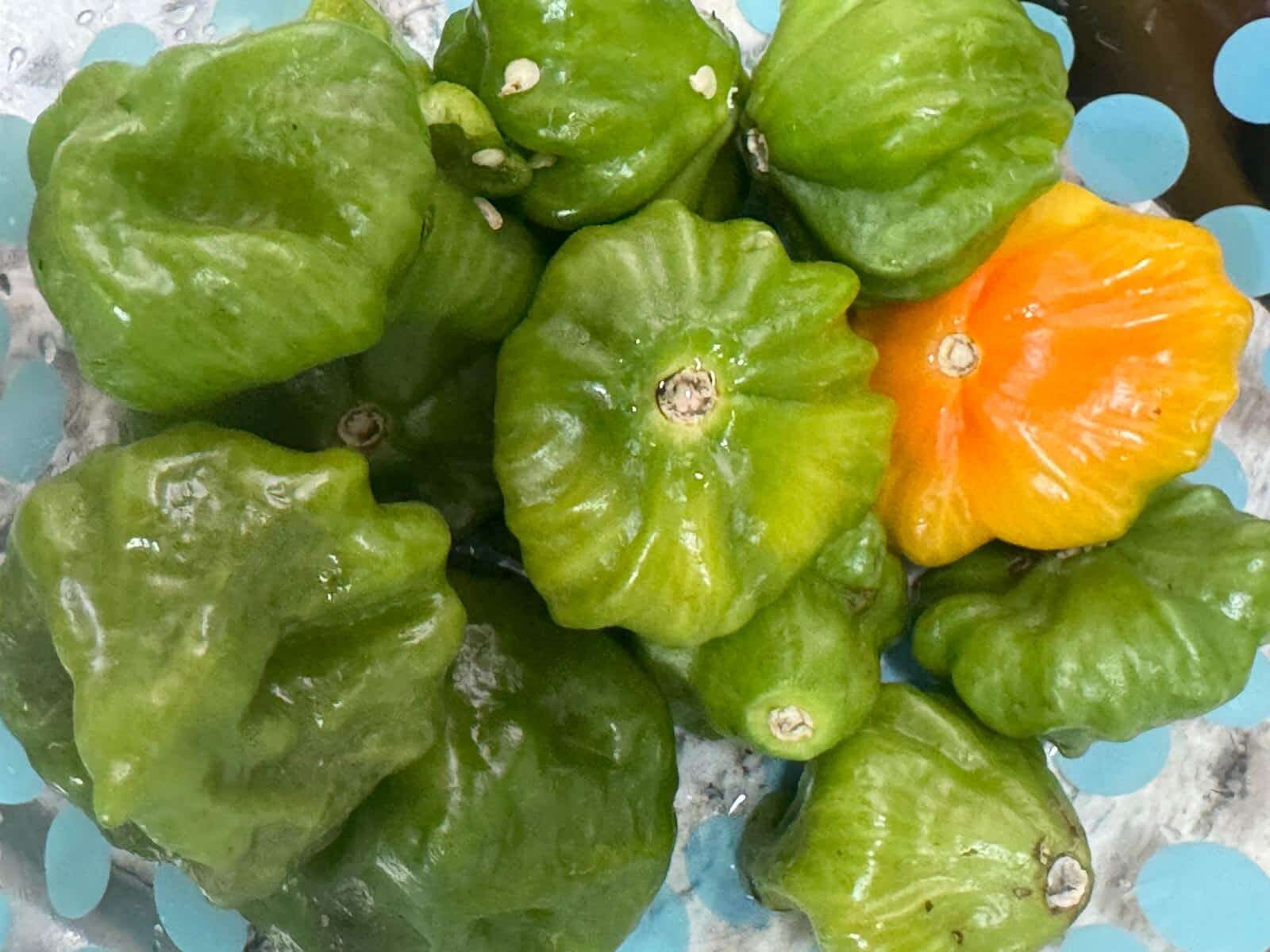
The scotch bonnet pepper is a small, round, wrinkled pepper — usually yellow, orange, or red — with a heat level that sits around 100,000–350,000 Scoville units. It is one of the hottest peppers in the world. It is also one of the most flavourful.
What it does
This is important: the scotch bonnet is not just heat delivery. It has a distinct fruity, floral flavour underneath the fire that is completely unique to this pepper. It’s the same heat that runs through jerk chicken and everyday pepper shrimp alike — Jamaican food gets its specific flavour profile, not just its heat, from the scotch bonnet. A dish made with plain chilli instead is a different dish.
The classic technique is to add it whole to the pot and remove it before serving — the pepper flavours the dish without releasing its full heat. Burst it open for more fire. Your call.
What to know
Handle with respect. Don’t touch your face. Wash your hands thoroughly after cutting. And for the diaspora — habanero is the closest substitute in terms of heat and flavour profile, though it’s not identical. Scotch bonnet is increasingly available at Caribbean and Asian grocery stores outside Jamaica.
Pimento (Allspice) — The Jamaican Spice
What it is
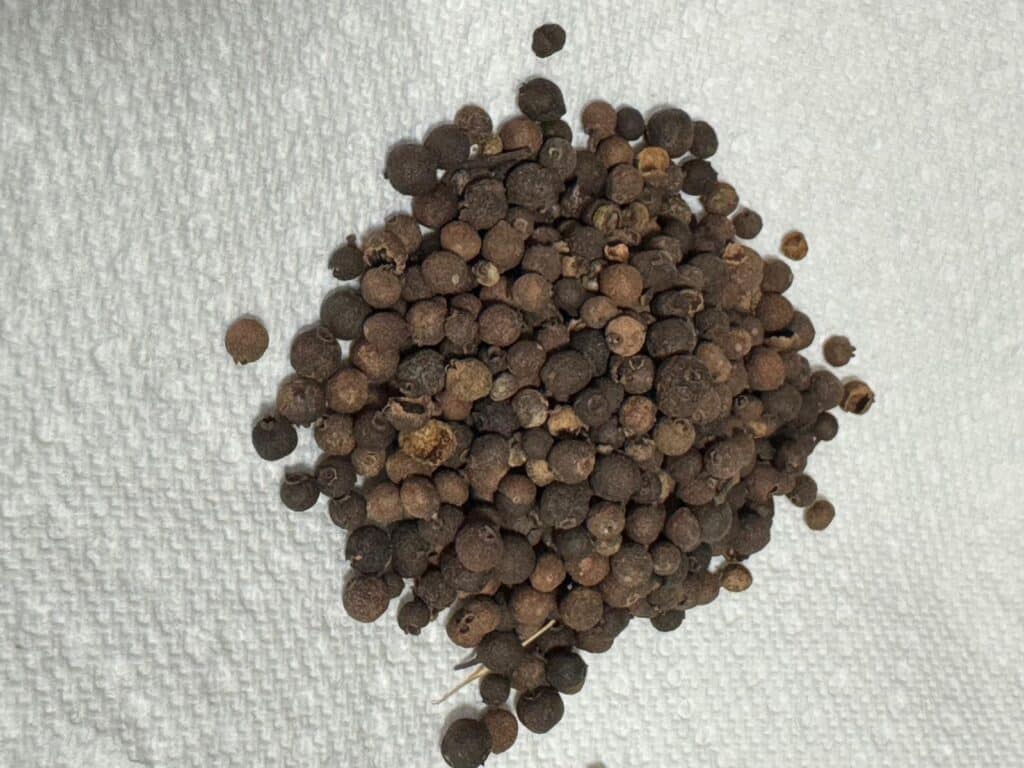
Pimento is what the rest of the world calls allspice — the dried berry of the Pimenta dioica tree, which is native to Jamaica. This is not a blend of spices despite the name. It is a single berry with a flavour that combines hints of clove, nutmeg, and cinnamon.
What it does
Pimento is the spice that makes Jamaican food taste distinctly Jamaican. It goes into jerk seasoning, into stew peas, into mannish water, into brown stew chicken. It is used whole — tossed into the pot — or ground, depending on the dish. The pimento leaves are also used in jerk cooking, placed over the coal to create that specific smoky fragrance.
What to know
Jamaica is the world’s largest producer of pimento. It grows here, it belongs here, and the quality of Jamaican pimento is genuinely superior to what gets exported elsewhere. If you’re cooking at home in the diaspora, whole dried pimento berries are available at most Caribbean grocery stores and online. Worth having in the pantry permanently.
Browning — The Colour
What it is
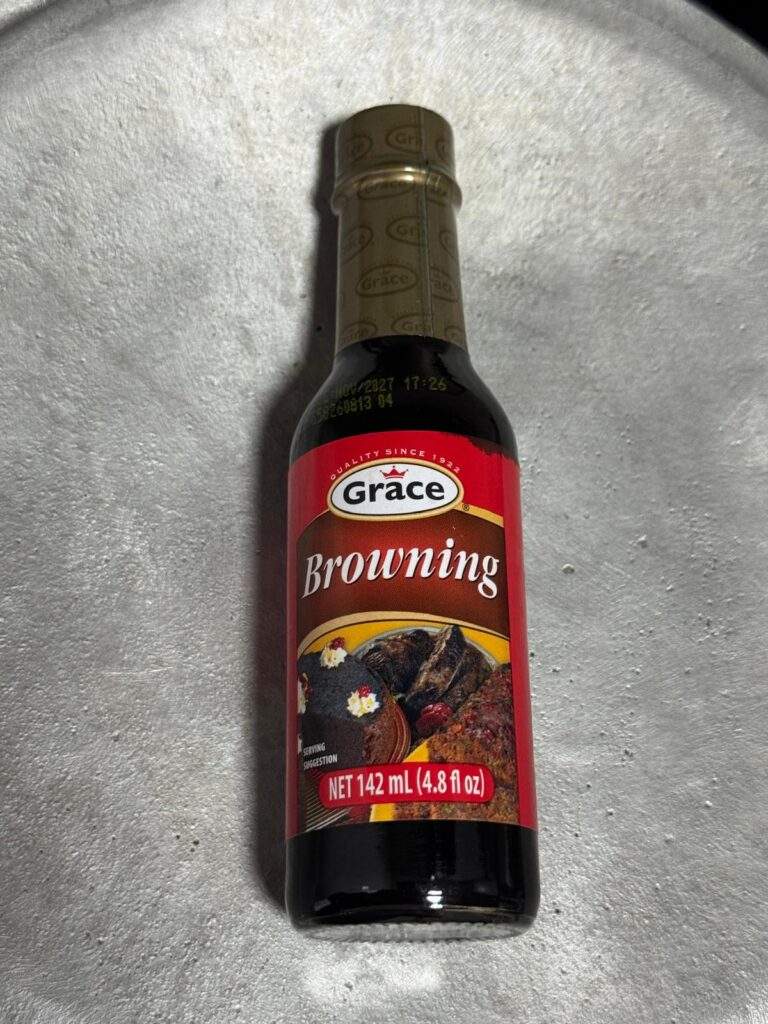
Browning is a dark, thick liquid made from caramelised sugar and water — sometimes with added spices. It is used as a colouring and flavouring agent in Jamaican cooking. Grace and Heinz both make widely available versions.
What it does
Browning is what gives Jamaican stew chicken, oxtail, and brown stew dishes their distinctive deep mahogany colour. A tablespoon in the marinade, a splash in the pot — and the dish turns that rich, dark brown that signals Jamaican stew. It also adds a slightly bitter, caramel depth to the flavour that is hard to replicate any other way.
What to know
Don’t skip it and don’t substitute it. Soy sauce is sometimes suggested as an alternative — it gives colour but a completely different flavour. Browning is readily available at Caribbean grocery stores worldwide and on Amazon. It’s cheap, it lasts forever, and it makes an immediate difference.
All-Purpose Seasoning — The Everyday Blend
What it is
All-purpose seasoning is a dry spice blend — typically containing salt, garlic powder, onion powder, black pepper, and other spices depending on the brand. Grace and Maggi are the most common brands in Jamaican kitchens.
What it does
It is the seasoning that goes into almost everything as a base layer — rubbed into chicken before marinating, added to mince, sprinkled into soups. It is not the main seasoning. It is the starting point that everything else builds on.
What to know
Every Jamaican cook has a preferred brand. Most Jamaican kitchens keep a jar of Grace all-purpose within reach — it’s a staple, not a shortcut. It’s a legitimate ingredient that is part of how Jamaican food actually tastes. Available everywhere.
Jamaican Curry Powder — The Inheritance
What it is
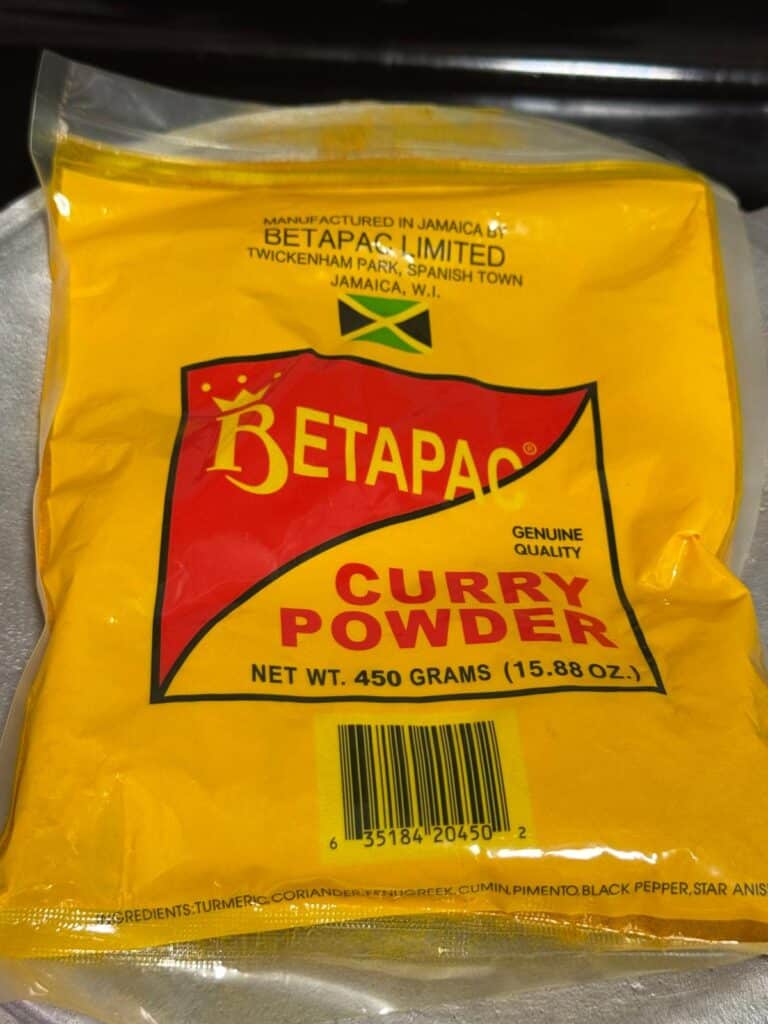
Jamaican curry powder is distinct from Indian curry powder — more turmeric-forward, slightly different spice balance, with a flavour profile that has been adapted over generations since Indian indentured workers arrived in Jamaica in the 19th century and left an indelible mark on the island’s cooking.
What it does
It is the foundation of curry goat — one of Jamaica’s most culturally significant dishes. No Jamaican wedding, christening, or nine night is complete without a pot of curry goat. The powder goes in early, bloomed in oil before the meat is added, giving the dish its deep golden colour and complex fragrance.
It also goes into curry chicken, curried shrimp, and vegetable curries — a whole category of Jamaican cooking that doesn’t get enough attention outside the island.
What to know
Jamaican curry powder is not interchangeable with Indian curry blends. Grace and Betapac are the standard brands. Betapac in particular is considered by many Jamaicans to be the more authentic choice. Worth tracking down specifically.
Black Pepper & Salt — The Given
These go without saying — but in a Jamaican kitchen, black pepper is used more generously than most cuisines would consider appropriate, and nobody apologises for it. Freshly ground where possible. And salt is seasoned throughout the cooking process, not just at the end. Taste as you go. That is how Jamaican cooks cook.
The Bottle of Whites — Wray & Nephew in the Kitchen
The bottle of Jamaican white rum that lives on the kitchen counter is not only for drinking. Jamaican white rum has a long history as a cooking ingredient — used to deglaze a pan after browning meat, added to marinades to tenderise and flavour, splashed into stews for depth. It also cleans wounds, but that is a different article.
The alcohol burns off during cooking. What remains is a subtle, slightly sweet complexity that is hard to identify but immediately felt. Not every Jamaican cook uses it in the kitchen. But enough do that it deserves its place on this list.
Use sparingly. A splash, not a pour. And do not use aged rum — the flavour profile is completely different. White overproof only.
Can You Cook Jamaican Food Without These Ingredients?
Short answer: You can leave out a few Jamaican cooking ingredients and still get close, but it won’t taste authentically Jamaican.
- Missing scotch bonnet = missing flavour profile
- No pimento = no Jamaican identity
- No browning = wrong look, wrong taste
Swap out enough of these and you end up with a dish that resembles Jamaican food without actually tasting like it. That’s the difference these ingredients make — they’re not seasoning on top of the dish, they are the dish.
Finding These Ingredients Outside Jamaica
If you’re cooking Jamaican food in the diaspora, here is the honest breakdown of which Jamaican cooking ingredients are easy to find, what takes a bit of searching, and what to do when you can’t find the real thing.
A quick disclosure: the links below are Amazon affiliate links — Showcase Jamaica may earn a small commission on qualifying purchases, at no extra cost to you. Every product listed is something Jamaican cooks actually use.
Stock the Pantry — What to Order Online
A few affiliate links to get the essentials delivered. All products recommended are what Jamaican cooks actually use.
→ Grace All-Purpose Seasoning — Amazon
→ Betapac Curry Powder — Amazon
→ Walkerswood Jerk Seasoning — Amazon
→ Pimento (Allspice) Berries — Amazon
Frequently Asked Questions
What herbs and spices are used in Jamaican cooking?
The core Jamaican cooking ingredients are fresh thyme, scallion, scotch bonnet pepper, garlic, and pimento (allspice). These appear in almost every savoury Jamaican dish. From there, browning, all-purpose seasoning, and curry powder complete the essential pantry.
What makes Jamaican food taste different from other Caribbean cuisines?
The combination of scotch bonnet — which has a distinct fruity heat unlike any other pepper — with pimento, fresh thyme, and browning creates a flavour profile that is specific to Jamaica. The technique matters too: long, slow cooking in a dutch pot builds depth that quick cooking can’t replicate.
Can I substitute scotch bonnet with another pepper?
Habanero is the closest substitute — similar heat level and a comparable fruity note. It won’t be identical because the scotch bonnet has a specific flavour profile that no other pepper fully replicates, but habanero is the best available option when scotch bonnet isn’t accessible.
Where can I buy Jamaican cooking ingredients outside Jamaica?
Caribbean grocery stores are the first stop — most will carry Grace products, scotch bonnet, pimento, and browning. Online, Amazon stocks most Grace brand products, Walkerswood jerk seasoning, Betapac curry powder, and pimento berries. See the pantry links above.
What is the most important ingredient in Jamaican cooking?
Thyme is the most widely used ingredient, appearing in nearly every savoury dish.
Keep Exploring
Now that you know the ingredients, see them in action. The Dutch Pot Series is where every one of these comes together — one real Jamaican recipe at a time.
And if you want to understand the vessel they go into, The Jamaican Dutch Pot covers everything from aluminium vs cast iron to why your grandmother’s pot still cooks better than yours.
Your Turn
Every Jamaican cook has their non-negotiables — the one Jamaican cooking ingredient they refuse to cook without, the brand they won’t substitute, the thing they bring back in their suitcase every time they visit the island. What’s yours? Drop it in the comments.
Walk Good. 🇯🇲
Every Nook. Every Cranny. All Jamaican