🪶 Introduction: More Than Just Old Saying
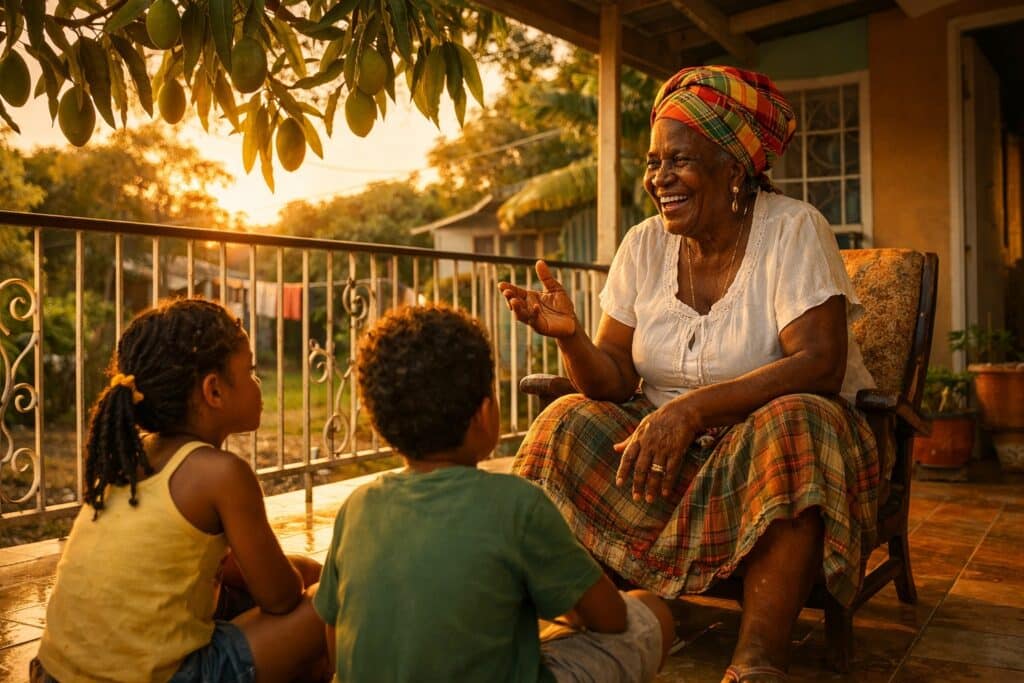
One does not simply grow up in Jamaica without a first-hand encounter with Jamaican proverbs. It didn’t matter if you were playing in the yard, sneaking a second helping from the pot, or getting caught doing something you had no business doing — somebody older always had something to say about it. And it was never a simple, straightforward scolding.
It came wrapped in metaphor. Delivered with timing. Usually in Patois. And somehow, it stung worse than a proper telling-off.
“Grandma, why mommy so miserable?”
“But see mi dying trial — pot a cuss kettle seh him black.”
[pause]
“Wha yuh say Grandma? Wha dat mean?”
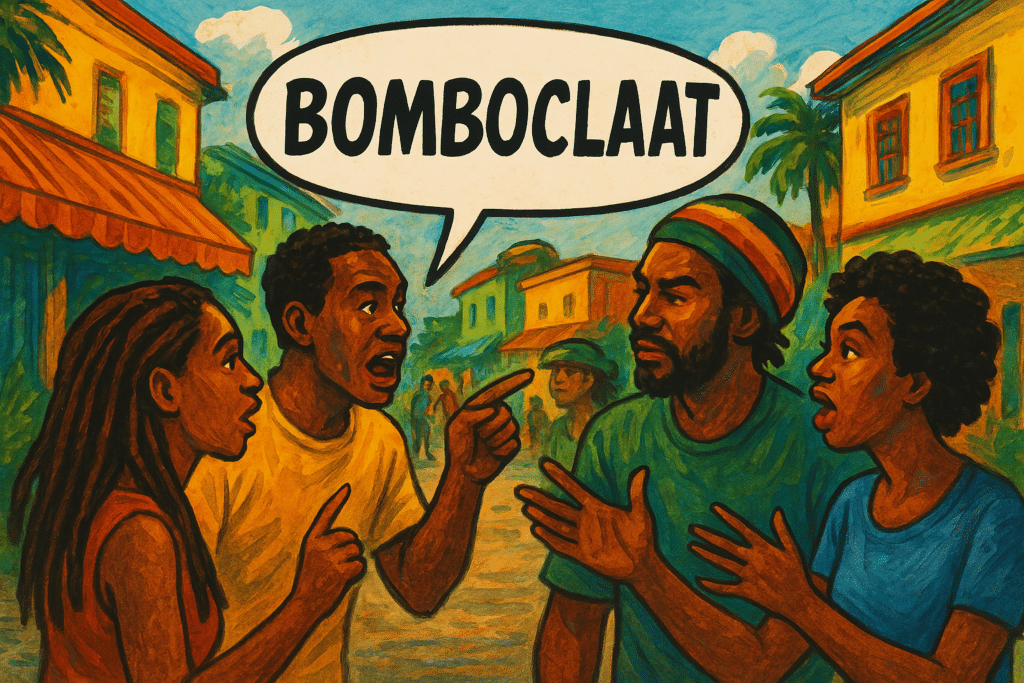
“It mean say yuh an yuh madda cut from di same claat, mi chile.”
That was Jamaican proverbs in action. Short, sharp, and surgical.
Jamaican proverbs are centuries-old sayings that offer wisdom, advice, or truth about life — almost always in the native tongue, Patois, and almost always drawing on the richness of everyday Jamaican experience. They are not just words. They are a living part of our oral tradition, passed down from generation to generation with remarkable precision and power.
And at the center of it all? Granny.

📚 What is a Jamaican Proverb?
A Jamaican proverb is a traditional saying used to express wisdom, advice, or truth about life. Most Jamaican proverbs are spoken in Jamaican Patois and passed down through oral storytelling from older generations. These sayings often use metaphor, animals, farming imagery, or everyday experiences to communicate deeper lessons about human behavior.
👵🏾 Who Taught Us the Proverbs?
Grandparents: The Original Keepers
Grandparents — and especially grandmothers — are the natural teachers and carriers of Jamaican proverbs. Having grown up in an era before screens, notifications, and Google, they understood the island’s culture in its most authentic form. And they passed it on the only way they knew how — through conversation, correction, and story.
Sometimes a proverb appeared naturally in passing:
“Grandma, why yuh always lock di gate?”
“Because, mi dear — cow nuh know di use of him tail till fly season.”
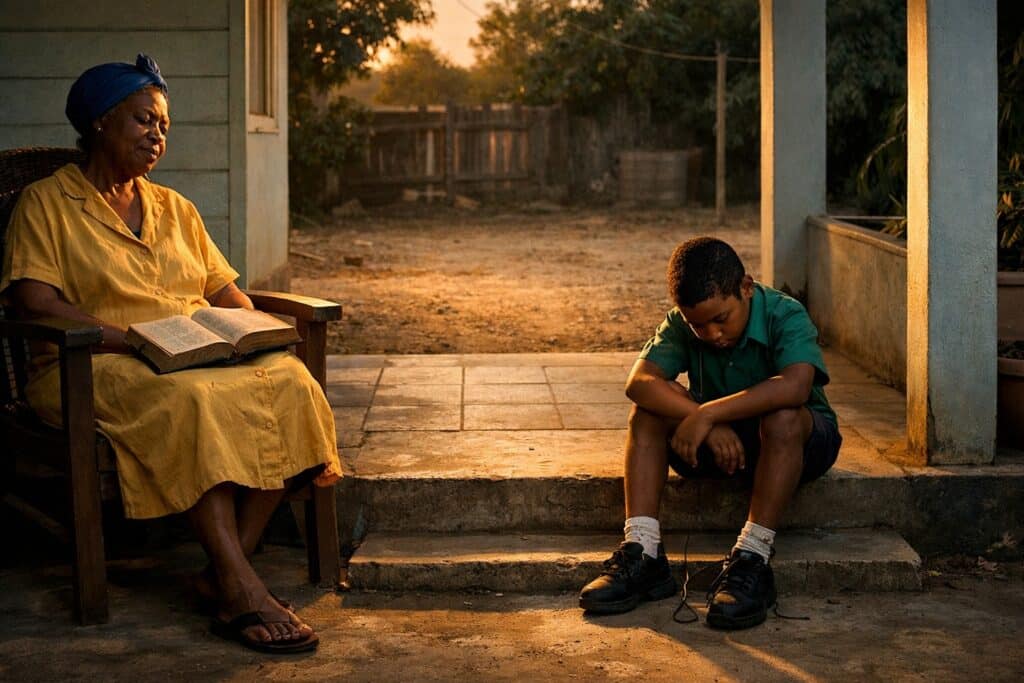
Other times, it arrived with discipline attached:
“Hard ears pickney mus feel.”
That one needed no translation.
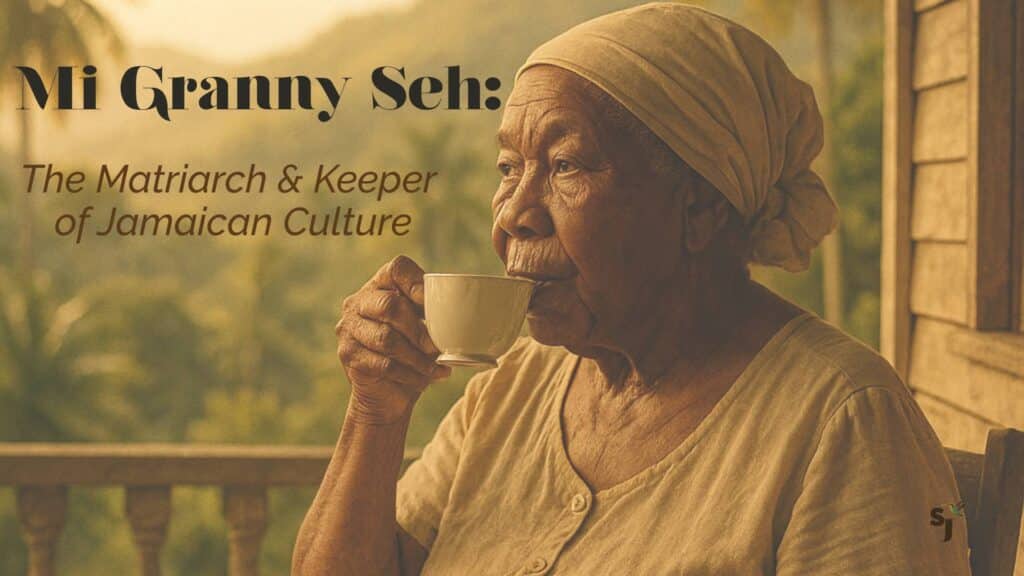
➡ Related: Mi Granny Seh: The Matriarch & Keeper of Jamaican Culture
Parents and Community
Parents also played a vital role in passing down proverbs — using them as tools to teach children social values, work ethic, and moral standards. But it wasn’t only family. Other adults in the community — neighbours, shopkeepers, church elders, even strangers — would drop a proverb in conversation without a second thought.
As the saying itself goes: “What you don’t know, older than you.”
That is the quiet genius of Jamaican proverbs. They do not belong to one person or one household. They belong to the whole culture.
💬 What Are Jamaican Proverbs Used For?
Jamaican proverbs are among the most versatile tools in the language. They can be a warning, a lesson, a piece of advice, a gentle nudge, or a full-on verdict — all depending on tone and timing.
They are deeply connected to the broader richness of Jamaican slangs and expressions — part of the same living, breathing language that makes Jamaican speech so distinctly its own. While slang captures the pulse of everyday conversation, proverbs carry the accumulated wisdom of generations.
Here is how they show up in real life:
To offer advice or give a warning — “Chicken merry, hawk deh near” doesn’t stop a child from playing. It reminds them that even in joy, awareness matters.
To teach values — “Han go, packy come” teaches generosity. Give, and it comes back. Share, and you will never want.
To influence behaviour — “Yuh sleep wid dog, yuh rise wid fleas” says everything about the company you keep, without saying it directly.
To pass judgment — Sometimes there is no cleaner verdict than a well-placed proverb. A whole argument settled in one line. “Pot a cuss kettle fi him black” — and suddenly everybody in the room go quiet.
In storytelling — Proverbs appear regularly in oral narratives as the moral thread running through the tale. A story about a greedy man who loses everything ends not with explanation but with “What sweet nanny goat a go run him belly” — and the lesson lands without another word needed.
This last point matters. Jamaican proverbs and Jamaican storytelling are inseparable — and both trace their roots back to the same source: the African oral tradition that survived the Middle Passage and took root in Jamaican soil.
10 Jamaican Proverbs and Their Meanings
1. 🐔 “Chicken merry, hawk deh near”
Literal meaning: The chicken is happy — but the hawk is close.
What it really means: In the middle of your celebration, danger is never far away. Don’t get so lost in the good times that you lose your awareness.
Granny would drop this one whenever she saw the children getting too rowdy, too loud, or too comfortable. Not to kill the joy. To sharpen the instinct. In Jamaica, this proverb isn’t pessimism — it’s wisdom. The kind that keeps you alive.
2. 🧺 “One one coco full basket”
Literal meaning: One by one, even cocoa fills a basket.
What it really means: Consistency beats haste. Every small effort, every single step — it all adds up. The basket fills slowly, but it fills.
3. 🪣 “Pot a cuss kettle fi him black”
Literal meaning: The pot is accusing the kettle of being black.
What it really means: You are guilty of the very thing you’re accusing someone else of.
4. 🔥 “Ole fire stick easy fi ketch”
Literal meaning: Old embers are easy to reignite.
What it really means: An old romance is easily rekindled.
5. 👻 “Duppy know who fi frighten”
Literal meaning: A ghost knows exactly who to scare.
What it really means: Bullies and opportunists always pick on the people least likely to fight back.
6. 🐱 “Puss an dawg no ave di same luck”
Literal meaning: Cats and dogs don’t share the same luck.
What it really means: Not everyone gets the same result from the same opportunity or situation.
7. 🐐 “What sweet nanny goat a go run him belly”
Literal meaning: What tastes sweet to the goat will eventually upset its stomach.
What it really means: The things that feel good in the moment can cause you pain later.
8. 🐕 “Play wid puppy, puppy lick yuh mouth”
Literal meaning: Play with the puppy long enough, and it will lick your face.
What it really means: If you allow familiarity to go unchecked, people will lose respect for your boundaries.
9. ✊ “Every mickle mek a muckle”
Literal meaning: Every small thing adds up to something big.
What it really means: Small consistent efforts eventually produce big results.
10. 👂 “Hard ears pickney mus feel”
Literal meaning: The hard-headed child must feel the consequences.
What it really means: If you refuse to listen, you will learn the hard way.
🗣️ The Language Behind the Proverbs
Jamaican proverbs are delivered almost exclusively in Patois — Jamaica’s native creole language rooted in English, African languages, and Caribbean history. That’s not an accident. The language is the wisdom.
“Hard ears pickney mus feel” hits very differently than “A disobedient child must face consequences.”
The first carries weight, texture, and lived experience. The second is simply a sentence.
This is why Jamaican language — from proverbs to slangs to the more colourful end of the spectrum — is so much more than communication. It’s identity. It’s history. It’s culture in its most raw and authentic form.
To explore the full landscape of how Jamaicans speak, read our complete guide:
Wha Dem Seh? A Guide to Jamaican Slangs and Expressions
And if you want to go even deeper — all the way to the bold and historically rooted end of the vocabulary — we’ve got that covered too:
Jamaican Badwords 101: A History, A Guide, and a Good Laugh
🏆 Why Jamaican Proverbs Still Matter
In a world of tweets, reels, and ten-second takes, the Jamaican proverb is still standing — and still landing.
They matter because they are true. Not in a textbook way, but in a lived way. In a “mi granny tell mi and I didn’t listen and then it happened exactly the way she said” kind of way.
They matter because they are ours. Born from African oral tradition, shaped by Jamaican history, and spoken in Patois — they belong to the culture in a way that cannot be replicated or borrowed.
Jamaican proverbs continue to shape how Jamaicans speak, teach, and understand life. Whether heard from a grandmother in the countryside or dropped casually in conversation in Kingston, these sayings remain one of the most powerful expressions of Jamaican culture and language.
And they matter because they carry Granny’s voice. Even when she is no longer in the room.
Even when she is no longer with us.
The proverb arrives in your mind at exactly the right moment — uninvited, unannounced, and completely accurate.
That is the real magic of Jamaican proverbs.
They are not just sayings.
They are memory.
They are culture.
They are love disguised as a likkle piece of advice.
“Mi granny seh.”
And somehow, she’s always right.
💛 What Did Your Granny Used to Say?
We know there are countless proverbs beyond this list — every parish, every family, every yard had its own favourites.
Drop your favourite Jamaican proverb in the comments below, or share it with us on Instagram @showcasejamaicamedia. The best ones will be featured in an upcoming edition of Mi Granny Seh.
Until next time, Walk Good.
Every Nook. Every Cranny. All Jamaican. — Showcase Jamaica