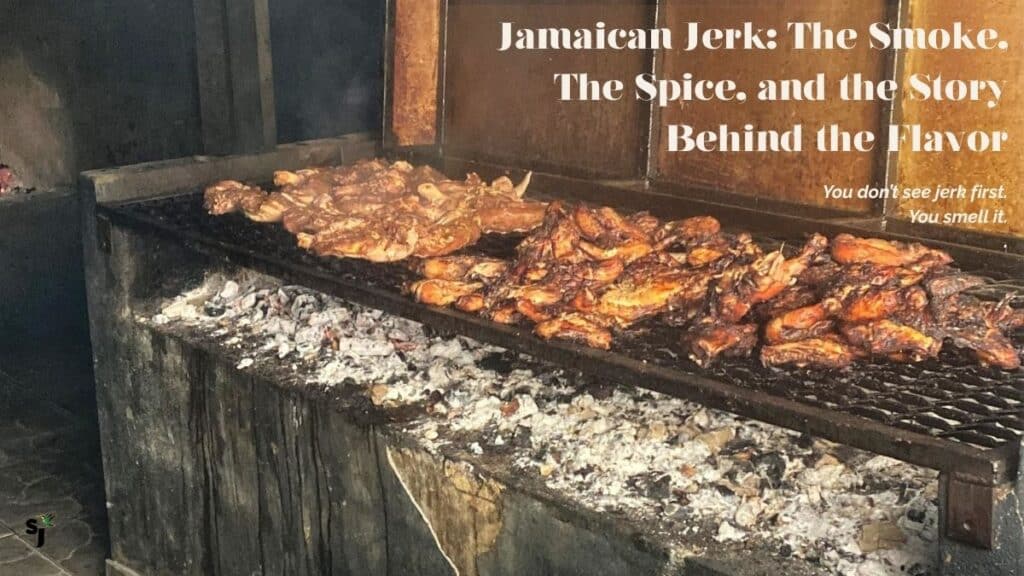
You don’t see jerk first.
You smell it.
Long before you reach the roadside pan or the beachside shack, the scent hits you — smoke, spice, pimento and something deeper you can’t quite explain until you taste it.
Jerk is not just a seasoning. It is not just a method.
Jamaican jerk is one of the island’s most recognizable food traditions — built on smoke, spice and centuries of history.
What Is Jamaican Jerk?
At its simplest, jerk is a way of seasoning and cooking meat — usually chicken or pork — using a blend of spices that includes:
- Scotch bonnet pepper
- Thyme
- Scallion
- Garlic
- Ginger
- Pimento (allspice)
But that explanation doesn’t go far enough.
Because jerk is not just what goes on the meat. It is how the meat is cooked.
Jamaican Jerk is just one part of a much deeper food culture. If you want to explore further, start with the full guide to Jamaican foods every visitor should try.
Where Does Jamaican Jerk Come From
Jerk cooking is not just about flavour — it is about survival.
Jerk has its roots in the Maroon communities of Jamaica — particularly in the hills of Portland.
These communities developed a method of seasoning and slow-cooking meat over pimento wood, allowing it to smoke slowly while preserving flavor. The Maroons, who had escaped slavery and retreated into the mountains of Jamaica, had to cook in a way that would not give away their location to the British. Open fires meant smoke. Smoke meant danger. That method is still the foundation of jerk today.
So they developed a method of cooking meat in the ground. The meat — most often pork, long before chicken entered the tradition — was seasoned heavily with pimento and whatever spices were at hand, then placed over pimento wood coals in a pit, covered with leaves and earth to trap the heat and suppress the smoke. The meat cooked slowly, absorbed the wood, and could be preserved for days. It fed communities moving through difficult terrain, staying hidden, staying alive.
What started as a survival method became one of Jamaica’s most important cooking traditions. That is why real Jamaican jerk is slow, smoky and built around pimento wood — the method comes first, not the sauce.
Why Is It Called Jerk?
The name itself has more than one explanation — and no single agreed origin.
One theory traces it to the Spanish word charqui, meaning dried or preserved meat — the same root that gives us the English word jerky. Early preserved meats in the Caribbean were seasoned in a similar way.
Another theory points to the technique itself — jerking the meat, meaning turning or poking it repeatedly while it cooks to work the seasoning deep into the flesh.
A third explanation suggests jerk comes from the process of poking holes in the meat before marinating, so the spices could penetrate further.
Which one is right? Likely all three played a role. What matters more than the name is what the method became — one of the most distinctive cooking traditions in the Caribbean.
How Jamaican Jerk Is Traditionally Cooked
This is where most people get it wrong.
Jerk is not just about sauce. It is about:
- Pimento wood smoke
- Low, slow cooking
- Covered pans or drums
- Time
The meat is seasoned, then placed over the fire — not directly grilled, but smoked. The result is something deeper than just spicy. It is smoky, rich and layered.
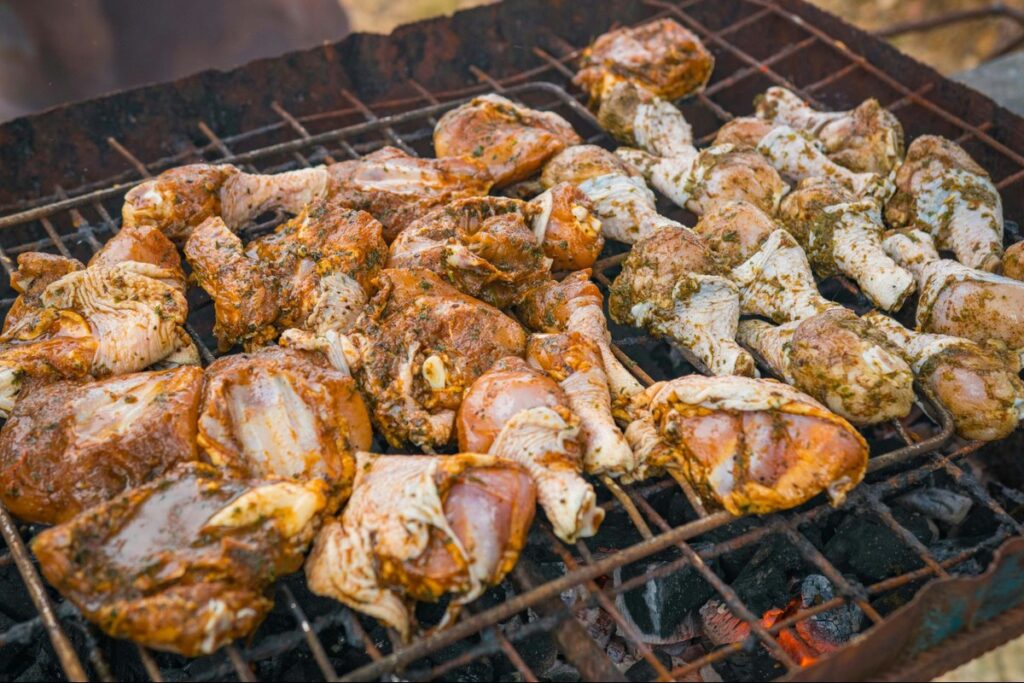
Jerk Is Not BBQ
This needs to be said clearly.
When people outside Jamaica first encounter jerk, they often reach for the closest comparison they know — BBQ. But the two are fundamentally different things.
BBQ is largely about sauce. The flavour comes from what is applied on top or after cooking. Jerk is about smoke and spice working together from the inside out. The pimento wood is not optional decoration — it is what makes jerk taste like jerk.
Pouring jerk sauce over grilled chicken is not jerk. It is grilled chicken with jerk-flavoured sauce. The distinction matters because the method is the point.
Real jerk requires time, heat and pimento smoke. There are no shortcuts.
The Jerk Pan Experience
Jerk lives on the roadside.
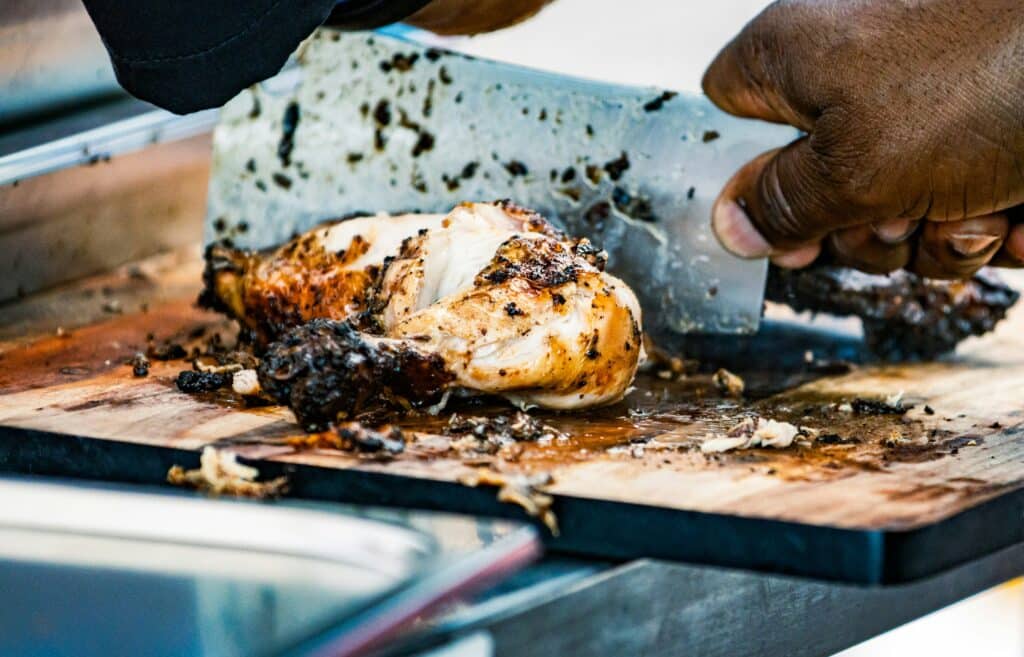
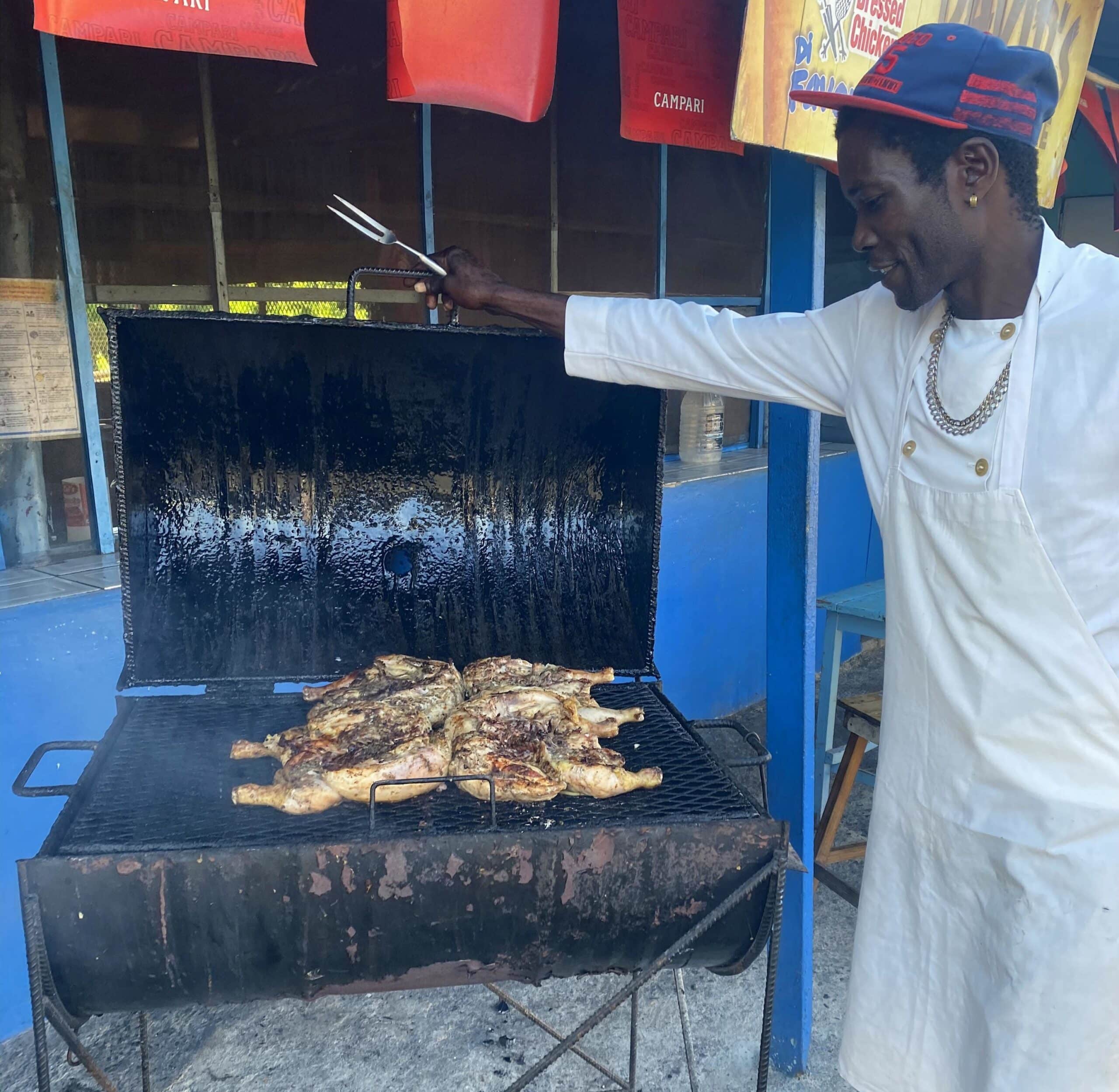
Metal drums cut open and turned into grills. Charcoal glowing underneath. Chicken and pork laid out, slowly cooking.
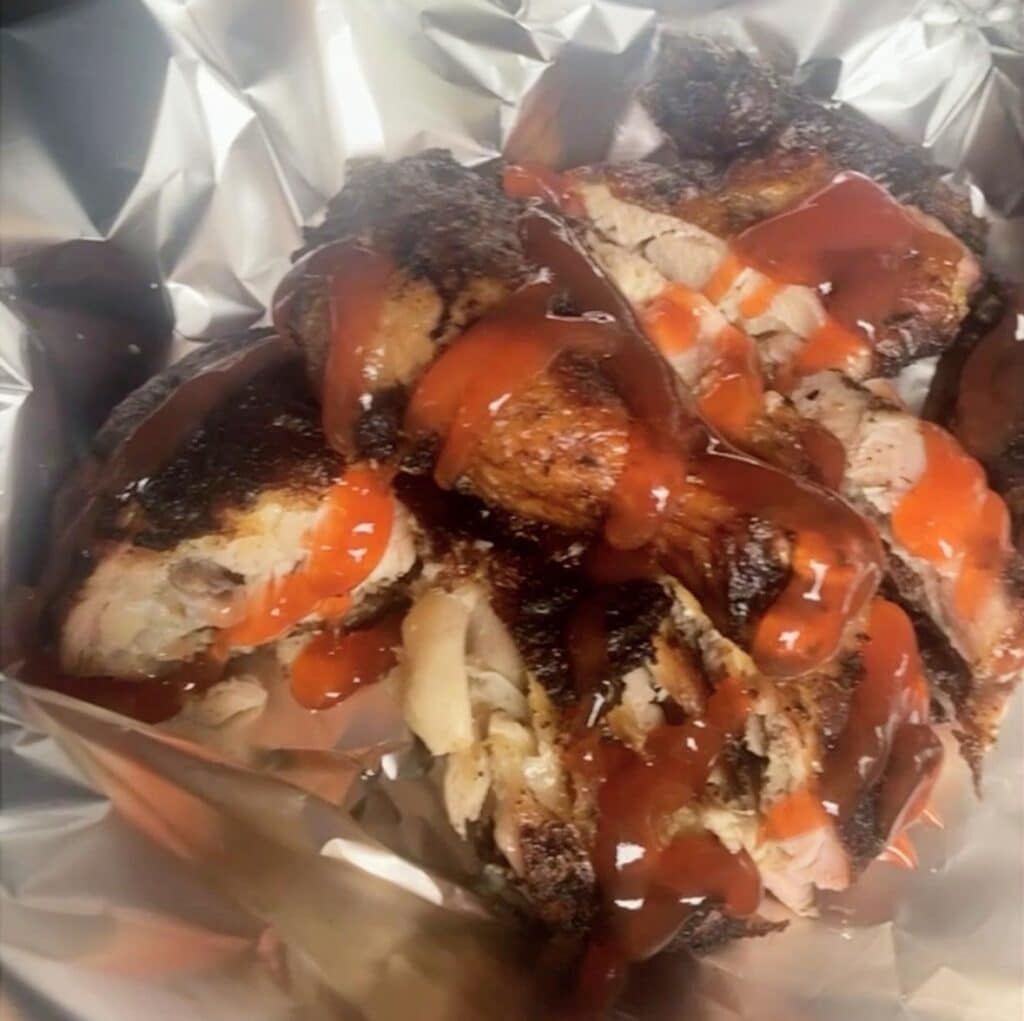
The vendor doesn’t rush. He turns the meat, chops it when ready, and wraps it in foil.
You don’t get jerk plated like fine dining. You get it wrapped, hot, and ready.
Boston Bay — The Birthplace of Jamaican Jerk
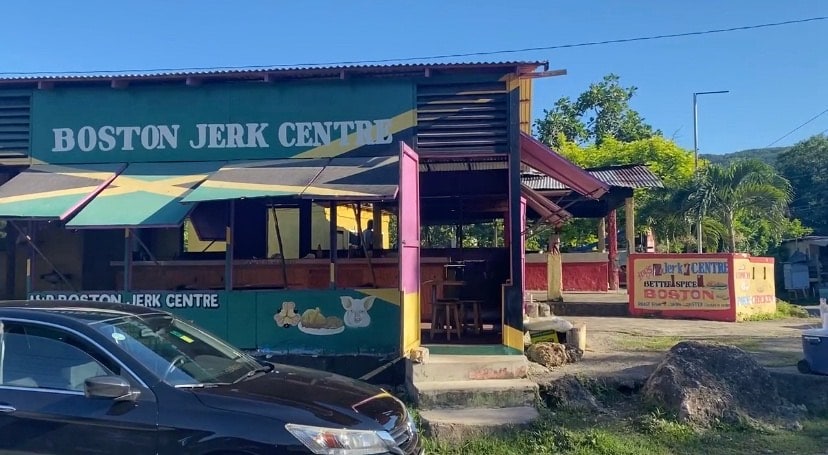
If jerk has a home, it is Boston Bay in Portland.
This is where the method became known and where some of the most authentic jerk can still be found today. Vendors line the roadside, each with their own variation — but all grounded in the same tradition.
What Comes With Jamaican Jerk
Jerk is rarely eaten alone. It is almost always served with:
- Festival
- Bread
- Bammy
- Roast breadfruit
And sometimes, just eaten straight out of the foil.
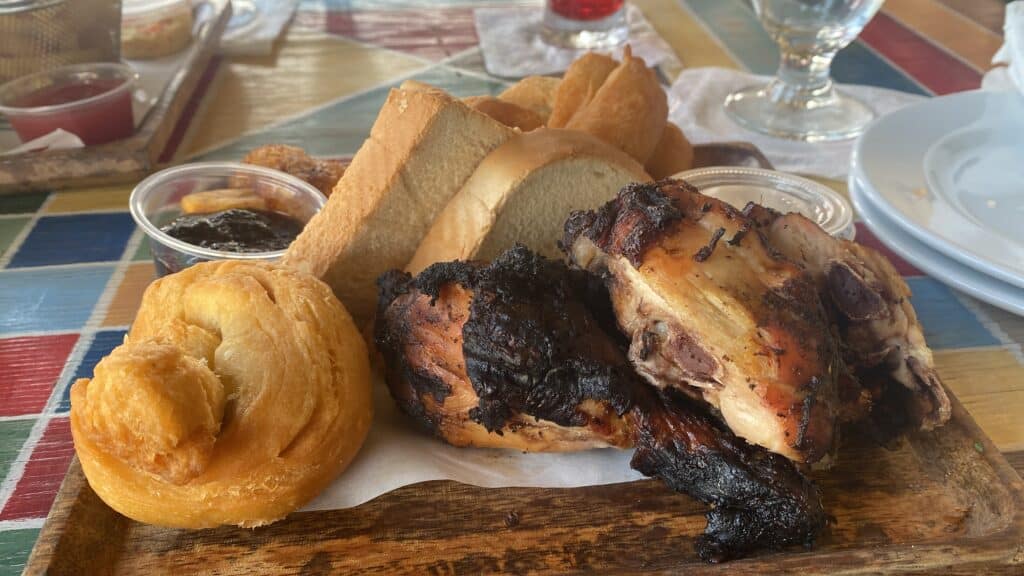
Jerk and Festival — A Famous Pair
If jerk has a best friend, it is festival.
The slightly sweet fried dough balances the heat and smoke of the meat in a way that feels less like a side dish and more like it was designed for this exact purpose. Bread, bammy and roast breadfruit all work alongside Jamaican jerk — but festival and jerk is one of those combinations that just makes sense. You don’t need to explain it. You just eat it and understand.
Jerk Beyond Chicken
While jerk chicken is the most common, jerk is also used for:
- Pork — and historically, pork actually predates chicken in the jerk tradition
- Fish
- Sausage
Each brings a slightly different texture and flavour, but the method remains the same.
Why Jamaican Jerk Matters
Jerk did not start in a restaurant kitchen.
It started in the hills — with people who had nothing but fire, spice and time. The Maroons of Portland didn’t season meat to impress anyone. They did it to survive, to preserve, to feed their own.
What they built became one of the most recognizable flavours on the planet.
That is why real jerk is not fast food. It cannot be rushed.
That is what jerk carries with it. Every roadside pan, every foil wrap, every cloud of pimento smoke — it is all connected to that history. You are not just eating well. You are eating something that refused to disappear.
Making Jamaican Jerk at Home
You will not replicate Boston Bay in your kitchen. The pimento wood, the drum pan, the open air — that is not something you can package.
But you can get close enough to understand why it works.
INGREDIENTS
- Chicken or pork
- Scotch bonnet
- Thyme
- Scallion
- Garlic
- Ginger
- Pimento (allspice)
- Soy sauce
- Browning
METHOD
Blend your scotch bonnet, thyme, scallion, garlic, ginger, pimento, soy sauce and a splash of browning.
Taste it — it should hit you before it even touches meat.
Marinate overnight if you can.
Cook it slow, and if you have access to a grill, finish it over open flame.
The smoke is not optional. It is the point.
What comes out will not be jerk the way Portland makes it. But it will be close enough to make you want to go find the real thing.
Where You’ll Find Jerk in Jamaica
- Roadside jerk pans
- Beach locations like Boston Bay (Portland)
- Local cook shops
- Some restaurants
But like many Jamaican foods, the best versions are often the simplest ones.
In Jamaica, Jamaican jerk is not just something you eat. It is something you smell, something you wait for, and something you remember.
Frequently Asked Questions
What makes Jamaican jerk different?
Jamaican jerk is unique because it uses pimento wood smoke and a blend of spices including scotch bonnet, thyme and allspice, creating a smoky and spicy flavour that cannot be replicated with sauce alone.
Where did jerk originate?
Jerk originated with the Maroons in Jamaica, particularly in Portland, where meat was seasoned and slow-cooked over pimento wood in underground pits to hide smoke from the British.
Why is it called jerk?
The name likely derives from the Spanish word charqui (dried meat), or from the technique of jerking and turning meat while cooking, or from poking holes in the meat to work in seasoning. No single origin is agreed upon.
What is jerk seasoning made of?
Jerk seasoning typically includes scotch bonnet pepper, thyme, scallion, garlic, ginger and pimento (allspice).
What do you eat with jerk chicken?
Jerk chicken is commonly served with festival, bread, bammy or roast breadfruit.
Is jerk the same as BBQ?
No. BBQ is primarily about sauce. Jerk is about smoke, spice and method — specifically the use of pimento wood smoke. The two are fundamentally different cooking traditions.
Jerk is one of those things that is difficult to explain to someone who has never experienced it. You can describe the pimento wood, the scotch bonnet heat, the slow smoke. You can talk about Boston Bay and the Maroons and centuries of history. But until you are standing by that roadside pan, foil-wrapped chicken in hand, smoke in your clothes — you are still only reading about it.
That is what Jamaica does. It gives you something you cannot fully understand until you go.
Walk Good. 🇯🇲
Every Nook. Every Cranny. All Jamaican