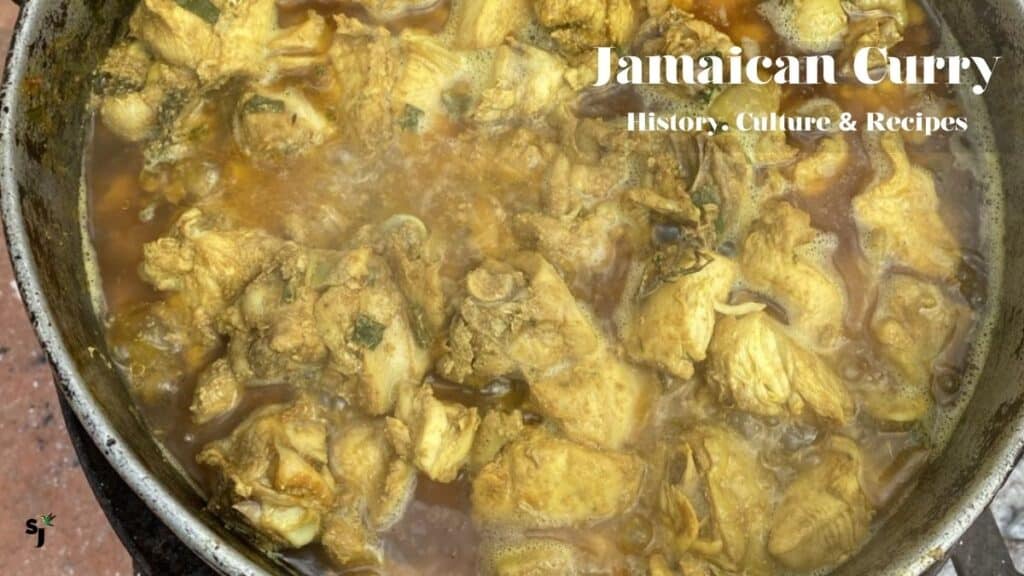
You don’t need to see the pot to know someone is making curry. The smell finds you first — that warm, golden, unmistakable combination of toasted spice and scotch bonnet that drifts out of the kitchen, down the hallway, out the window, and into the street. By the time you reach the pot, your stomach has already made its decision.
Curry is woven into Jamaican life in a way that goes beyond recipe. It is a celebration dish and a weekday lunch. It is the thing your mother made that nobody else’s mother made exactly the same way. It is the smell of a cook shop on a Thursday morning and the question every Jamaican instinctively asks at a party: “Dem have curry goat?” This is where it came from, what makes it Jamaican, and how to make it at home.
The History of Jamaican Curry
On May 10, 1845, a ship called the Blundell Hunter arrived at Old Harbour Bay in Jamaica. On board: 200 men, 28 women, and 33 children from the Indian subcontinent — the first wave of what would become 37,027 Indian indentured labourers brought to Jamaica between 1845 and 1917. They came to work the sugar estates after emancipation, when formerly enslaved people had rightly walked off the plantations and the British colonial system needed to fill the gap.
Indentureship was not freedom — it was bonded labour under contract, often exploitative, often brutal. But the people who came brought something the colonial system hadn’t accounted for: their culture, their knowledge, their food. They brought spices from across the Indian subcontinent. They brought techniques. They brought curry.
What Jamaica did with it was make it entirely its own. Allspice (pimento) — native to Jamaica and already central to the island’s cooking — found its way into the curry blend. The scotch bonnet pepper replaced chilli powder, adding a fruity, floral heat that Indian curries don’t have. Coconut milk, used widely in Indian curries, was set aside in favour of a drier, more intense pot. The result was something new: not Indian curry, not a copy of anything — Jamaican curry, with its own colour, its own flavour profile, and its own rules. Today, despite people of Indian descent making up just around 3% of Jamaica’s population, curry goat is considered one of the island’s national dishes. That is the measure of what those 37,027 people left behind.
What Makes Jamaican Curry Different From Other Curries
Two things set Jamaican curry apart from almost everything else in the curry world. The first is the spice blend itself. Jamaican curry powder contains turmeric, cumin, coriander, and fenugreek — but the ingredient that changes everything is allspice (pimento). Native to Jamaica and already the backbone of jerk seasoning, pimento found its way into the curry blend and made it entirely its own. That warm, slightly sweet, slightly woody note underneath the turmeric is the fingerprint — it does not appear in Indian curry powder, which is where the two traditions part ways permanently. The go-to brand in most Jamaican kitchens is Betapac, made in Spanish Town, no salt, no MSG. The diaspora hunts it down in Caribbean grocery stores worldwide. If you find it, buy two.
The second thing is the technique: burning the curry. Before any meat goes in the pot, the curry powder is added to hot oil and toasted — stirred constantly until it darkens slightly and becomes fragrant. This step is not optional. It is the difference between curry that tastes like spiced meat and curry that tastes like Jamaican curry. Skip it and you will know. Eat it properly done and you will also know. The Dutch pot matters too — heavy-bottomed, even heat, built for the kind of low-and-slow cooking that Jamaican curry demands. And if you want to understand how deep Jamaica’s relationship with spice and natural ingredients runs, our guide to Jamaican bush teas and natural remedies gives you a broader picture — scotch bonnet and pimento appear there too, in very different contexts.
Jamaican Curry Powder vs Indian Curry Powder
Because the two traditions share a name and some of the same base spices, it’s a common question: what actually makes them different? The short answer is allspice. The longer answer is that Jamaican curry powder and Indian curry powder evolved in completely separate directions, shaped by different ingredients, different cooking techniques, and different culinary cultures.
| Jamaican Curry Powder | Indian Curry Powder | |
| Key spices | Turmeric, cumin, coriander, fenugreek, allspice (pimento) | Turmeric, cumin, coriander, garam masala blend |
| The difference maker | Allspice (pimento) — warm, sweet, woody note | Garam masala — complex, warmer, no allspice |
| Heat source | Scotch bonnet pepper (fruity, floral heat) | Red chilli powder or fresh chillies |
| Coconut milk | Rarely used — dry, intense pot style | Common in many regional varieties |
| Go-to brand (Jamaica) | Betapac (no salt, no MSG) | Varies — Rajah, MDH, etc. |
| Colour | Deep golden-orange | Varies by blend — lighter to deep red |
The bottom line: if a recipe calls for Jamaican curry powder and you substitute an Indian blend, the dish will still taste good — but it won’t taste Jamaican. That allspice note is the difference. When in doubt, reach for Betapac, which is widely available in Caribbean grocery stores and online. They are what generations of Jamaican cooks have used, and there’s a reason nobody’s switched.
Jamaican Curry Goat: The King of the Pot
Curry goat is the occasion dish. Weddings, funerals, birthday parties, any major occasion — curry goat is the statement. It takes time. It demands attention. And when it is done right, it is one of the most deeply satisfying things Jamaica produces.
One thing every Jamaican curry goat cook will tell you: use the ram goat. In Jamaica, the buck is called the rammy — and there is an old saying in the kitchen that captures it perfectly: “the renker the rammy, the sweeter the meat.” The stronger the smell of the goat, the richer and more flavourful the curry will be. It sounds counterintuitive to the uninitiated. To anyone who grew up eating proper curry goat, it is just common sense. The bone-in cut is non-negotiable — the marrow and connective tissue are what make the gravy. Boneless curry goat is a compromise nobody asked for.
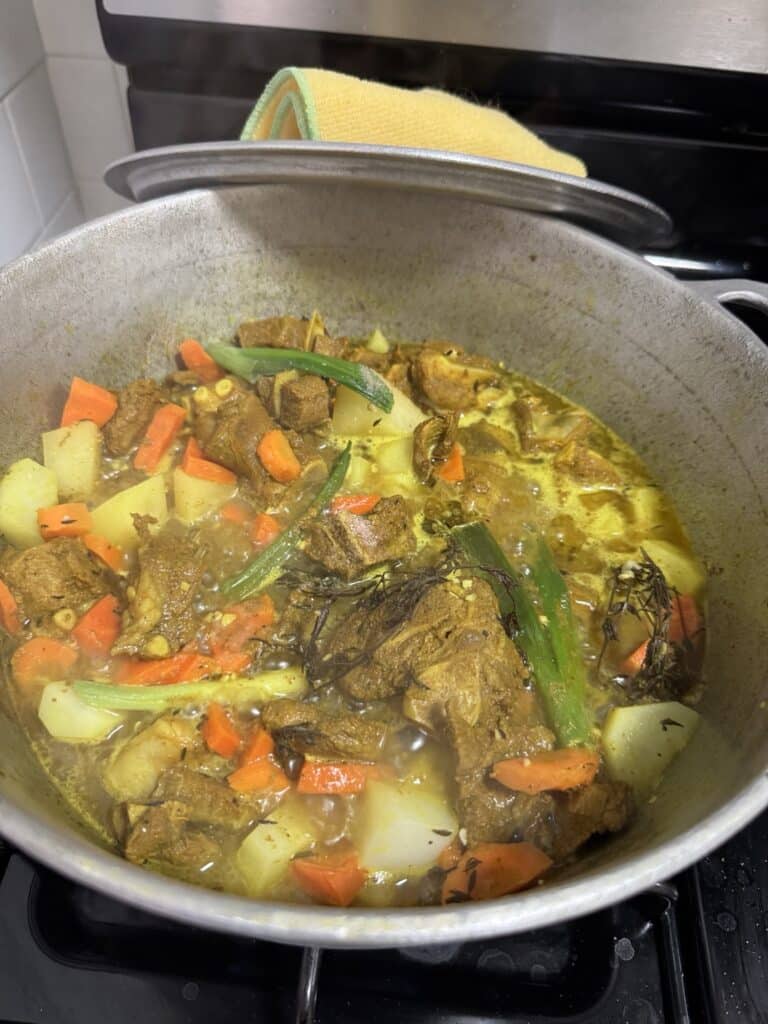
| Simple Curry Goat |
| You need: • 2 lbs bone-in goat (ram goat / rammy preferred) • 3–4 tbsp Jamaican curry powder (Betapac or Grace) • 1 scotch bonnet pepper, whole • 3 cloves garlic, minced • 2 stalks scallion, chopped • 1 sprig fresh thyme • 1 small onion, chopped • ½ tsp allspice (pimento seeds) • Salt and black pepper to taste • 2–3 small Irish potatoes, cubed (optional, adds body to the gravy) • 2–3 tbsp oil • 2–3 cups water Method: Season the goat with garlic, scallion, thyme, onion, allspice, salt, and pepper. Leave it to marinate — at least an hour, overnight if you can. Heat oil in your Dutch pot on high. Add the curry powder and let it toast in the oil for 1–2 minutes, stirring constantly — this is burning the curry, don’t skip it. Add the seasoned goat and brown on all sides. Add water, scotch bonnet (keep it whole so it flavours without destroying), reduce to medium-low and cover. Cook for 1.5–2 hours until the meat is tender and falling off the bone. Add potatoes in the last 30 minutes if using. Taste and adjust salt. The gravy should be thick, dark gold, and deeply fragrant. Serve with rice and peas, white rice, or roti. Never rush this pot. Pressure cooker variation: Season and brown the meat the same way, burn the curry first. Pressure for 20–25 minutes instead of the 2-hour simmer. Add potatoes after releasing pressure and simmer uncovered for 10 minutes to thicken the gravy. |
Jamaican Curry Chicken: The Everyday Essential
If curry goat is Sunday, curry chicken is Thursday morning. It is faster, more forgiving, and every bit as good when it is made with the same respect. Chicken thighs and drumsticks, bone-in — same logic as the goat, same technique, same burn-the-curry-first rule. The gravy comes together quicker, the meat cooks through in under an hour, and the result is something that Jamaicans eat at every hour of the day.
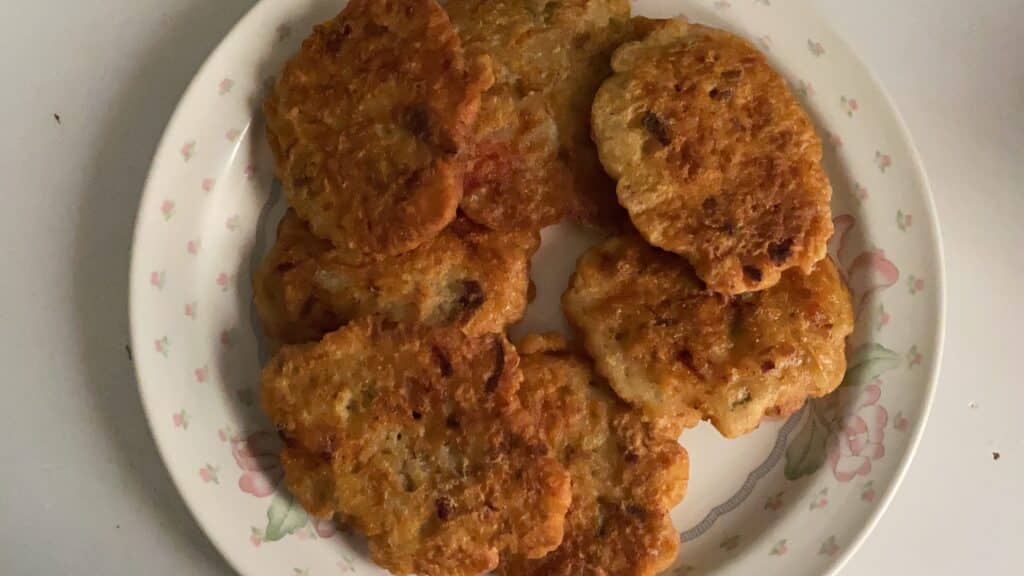
Breakfast, specifically, is where curry chicken earns a special place. Walk into any cook shop on a weekday morning and there is a good chance curry chicken is on the counter. The pairing is fry dumpling — and this is not a combination to be taken lightly. The dumpling, hot and slightly crisp on the outside, soaks up the curry gravy the moment you break it open. That bite — dumpling drenched in curry, soft inside, golden outside — is one of those things that is difficult to describe accurately to someone who hasn’t had it, and completely unnecessary to describe to someone who has. It is also served with boiled food — green banana, yam, boiled dumpling — a more filling breakfast that keeps you going all morning. If you want to see how curry chicken is a breakfast dish in Jamaica alongside other morning staples, that guide covers the full picture.
At lunch, curry chicken comes into its own on a hot plate of steamed white rice. The rice absorbs everything. This is what the cook shop was built for. And here is something visitors don’t always know, but every Jamaican does: even if you’re ordering something else off the menu — fry chicken, baked chicken, whatever — it is entirely acceptable to ask for some curry gravy on your rice. Some places, especially if it’s curry goat gravy, will charge a little extra. Pay it. It is worth every dollar.
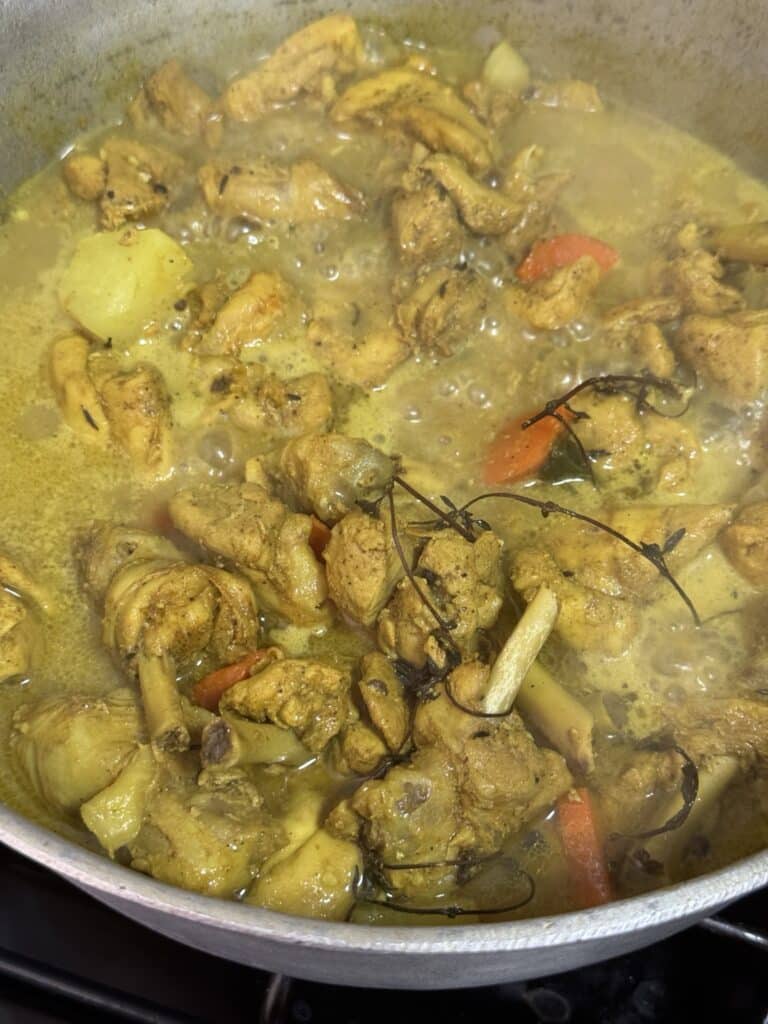
| Simple Curry Chicken |
| You need: • 2 lbs chicken pieces, bone-in, chopped (thighs and drumsticks) • 3 tbsp Jamaican curry powder • 1 scotch bonnet pepper, whole • 3 cloves garlic, minced • 2 stalks scallion, chopped • 1 sprig fresh thyme • 1 small onion, chopped • Salt and black pepper to taste • 2 tbsp oil • 1.5–2 cups water Method: Season chicken with garlic, scallion, thyme, onion, salt, and pepper. Marinate for at least 30 minutes. Heat oil in Dutch pot, add curry powder and toast for 1–2 minutes stirring constantly. Add chicken pieces and brown on all sides. Add water and scotch bonnet (whole). Cover and simmer on medium-low for 40–50 minutes until chicken is cooked through and gravy has thickened. Taste and adjust seasoning. Serve with fry dumpling for breakfast, steamed white rice for lunch, or roti any time. |
A Word About Buying Curry Outside Your Kitchen
Jamaicans who grew up eating their mother’s or grandmother’s curry develop a particular relationship with the dish that makes eating it elsewhere a considered decision. The reason is practical: curry that is not cooked properly — specifically, curry where the powder was not burned correctly or the meat was not cooked all the way through — will, as any Jamaican will tell you frankly, run yuh belly. This is not a minor inconvenience. It is the kind of afternoon you do not forget.
This is why many Jamaicans are selective about where they buy curry outside the home. A cook shop with a good reputation, a vendor whose curry goat you have eaten before without incident, a restaurant where the pot has clearly been going since early morning — these earn trust. A new spot, a plate that looks rushed, curry that smells faintly of undercooked spice — these earn caution. It is not squeamishness. It is wisdom accumulated across generations of Caribbean stomachs.
When you find a cook shop whose curry you trust, you will know. And you will go back. Every time.
Other Jamaican Curry Dishes
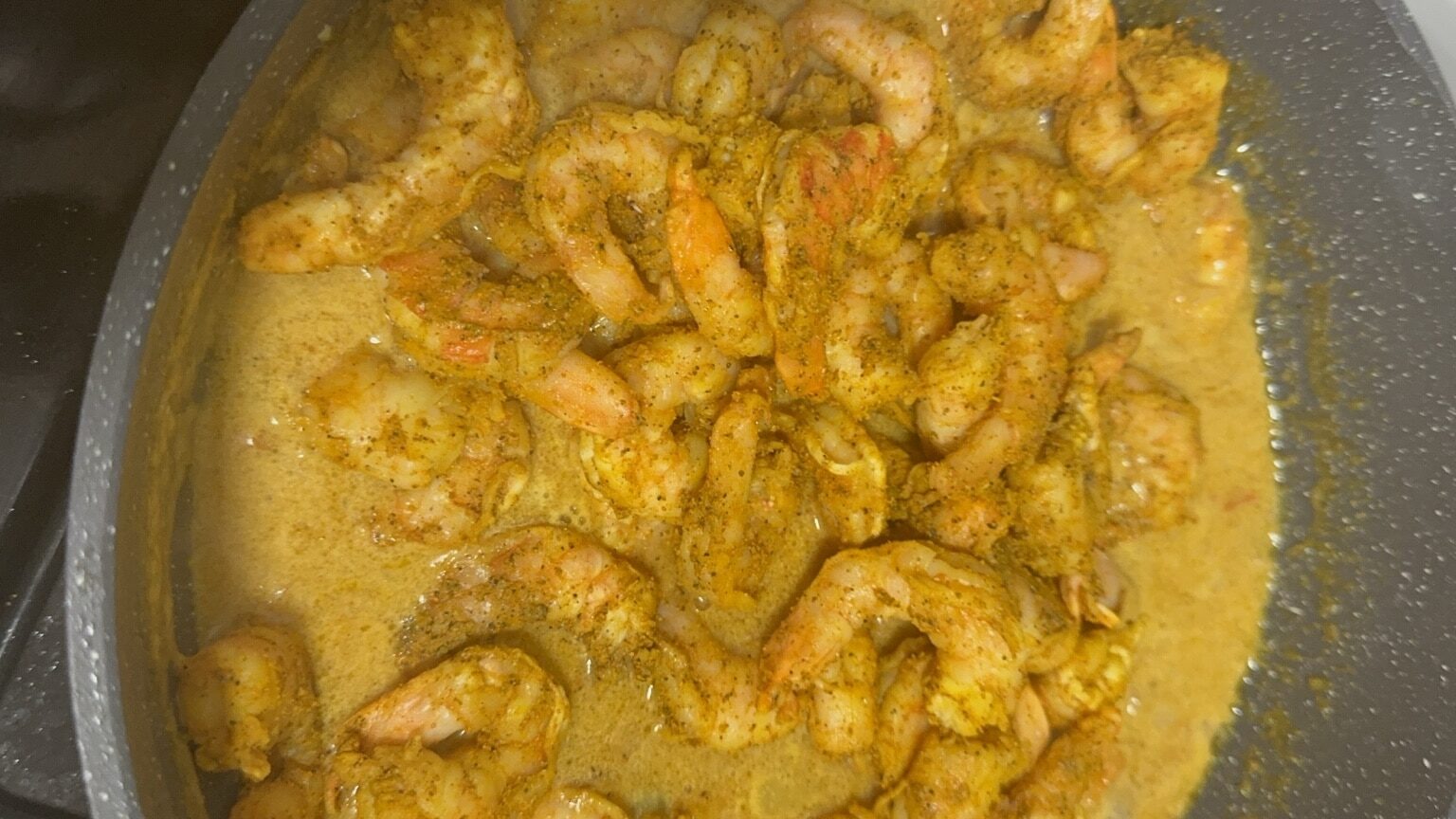
Curry goat and curry chicken get all the attention, but Jamaica’s curry tradition runs wider. Curry shrimp is a quick, flavourful weeknight dish — the shrimp cook fast so the technique matters even more. Curry fish is popular in coastal areas where the catch is fresh. Curry chickpeas — sometimes cooked with potato — is the vegetarian option that deserves more credit than it gets, deeply spiced and satisfying in its own right, often served with roti. The tradition is broad. The technique is the same throughout: burn the curry first, always.
What To Eat With Jamaican Curry
The classic pairing for curry goat is rice and peas — red kidney beans cooked into coconut rice, the dish that anchors the Jamaican Sunday table.
Here are the most common things Jamaicans eat with curry:
- Rice and peas – the traditional Sunday pairing, especially with curry goat.
- White rice – simple and perfect for soaking up curry gravy.
- Roti – a soft flatbread that reflects the Indian roots of Jamaican curry.
- Fry dumpling – often eaten with curry for breakfast or leftover curry.
- Boiled food – green banana, yam, and boiled dumpling when you want something more grounding.
- Bread – hard dough bread in a real pinch, no judgement.
The one constant: whatever you eat curry with, make sure there is enough to handle the gravy. Leaving curry gravy in the bowl is not an option.
Jamaican Curry — Frequently Asked Questions
| What is Jamaican curry made of? Jamaican curry is made with curry powder (turmeric, cumin, coriander, fenugreek, and allspice), scotch bonnet pepper, garlic, thyme, scallion, and onion, cooked in a Dutch pot after the curry is “burned” in oil. |
| Why do Jamaicans burn curry powder first? Burning the curry in oil toasts the spices and deepens the flavour. This step is essential and is what gives Jamaican curry its distinctive taste and colour. |
| What meat is used in Jamaican curry? The most popular meats are curry goat and curry chicken, but Jamaicans also make curry shrimp, curry fish, and curry chickpeas. |
| What do you eat with Jamaican curry? Jamaican curry is commonly served with rice and peas, white rice, roti, fry dumpling, or boiled food like yam and green banana. |
| Is Jamaican curry spicy? Jamaican curry gets its heat from scotch bonnet pepper, which adds a fruity, spicy flavour. The heat level can be adjusted depending on how the pepper is used — keeping it whole in the pot gives flavour without full heat; chopping it opens up the fire. |
Curry arrived in Jamaica through hardship — carried by people who crossed the ocean under indenture and planted something that outlasted the system that brought them here. What Jamaica made of it is entirely its own: a dish that smells like celebration and tastes like home, whether you grew up eating it or discovered it for the first time at a cook shop counter with a dumpling in your hand.
For more of the dishes that tell Jamaica’s full story, explore our guide to Jamaican cuisine. And if some of the words in this article had you reaching for a translation, our Jamaican slang guide has everything you need.
| How do you take your curry? Goat or chicken? Rice and peas or roti? Fry dumpling in the gravy or boiled food on the side? And be honest — do you have a cook shop you trust, or is curry strictly a home food for you? Drop it in the comments. |
Walk Good. 🇯🇲
Every Nook. Every Cranny. All Jamaican.