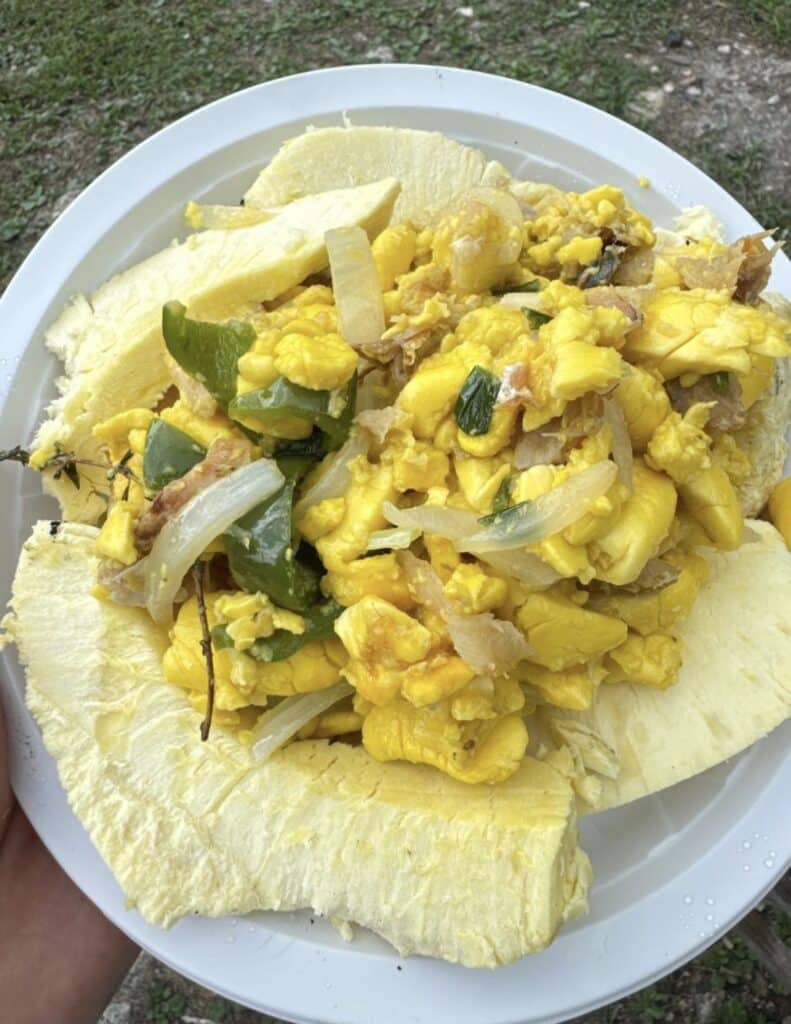
There is a particular kind of Sunday morning in Jamaica. The ackee and saltfish kind of morning.
Waking up to the smell of something already happening in the kitchen. Onions going down in hot oil. Thyme and escallion following close behind. The particular sizzle that means the saltfish has hit the pan. And then the moment — always the same moment — when the ackee goes in and the whole house smells like home.
Ackee and saltfish is not just Jamaica’s national dish. It is a reflection of the island itself — a mix of history, survival, adaptation and flavour that somehow comes together and just works.
For many Jamaicans, this is not a “special occasion” meal. It is breakfast. It is Saturday morning. It is something you grow up eating without thinking too much about it — until you leave, and suddenly it becomes one of the things you miss the most.
From Kingston yards to country kitchens, ackee and saltfish is one of the most recognizable and deeply rooted parts of Jamaican food culture.
Here’s the full story — where it came from, how to cook it properly, and everything worth knowing about Jamaica’s most beloved dish.
What Is Ackee and Saltfish?
Ackee and saltfish is made with two main ingredients:
- Ackee — a fruit brought to Jamaica from West Africa
- Saltfish (salted cod) — introduced during colonial trade
Cooked together with onion, tomato, scallion, thyme and a touch of black pepper, the finished dish is soft, slightly buttery, and deeply savoury.
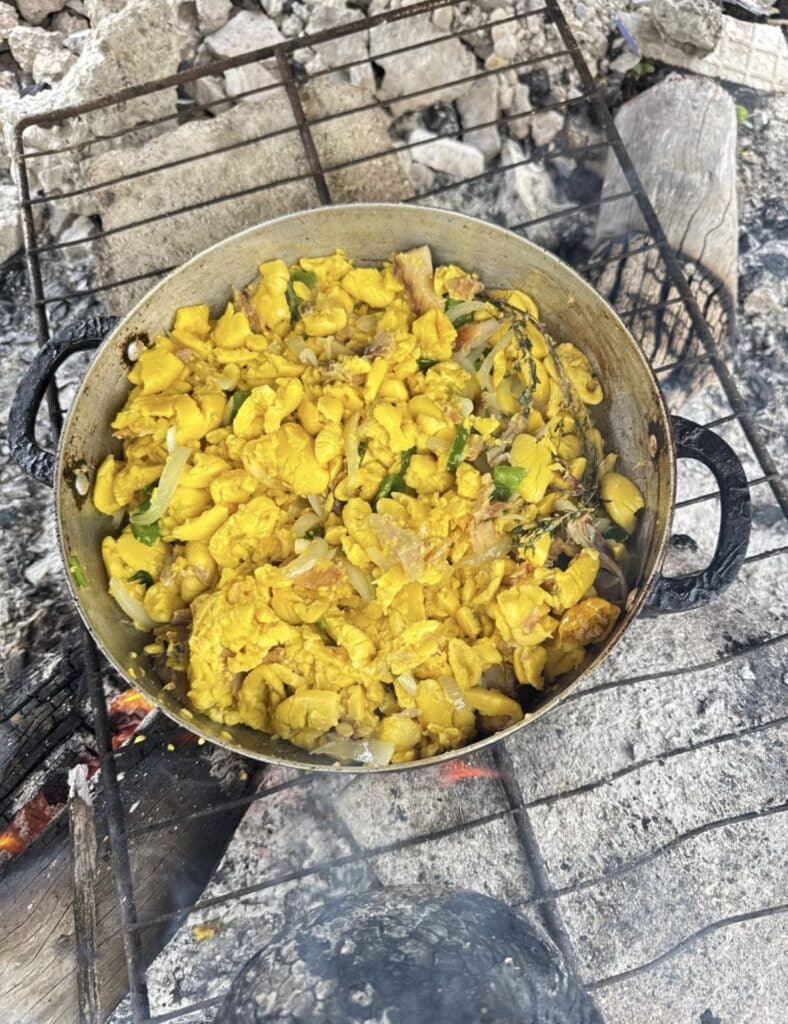
When prepared properly, ackee looks almost like scrambled eggs — but the taste is completely its own.
Where Ackee and Saltfish Comes From
Ackee did not start in Jamaica.
It came from West Africa specifically from Ghana, where it is known as akye fufo among the Akan people. It came during the transatlantic slave trade and eventually became part of local agriculture.
Saltfish, on the other hand, was a preserved protein brought in to feed enslaved populations because it could last for long periods without spoiling.
Two ingredients, neither originally Jamaican — yet together, they became one of the most Jamaican things there is.
That is the story of the island in a plate.
Understanding Ackee — Jamaica’s National Fruit
Ackee is Jamaica’s national fruit as well as one half of the national dish, and it is unlike almost anything else you will encounter in a kitchen.
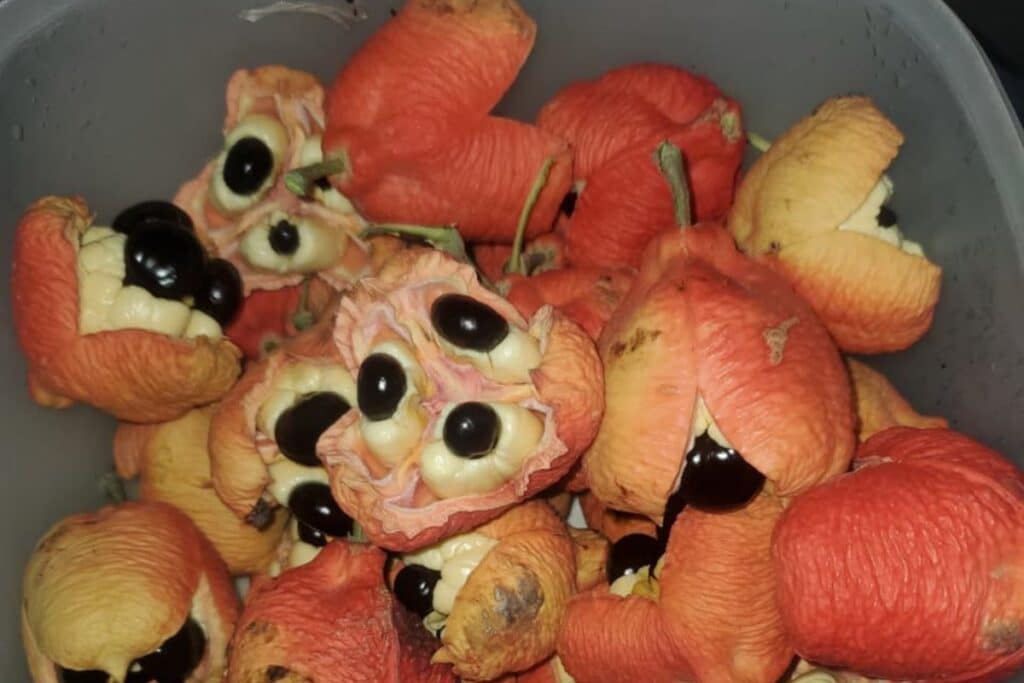
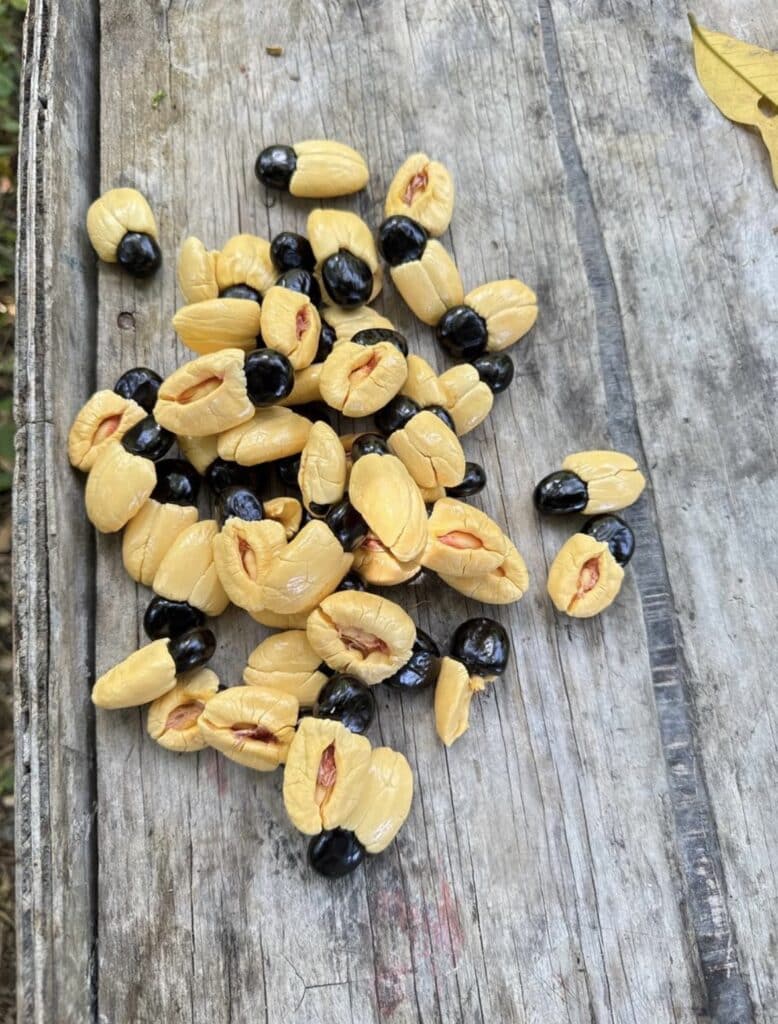
It grows in pods on the ackee tree. When the pod ripens it splits open naturally, revealing three or four sections of yellow or cream-coloured flesh — the arils — attached to large black seeds. Unripe ackee is poisonous. The seeds, the pink inner membrane, and any ackee that has not opened on its own are all toxic, and can cause serious illness.
We cant stress this enough, ackee must be fully opened naturally on it’s own and properly prepared before eating. Every Jamaican pickney learns this early. You do not pick ackee before it opens. You do not force it. You leave it to tell you when it’s ready.
How to Cook Ackee and Saltfish — The Showcase Jamaica Recipe
Every Jamaican cook has their own version and every Jamaican cook will tell you theirs is correct. What follows is the foundation — the dish as it has been made in Jamaican kitchens for generations. Build from it as you see fit.
What You Need
Serves 4
- 1 or 2 doz fresh ackee, (outside Jamaica where fresh ackee isn’t available: 1 can of ackee, approximately 540g / 19oz, drained and rinsed)
- 1 lb saltfish (salted cod)
- 2 tablespoons cooking oil (vegetable or coconut oil or canola oil)
- 1 medium onion, sliced
- 2 stalks escallion (spring onion), chopped — white and green parts separated
- 2 cloves garlic, minced
- 1 sprig fresh thyme (or ½ teaspoon dried)
- ½ scotch bonnet pepper, deseeded and finely chopped — or left whole for milder heat
- 1 medium tomato, chopped
- 1 sml sweet pepper, thinly sliced
- Black pepper to taste — no additional salt needed, the saltfish provides it
Method
- Prepare the saltfish
Boil the saltfsh for approximately 15 – 25 min, Debone and flake it - Boil ackee (if using fresh)
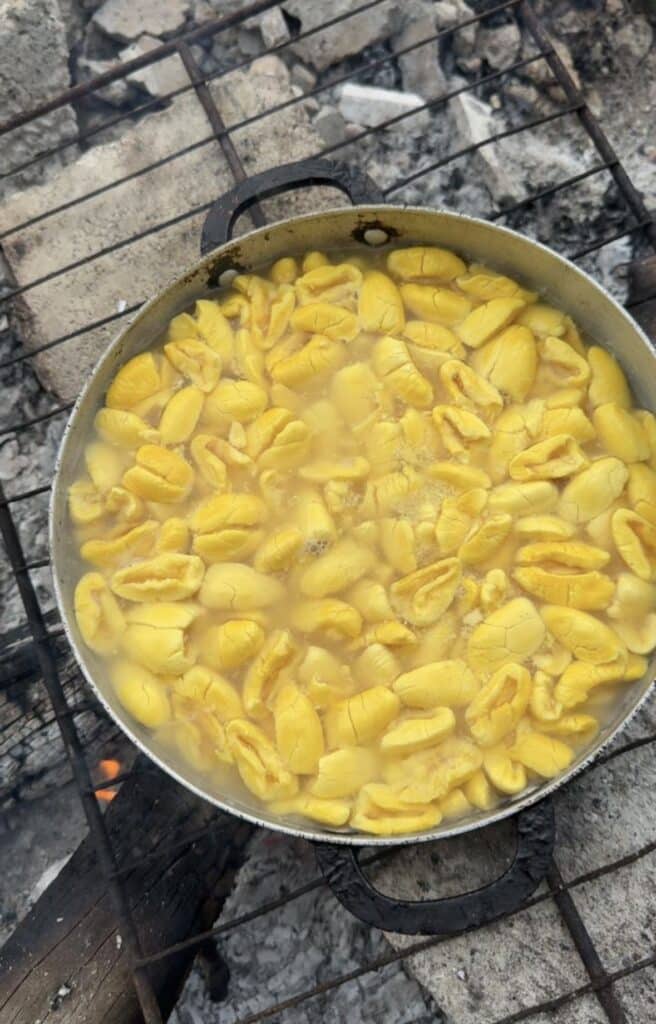
Remove seed and any pink membrane from ackee. Boil for approximately 15-20 minutes until tender then drain and set aside. If using tin ackee,simple open and drain ackee from tin, no boiling needed. - Sauté the seasoning
Heat the oil in a wide pan or skillet over medium heat. Add onion, escallion, garlic, thyme, scotch bonnet, tomato, and sweet pepper. Cook for about 2-4 minutes. You want the aromatics fragrant but not burned. - Add saltfish
Stir it through the aromatics. Cook for 3–4 minutes, letting the saltfish absorb the seasoning. You can add a tups of black pepper here (shhhh) - Add ackee last
Gently fold it in. Do not mash. Use a slow, careful hand to avoid breaking the pieces. - Reduce heat to low
Let everything come together for 2–3 minutes. Do not overcook. The ackee is already cooked and should remain soft and delicate.
What to Serve with Ackee and Saltfish (Traditional Jamaican Sides)
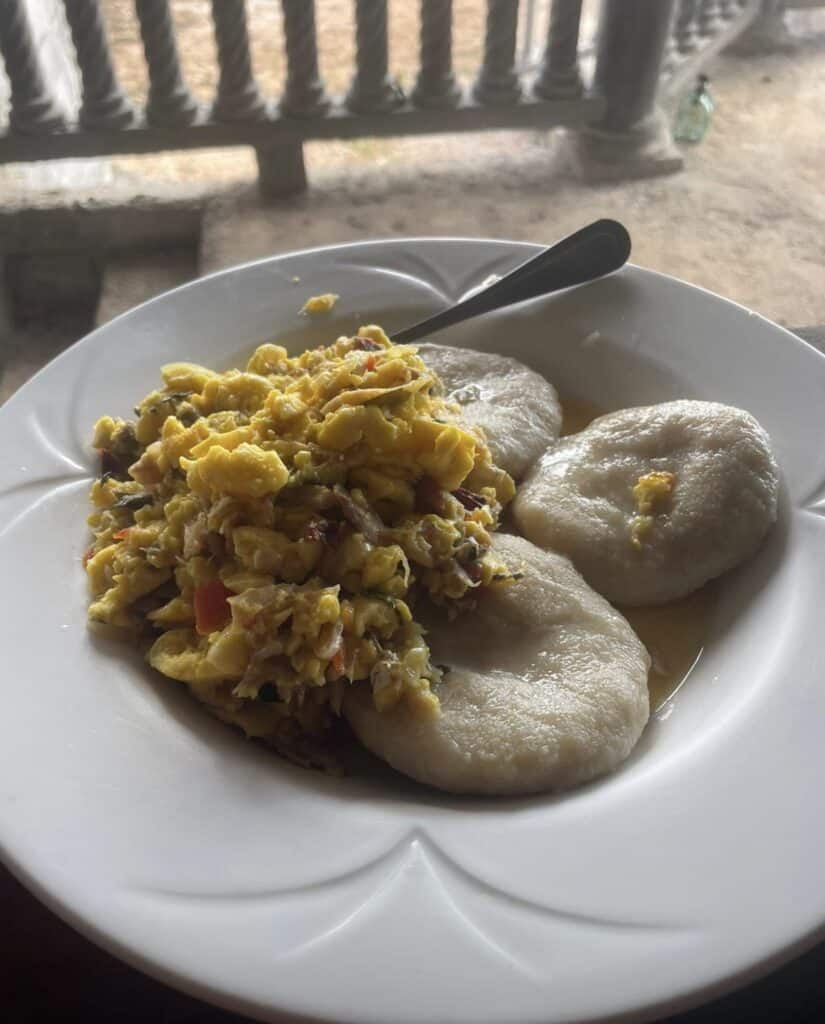
The sides are where the argument starts. Here is where Jamaicans divide firmly into camps, and the right answer depends entirely on who raised you, what parish you’re from, and what time of day it is.
- Fried dumplings — thick, golden, slightly sweet on the outside. The non-negotiable for most Jamaicans. You scoop the ackee with the dumpling. This is not optional.
- Boiled food — green bananas, boiled dumplings, sweet potatoes, white or yellow yam. Simple, filling, and traditional.
- Roasted or boiled breadfruit — the other great debate. Some families swear by roasted breadfruit with the skin charred and the inside creamy. Others boil it. Both are correct.
- Fried plantain — ripe, sweet, caramelised at the edges. The contrast of the sweet plantain against the savoury saltfish is one of Jamaica’s great flavour combinations.
- Hard dough bread — thick-sliced and buttered, perfect for mopping up everything left on the plate.
Why Ackee and Saltfish Matters
This dish carries history.
It represents:
- survival
- resourcefulness
- cultural blending
- identity
It is one of the clearest examples of how Jamaican cuisine was shaped — not by luxury, but by necessity, creativity and time.
Where You’ll Find It
Ackee and saltfish is not something you have to search hard for in Jamaica.
You will find it:
- in small cook shops
- at roadside stalls
- in family kitchens
- on hotel breakfast menus
But like many Jamaican dishes, the best version is often homemade.
More Jamaican Food on Showcase Jamaica
Ackee and saltfish is the national dish, but it is far from the only story worth knowing in the Jamaican kitchen. Here’s where to go next:
- Saltfish fritters — Stamp and Go, the original Jamaican snack
- The full Jamaican breakfast — Top 6 Jamaican Breakfast Items covers the complete morning spread.
- The wider table — Taste of Jamaica: Exploring the Island’s Flavourful Cuisine looks at the bigger picture of what Jamaican food is and where it comes from.
FAQ — Ackee and Saltfish
What is ackee and saltfish?
Ackee and saltfish is Jamaica’s national dish, made with salted cod (saltfish) and ackee, a fruit that has a soft, buttery texture when cooked. It is typically prepared with onion, scallion, thyme, and scotch bonnet pepper.
Is ackee safe to eat?
Yes — but only when fully ripe. Ackee must open naturally on the tree before it is picked and cooked. Unripe ackee is toxic and should never be eaten.
What does ackee taste like?
Ackee has a mild, buttery taste and a texture similar to scrambled eggs or soft avocado. It absorbs the flavour of the saltfish and seasoning it is cooked with.
How do you prepare saltfish for cooking?
Saltfish is typically boiled and drained to remove excess salt, then flaked into pieces before being added to the dish.
Can you use canned ackee?
Yes. Outside of Jamaica, canned ackee (like Grace brand) is commonly used. It should be drained and rinsed — no boiling required.
What do Jamaicans eat with ackee and saltfish?
Ackee and saltfish is commonly served with fried dumplings, boiled green bananas, roasted breadfruit, bammy, or festival.
Is ackee and saltfish eaten for breakfast or dinner?
Traditionally, it is a breakfast dish in Jamaica, but it is enjoyed at any time of day.
Before You Walk Good — Tell Wi Something
Every Jamaican family has their version. The one that uses tomato instead of sweet pepper. The one that adds a pinch of pimento. The one that has to have roasted breadfruit or it doesn’t count. The one where Granny never measured anything and it came out perfect every time.
How do you make yours? What’s the one thing you do that nobody else does? And what do you serve it with? Drop it in the comments — the ackee and saltfish conversation has been going since before Jamaica was Jamaica, and there is always room for one more opinion.
Until next time, Walk Good.
Every Nook. Every Cranny. All Jamaican. — Showcase Jamaica

Pingback: Jamaican Foods Every Visitor Should Try | Showcase Jamaica
Pingback: Top 6 Jamaican Breakfast Items - Showcase Jamaica