Is Jamaica safe?
Someone told you to be careful.
Maybe it was your mother. Maybe a coworker who’s never actually been. Maybe it was the internet at 11pm when you were looking at flights and ended up down a rabbit hole of headlines.
The warnings are well-meaning. Some of them are based in reality. But most of them are based on a version of Jamaica that tells half the story — the half that gets clicks — while leaving out the version that millions of visitors experience every year.
So let’s have the conversation properly. No sugarcoating. No fearmongering. Just the real talk.
Is Jamaica Safe to Visit? (Quick Answer)
Yes — millions of visitors travel to Jamaica safely every year.
Most tourist experiences take place in destinations such as:
- Negril
- Montego Bay
- Ocho Rios
- Port Antonio
- Treasure Beach
Like any country, Jamaica has areas with higher crime levels, but these are generally outside the places travelers spend their time.
Visitors who use normal awareness — choosing good accommodations, using licensed transportation, and staying within well-known areas — typically have safe and memorable trips.
The honest answer is: it depends on where you go, how you move, and how much attention you pay to your surroundings. That’s true of Paris, Cancun, and Cape Town too.
Jamaica Crime Statistics — The Context That Headlines Miss
Jamaica has historically struggled with a high murder rate. Jamaicans know this and live with that reality.
But the full picture is rarely explained.
In 2025 Jamaica recorded 673 murders, down from 1,147 in 2024 — a decline of more than 40 percent and the lowest total in more than three decades.
Other serious crime categories also declined:
- Shootings fell by roughly 31–32%
- Sexual violence dropped by 28%
- Overall serious crime decreased by 17%
This is a genuinely historic achievement. If those numbers had gone in the other direction, it would have been front-page news worldwide. It barely registered in international travel media.
Another key piece of context is geography.
Much of Jamaica’s violent crime occurs in specific inner-city communities, particularly in parts of Kingston and Montego Bay.
Those areas are not where tourists typically visit.
Popular areas like Ocho Rios, Negril, Montego Bay, and Port Antonio remain heavily monitored and, in officials’ own words, secure.
When crime happens in Paris, the headline says crime in Paris. When crime happens in Jamaica, the headline often says crime in Jamaica — as if the entire island were one place. It isn’t.
What the Tourism Numbers Actually Tell Us
Even in a challenging year, Jamaica welcomed approximately 2.6 million visitors in 2025. That’s a 10% dip from the prior year — but the cause was not crime or instability. It was Hurricane Melissa, which disrupted travel during peak season.
Through July alone, 2.3 million visitors had already arrived, suggesting strong demand that was cut short by a natural weather event. Jamaica’s winter 2025/26 forecast already points to a 6.9% increase in stopover arrivals — the rebound is firmly underway. Jamaica also recorded its strongest-ever visitor performance from Latin American markets in 2025. Confidence in Jamaica as a destination is growing, not shrinking
The Places You’re Likely to Visit
Jamaica is made up of many different communities and environments. Here’s what you need to know about the main tourism destinations.
Negril
If your goal is relaxation, Negril is one of the easiest places to start. The town is famous for Seven Mile Beach, a long stretch of white sand lined with small hotels, beach bars, and restaurants.
Negril has a laid-back atmosphere that attracts travelers looking for sunsets, swimming, and slow island days. Visitors interested in exploring the area further can read our guide to Negril, which covers beaches, attractions, and local highlights.
Montego Bay
Montego Bay is Jamaica’s largest tourism hub and home to one of the island’s two international airports. The Hip Strip (Gloucester Avenue) and the resort corridor are heavily visited by tourists and generally well monitored.
While parts of St. James parish have experienced elevated crime levels at times, those communities are separate from the areas visitors usually explore. Millions of travelers pass through Montego Bay every year without incident.
Kingston & St. Andrew
Kingston doesn’t get enough credit as a travel destination — and that’s starting to change.
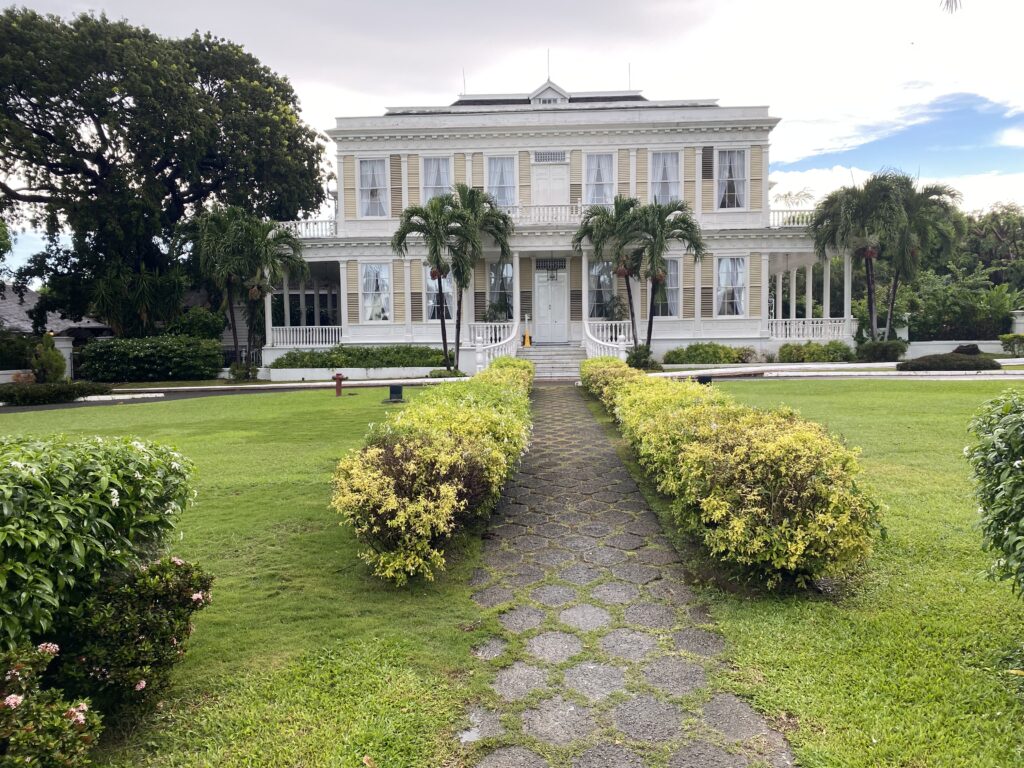
The capital is where Jamaica’s culture runs deepest: the Bob Marley Museum, Devon House, the National Gallery, Emancipation Park, and a street food and restaurant scene that puts most resort towns to shame. New Kingston, the commercial and social hub, is lively, walkable in the right areas, and perfectly navigable for visitors.
For a deeper look at the city, explore our Kingston & St. Andrew guide, which covers the best places to visit and how to experience the capital properly.
Kingston rewards preparation more than most destinations on this list. Uptown areas are generally comfortable for visitors, while parts of downtown are best explored with a local guide.
Ocho Rios
Ocho Rios is another major tourism center and cruise destination.
Visitors typically come for attractions such as:
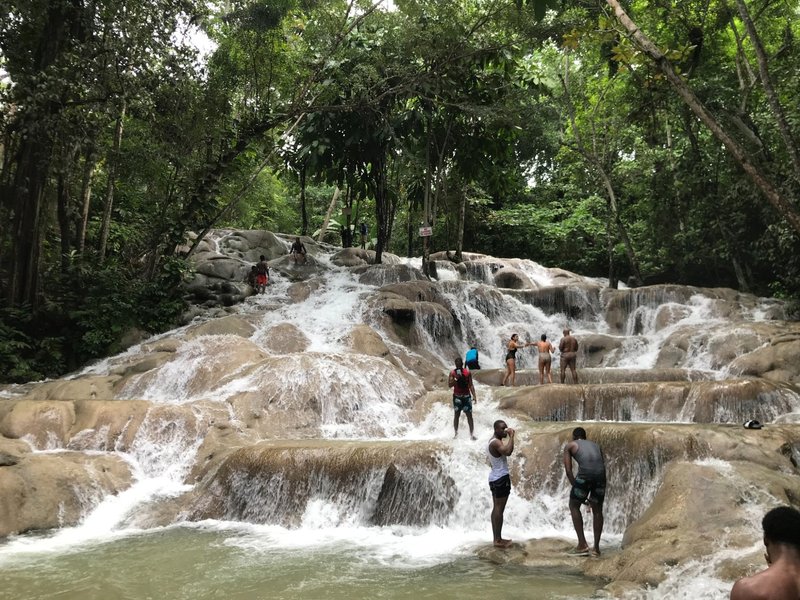
- Dunn’s River Falls
- Mystic Mountain
- the Ocho Rios craft market
These attractions operate in managed tourism environments, and the town itself is accustomed to large numbers of international visitors. See our Ocho Rios guide for the full breakdown.
Falmouth (Trelawny)
Falmouth is one of the largest cruise ports in the Caribbean, welcoming ships from major cruise lines throughout the year. The port area is a purpose-built tourism zone, designed specifically for cruise passengers and considered safe within the port precinct.
Beyond the port, Falmouth is also known for its well-preserved Georgian architecture, with buildings dating back to the eighteenth century. Nearby attractions include rafting on the Martha Brae River and visiting the Luminous Lagoon.
Port Antonio (Portland)
Portland is widely considered one of the most beautiful parishes in Jamaica. Port Antonio offers a slower pace of life, fewer crowds, and dramatic landscapes compared with larger resort towns.
Popular experiences include:
- Blue Lagoon
- Reach Falls
- rafting on the Rio Grande
- Boston Bay jerk
Visitors can explore more in our guide to Things to Do in Portland, which highlights some of the parish’s most memorable attractions.
The South Coast (Treasure Beach & St. Elizabeth)
The South Coast remains one of Jamaica’s most underrated regions. St. Elizabeth is largely agricultural and known for its slower rhythm and strong community culture.
Treasure Beach offers visitors quiet fishing villages, small guesthouses, and authentic local experiences. Boat trips from this area often include a visit to Floyd’s Pelican Bar, one of Jamaica’s most unusual attractions — a rustic wooden bar standing in the middle of the sea.
The bar was destroyed by Hurricane Melissa in 2025 and rebuilt shortly afterward, a reminder of the resilience of Jamaica’s coastal communities.
How to Move Safely Around Jamaica
Most travel advice for Jamaica is the same advice you would hear for cities around the world. A few practical habits make a big difference.
Use licensed transportation
Use registered taxis or drivers recommended by your hotel. Avoid getting into unmarked vehicles offering rides.
Choose accommodation carefully
Read recent reviews and pay attention to location, not just price. A well-reviewed guesthouse in a good area will almost always provide a better experience than a cheap room in the wrong neighborhood.
Be mindful at beaches and markets
Avoid leaving valuables unattended. Most problems visitors encounter involve petty theft, not violent crime.
Understand the vendor culture
Vendors in busy tourism areas can be persistent. This is part of Jamaica’s informal economy rather than a safety threat. A polite but firm “No thanks, respect” usually ends the interaction.
Be sensible about nighttime movement
In active tourism areas such as Negril, New Kingston, or the Montego Bay Hip Strip, walking around where there is activity is usually fine. But wandering down unfamiliar roads late at night is rarely a good idea anywhere in the world.
A few extras worth doing before you go:
- Check the U.S. State Department or UK Foreign Office travel advisories — they provide updated, parish-by-parish guidance far more useful than generalised headlines.
- Purchase travel insurance that covers medical evacuation. Not just for Jamaica — for any international travel.
- Save the number of your country’s embassy or consulate in Jamaica before you arrive.
- Connect with locals online before you visit. Facebook groups and travel forums are full of Jamaicans who love sharing insider knowledge.
Solo Travel, Female Travel, and Families
Solo Travelers
Negril and Portland are particularly comfortable destinations for solo visitors. Confidence and clear boundaries usually help navigate social interactions. The tourism infrastructure in both areas is well established.
Solo Female Travelers
Jamaica may require a little more boundary-setting for solo female travelers than some destinations. Catcalling and persistent attention can happen in busy tourism areas, though it is typically more about social dynamics than danger. Destinations like Port Antonio and Negril’s West End tend to feel more relaxed.
LGBTQ+ Travelers
LGBTQ+ travelers visit Jamaica every year, particularly in tourism areas such as Negril, Montego Bay, and Port Antonio, where the visitor culture is more international. Being aware of local cultural norms and choosing well-reviewed accommodations can help ensure a comfortable trip.
Family Travel
Children are welcomed almost everywhere, and the island offers plenty of activities including beaches, waterfalls, wildlife experiences, and great food. Jamaica is widely considered a great destination for families.
The “Aggression” You’ve Heard About? It’s Mostly Hustle
Many first-time visitors are caught off guard by the directness and persistence of vendors, taxi drivers, and tour hustlers — particularly at craft markets and port areas. This can feel intimidating if you’re not used to it.
But there’s an important distinction: assertiveness is not aggression. Jamaican culture is bold, expressive, and entrepreneurial. A vendor calling out to you at the Ocho Rios Craft Market isn’t a threat — he’s trying to make a living. A firm but polite “No thanks, I’m good” is almost always respected.
Learning to navigate these interactions with confidence and good humour becomes one of the most memorable parts of the Jamaican experience. The warmth underneath far outweighs the awkward sales pitch.
What Headlines Often Get Wrong
When crime happens in Paris, the headline says crime in Paris. When crime happens in Jamaica, the headline often says crime in Jamaica, as if the entire island were one place.
But Jamaica is made up of many different communities and environments. The Jamaica experienced by visitors — beaches, waterfalls, cookshops, music, and conversations with locals — is not the same story reflected in national crime statistics.
Both realities exist. But they are not the same experience.

The Bottom Line — Walk Good
Is Jamaica safe? Jamaica is not a danger zone. It is a country with real challenges, but also with extraordinary culture, landscapes, and people who take pride in sharing their island with visitors.
Travelers who approach Jamaica with curiosity, respect, and awareness usually leave with the same reaction: they start planning their next trip before the first one ends.
Once you’re ready to visit, start with our guide to the most unique experiences in Jamaica — 20 things you can only do on this island.
Don’t let a fearful headline rob you of one of the Caribbean’s most vibrant and culturally rich experiences. Jamaica has been welcoming the world for decades. It’s ready to welcome you too.
🇯🇲
Frequently Asked Questions
Is Jamaica safe for tourists?
Yes. Millions of tourists visit Jamaica every year without incident, particularly in tourism destinations like Negril, Montego Bay, Ocho Rios, and Port Antonio.
What is the safest part of Jamaica for tourists?
Many travelers consider Port Antonio, Negril, and Treasure Beach among the most relaxed destinations on the island.
Is Jamaica safe for solo travelers?
Yes. Solo travelers regularly visit Jamaica, especially in areas with strong tourism infrastructure such as Negril and Portland.
Is Jamaica safe compared with other Caribbean islands?
Jamaica has higher crime statistics than some Caribbean islands, but tourism areas operate very differently from the communities where most crime occurs.
What should I do if something goes wrong?
Save your country’s embassy or consulate number before you travel. Purchase travel insurance that covers medical evacuation. In an emergency, dial 119 for police in Jamaica.
Until next time, Walk Good.
Every Nook. Every Cranny. All Jamaican. — Showcase Jamaica